How to Write a Documentary Script (Step-by-Step Guide)

Writing a documentary script is one of those things that sounds simple until you actually sit down to do it. You're not making up characters or inventing a plot. You're working with real people, real events, and real footage, which honestly makes it harder in some ways. You have to find the story inside the facts, and that takes real skill.
A lot of you have asked about this topic, and I get why. Documentary filmmaking has exploded over the last decade. From true crime series to nature films to short-form docs on YouTube, the format is everywhere right now. But most guides skip the messy middle part, the actual process of getting words on a page that turn into a finished film.
So let's walk through it step by step. Whether you're working on your first short doc or trying to level up your process, this guide breaks it all down in plain language. No fluff, just the real steps that working documentary writers actually use.
Start with research and a clear point of view
Before you write a single line of script, you need to know your subject inside and out. That means watching other documentaries on similar topics, reading articles, interviewing sources, and collecting as much raw material as you can. Think of this phase like filling a bucket. The more you pour in, the more you have to work with later.
But here's the part a lot of beginners skip: you need a point of view. A documentary isn't just a collection of facts. It's a filmmaker's argument about those facts. Ask yourself what you actually think about this subject. What do you want your audience to feel or understand by the end? Your answer to that question becomes the spine of your entire script.
I personally think this is the most important step in the whole process, and it's the one people rush past the fastest. Without a clear point of view, your script ends up feeling like a Wikipedia article read aloud. With one, it feels like a real film with something to say.
Once you have your research and your angle, write a one-sentence treatment. Something like: 'This film follows a small-town baker who secretly funded an art museum, and asks why generosity is so often hidden from public view.' That one sentence will guide every decision you make going forward. Keep it close.
Build your structure before you write
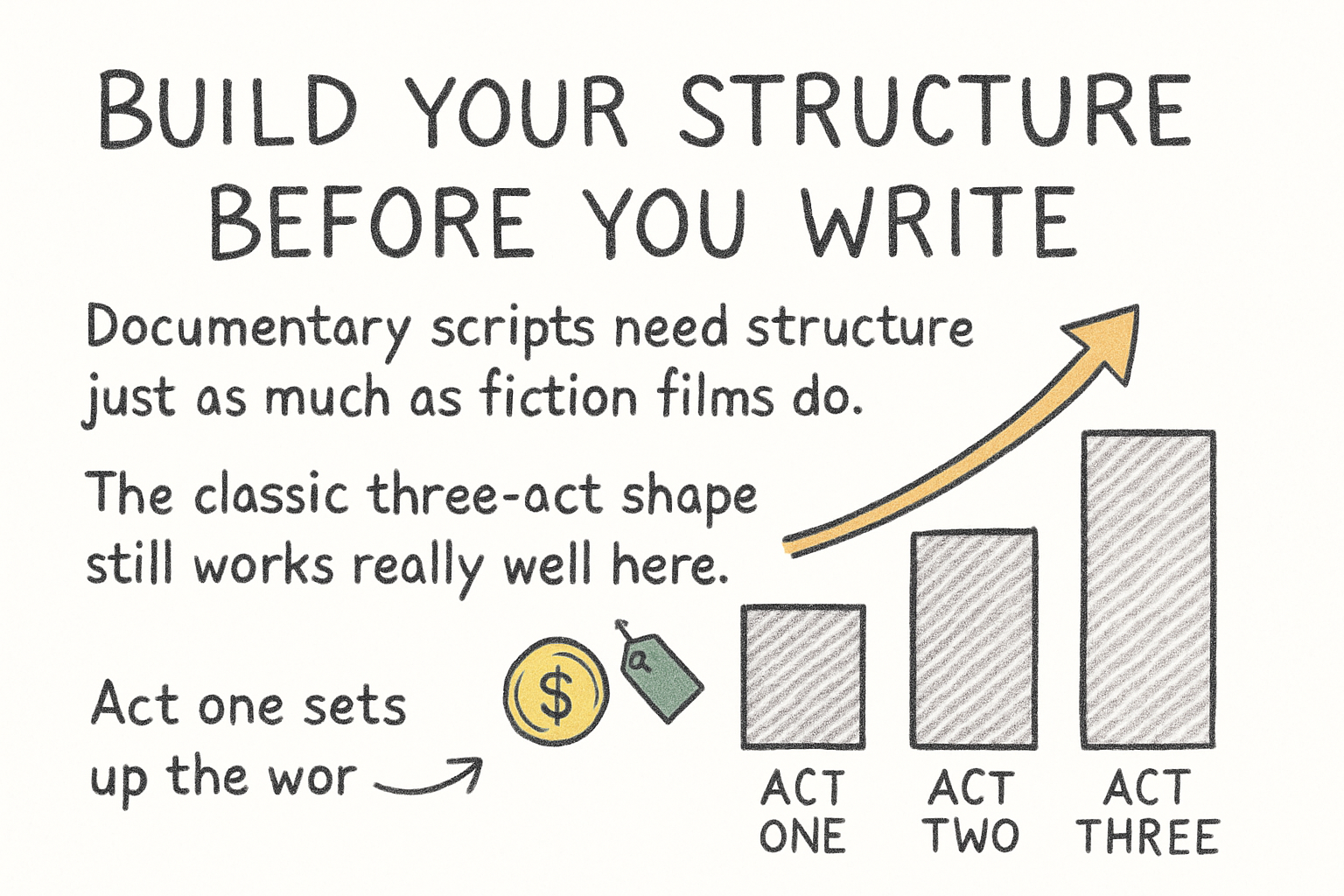
Documentary scripts need structure just as much as fiction films do. The classic three-act shape still works really well here. Act one sets up the world and the central question. Act two digs into that question through interviews, footage, and events. Act three brings it to some kind of resolution, even if the answer is complicated or unresolved.
Start by creating what writers call a paper edit. Take all your research, interview notes, and scene ideas and organize them into a rough outline. You're basically arranging puzzle pieces before you glue anything down. I remember doing this on my kitchen table for a short doc project once, using sticky notes all over the wall, and it genuinely saved hours of rewriting later.
Think about your opening scene hard. Documentaries live or die by their first two minutes. You need to drop the viewer into something compelling right away. That might be a striking visual, a provocative quote from an interview subject, or a moment of action that raises an immediate question in the viewer's mind.
Also plan your turning points. Where does the story shift? What moment in the middle changes everything? Where does the final emotional beat land? Map these out in your outline before you start writing actual script pages. Structure saves you from getting lost once you're deep in the writing.
Write the script in stages, not all at once
Most documentary scripts go through at least three distinct versions, and that's totally normal. The first version is your shooting script, written before you've filmed anything. It describes what you plan to capture, the questions you'll ask in interviews, the locations you need, and the general flow of the story. It's a plan, not a final product.
The second version is your paper cut or rough assembly script. This comes after you've shot your footage and done your interviews. Now you're working with what you actually have, not what you hoped to get. You'll probably find that reality gave you better material in some spots and weaker material in others. Rewrite around what you have.
The third version is your fine cut script. This is where you're polishing narration, tightening interview sequences, and making sure every scene earns its place. Cut anything that doesn't serve your central point of view. If a scene is interesting but doesn't push the story forward, it's probably hurting you more than helping you.
Narration deserves its own attention. Write it out loud. Literally say the words as you type them. Documentary narration has to sound like a person talking, not like a textbook. Short sentences work better than long ones. Active verbs carry more weight than passive ones. And silence is your friend. You don't need to narrate over everything.
Ready to take the next step?
Documentary scriptwriting is a craft you build over time, not something you master on the first try. Keep your research deep, your point of view honest, and your structure tight, and you'll already be ahead of most people starting out. If you want to keep sharpening your filmmaking skills, check out Cliptude for tools and resources built specifically for video creators. Drop your questions in the comments below. What part of documentary writing trips you up the most? Let's talk about it.