The Ultimate Template for Writing a Video Script

Writing a video script sounds simple until you're staring at a blank page with a deadline breathing down your neck. You know what you want to say, but getting it onto the page in a way that actually works on camera? That's where a lot of creators get stuck. The good news is that a solid template can take most of that guesswork off your plate.
A lot of you have asked about this exact topic, so I wanted to break it down in a way that's actually useful rather than just theoretical. Whether you're making a YouTube tutorial, a brand video, or a short social media clip, the bones of a good script are pretty much the same. Get the structure right, and everything else gets easier.
I personally think the biggest mistake creators make is treating a video script like a written essay. It's not. It's spoken words on paper. When you write it, you should be hearing it out loud in your head the whole time. That shift in thinking alone will improve your scripts more than any fancy software or technique ever could.
Start with a hook and a clear setup
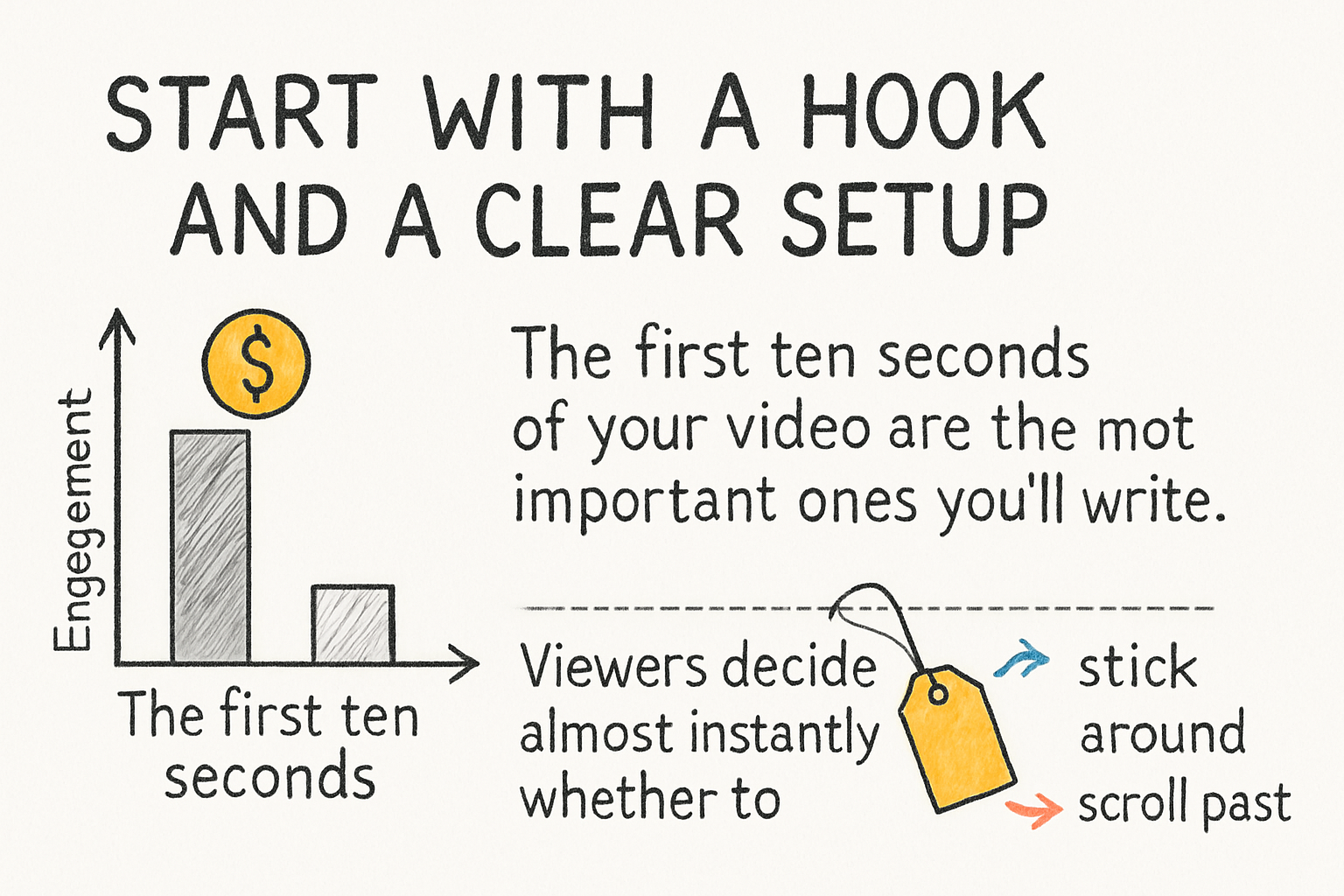
The first ten seconds of your video are the most important ones you'll write. Viewers decide almost instantly whether to stick around or scroll past. Your hook needs to do one thing well: make them feel like staying is worth their time. Ask a question, drop a surprising fact, or just promise them something they actually want.
After the hook, you move into the setup. This is where you tell your audience what the video is about and why it matters to them. Keep it short. Two or three sentences is usually enough. Think of it like a handshake. You're introducing yourself and the topic before diving in deep.
A good template line for the setup sounds something like this: 'In this video, I'm going to show you exactly how to [do the thing], so you can [get the result] without [the common struggle].' That format works because it speaks directly to what the viewer wants. It's specific, it's personal, and it sets expectations clearly.
I remember the first time I skipped writing a proper setup and just jumped into the content. The video felt scattered, and the comments reflected that. People were confused about what the video was actually trying to do. That one small section makes a bigger difference than you'd expect.
Build your middle section with a simple three-point structure
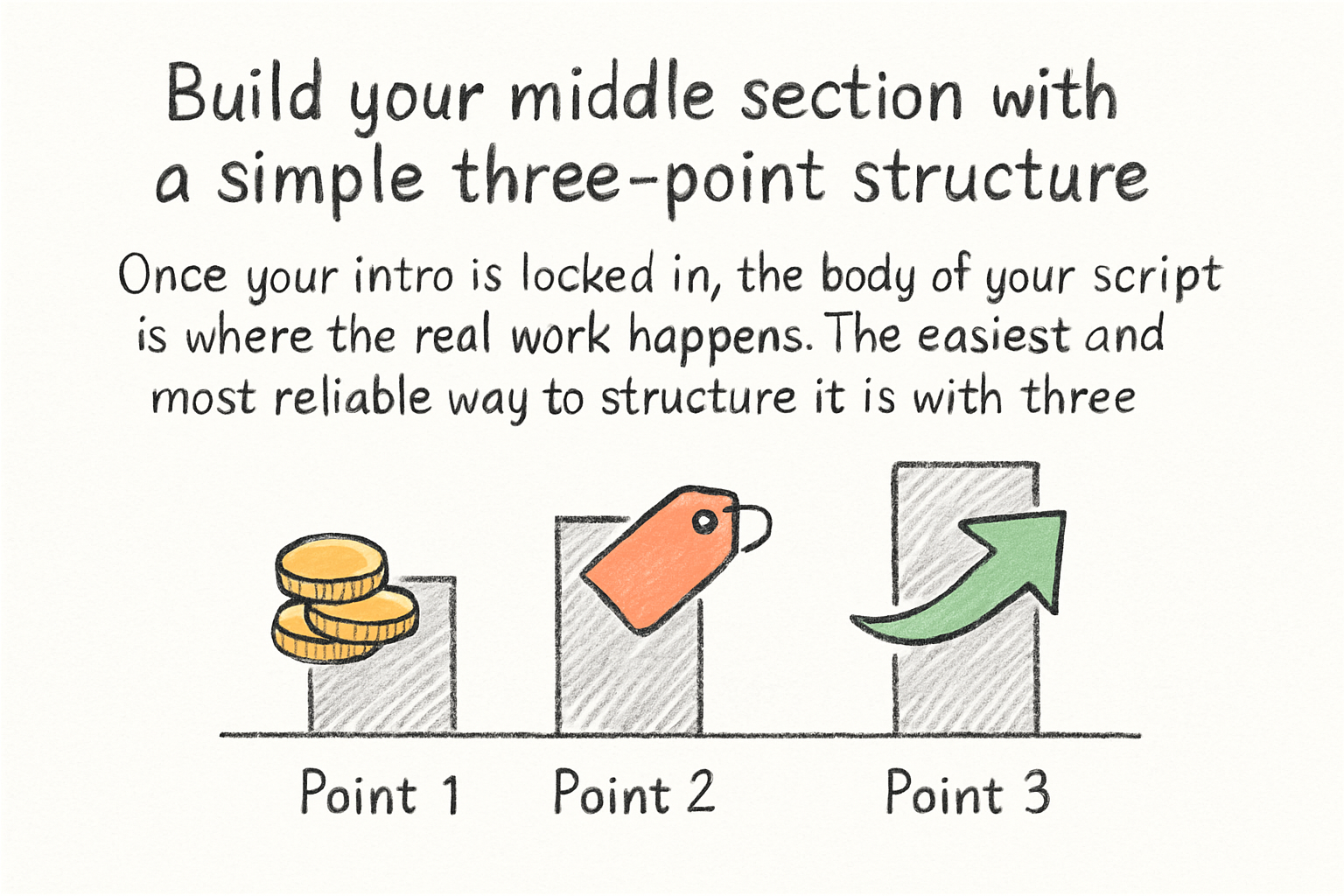
Once your intro is locked in, the body of your script is where the real work happens. The easiest and most reliable way to structure it is with three main points. Three feels complete without being overwhelming. It gives your video a rhythm and makes it easy for viewers to follow along.
For each point, use the same mini-structure: introduce the idea, explain it, and give an example. That's it. You don't need to overthink it. When you repeat that pattern across three points, your video flows naturally and your audience always knows where they are in the content.
Transitions matter more in a script than most people realize. You can't just jump from one point to the next. A simple bridge sentence like 'Now that you know X, let's talk about Y' keeps everything connected. It sounds obvious, but without those small connectors, your video can feel choppy even if the individual sections are strong.
If you're working on something more complex, like a documentary or a long-form piece, the same principles apply but on a bigger scale. We actually covered this in detail in our step-by-step guide on writing a documentary script, which is worth a read if you're tackling something longer than a standard YouTube video.
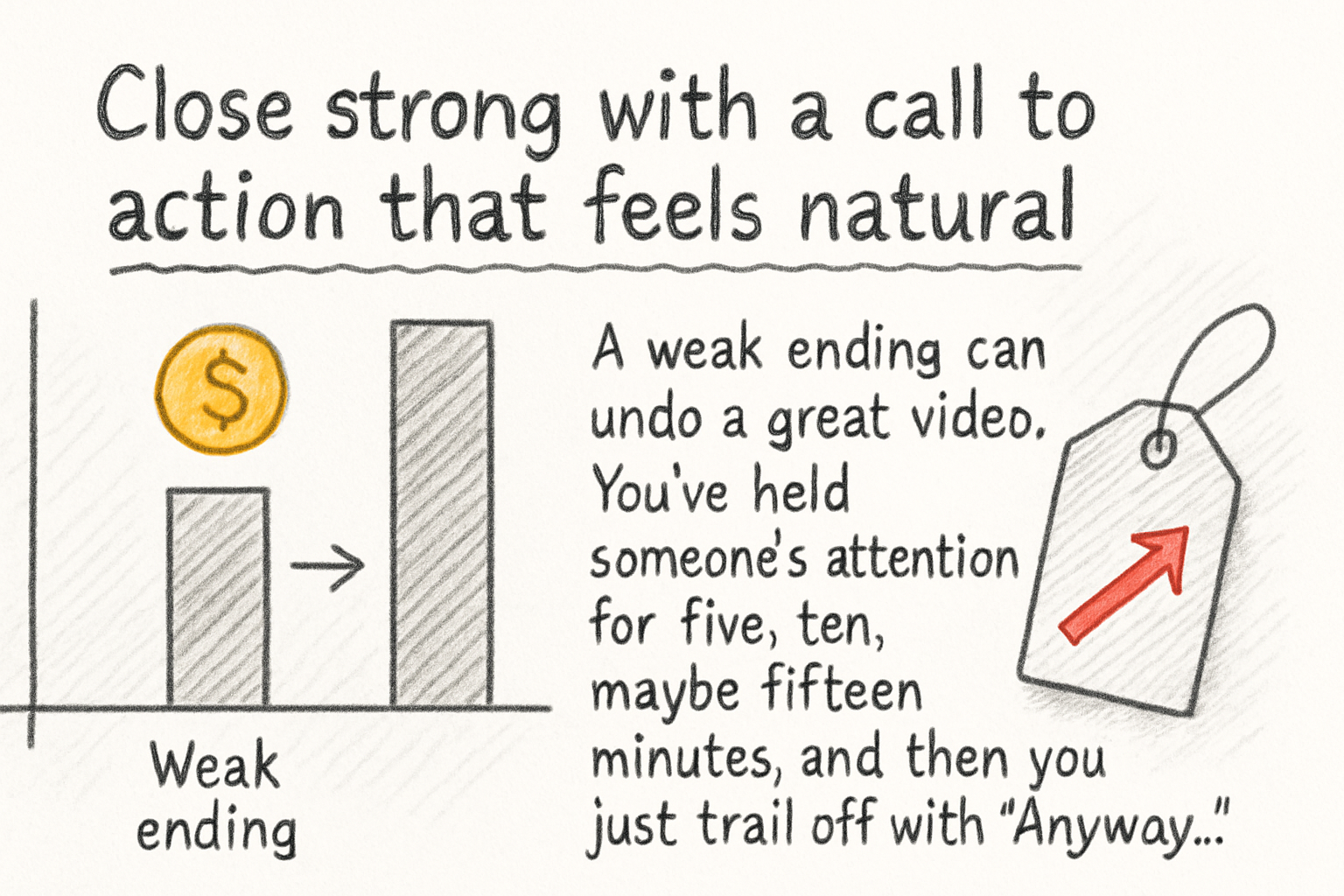
Close strong with a call to action that feels natural
A weak ending can undo a great video. You've held someone's attention for five, ten, maybe fifteen minutes, and then you just trail off with 'Anyway, that's all I've got.' That's a missed opportunity. Your closing section should do two things: remind viewers of the value they just got and tell them exactly what to do next.
The reminder part doesn't need to be a long recap. One or two sentences that echo your main points is enough. Something like 'Now you've got the hook, the structure, and the closing sequence to write a script that actually works on camera.' Short, punchy, and it ties everything together.
Then comes the call to action. Be direct. If you want them to subscribe, ask them to subscribe. If you want them to comment, give them a specific prompt like 'Drop your biggest scripting struggle in the comments below.' Vague calls to action like 'don't forget to like and subscribe' barely register anymore because people hear them on every single video.
One thing worth noting: your call to action in the script should match the energy of your video. If your whole video was casual and conversational, ending with a stiff corporate-sounding pitch will feel off. Keep the same voice all the way through. That consistency is what makes a video feel like it was made by a real person with a clear point of view, not just assembled from parts.
Ready to take the next step?
If you found this helpful, drop a comment and let me know what kind of videos you're scripting right now. Are you working on tutorials, brand content, or something else entirely? I'd love to hear what you're building. And if you're ready to take your video creation even further, go check out Cliptude and see how it can help you bring your scripts to life faster than you thought possible.