Vid rush: how to create videos faster with AI automation

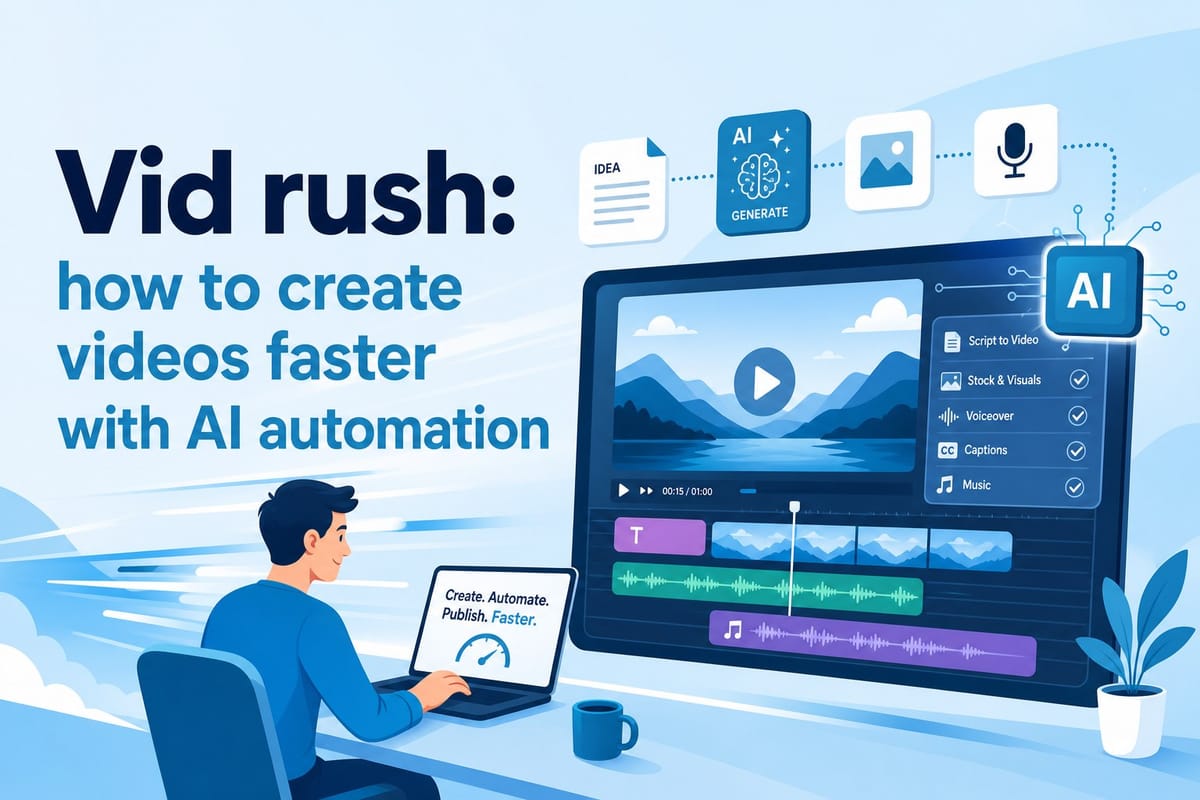
Table of contents
1. What a vid rush actually means for modern creators
2. The parts of video production that AI can automate right now
3. Building a sustainable vid rush workflow you can actually stick to
I want to make videos faster. I think most creators do. The problem is that traditional video production eats up hours you simply do not have. You need a script, footage, voiceover, graphics, and editing, and each step takes longer than the last. That is where the concept of a vid rush comes in. A vid rush is the push to produce more video content in less time without sacrificing quality. AI automation has made that goal genuinely reachable for solo creators, small teams, and faceless YouTube channels. In this article, I will break down how AI tools are changing the production workflow, what tasks you can realistically automate today, and how platforms like Cliptude make it possible to go from a simple idea to a finished video without touching editing software.
What a vid rush actually means for modern creators
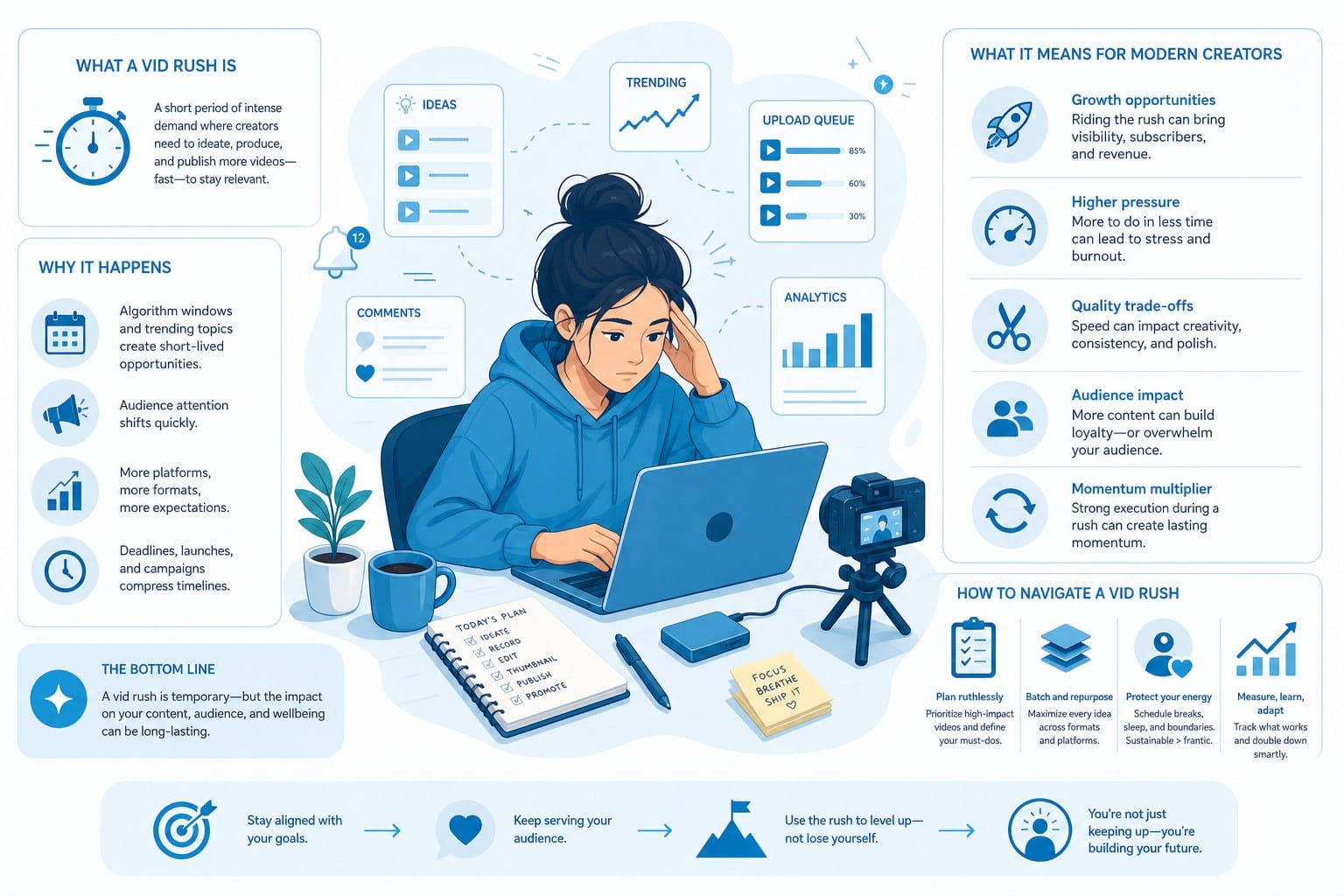
The phrase vid rush used to mean something stressful. It described the frantic scramble before a deadline, the late nights rendering footage, the panic of realizing your audio was out of sync at midnight before a scheduled upload. For a lot of creators, that feeling is still very real.
But the meaning is shifting. A vid rush now describes the competitive momentum in the video content space, where creators are producing more videos per week than ever before. Channels that used to post once a week are now posting every day. Faceless YouTube channels in niches like history, finance, science, and true crime are churning out long-form documentary content at a pace that would have been impossible a few years ago.
The pressure is real. YouTube rewards consistency. The algorithm pushes channels that upload frequently and keep watch time high. TikTok and Instagram Reels have a shelf life measured in hours, not days. If you want to compete, you have to produce.
The creators winning right now are not the ones who edit faster by hand. They are the ones who have figured out which parts of the workflow can be automated and which parts still need a human touch. That distinction matters a lot.
Let me walk through a typical video production workflow so you can see exactly where the time goes. First, research. You need to understand your topic well enough to write a compelling script. That might mean reading ten articles, watching three competitor videos, and taking notes. For a ten-minute documentary, that process alone can take two to three hours.
Next comes the script. You have to decide on structure, pacing, tone, and storytelling approach. Writing a tight script for a fifteen-minute video can take another two to four hours, especially if you want it to sound natural.
Then you need footage. If you are running a faceless channel, you are hunting through stock video libraries for clips that actually match what your script is describing. You might need fifty to a hundred clips for a single video. That search takes time, and licensing matters if you want to monetize.
After footage comes voiceover, graphics, b-roll synchronization, title cards, music, color grading, and final export. A solo creator doing all of this by hand might spend eight to twelve hours on a single ten-minute video.
AI automation changes that math significantly. I have seen creators cut their production time by more than half by using the right tools. The vid rush is no longer about working harder. It is about working with better systems.
If you have been looking into tools to help speed things up, you may have come across discussions on Reddit about various platforms. Those conversations can be useful, but they can also send you in the wrong direction. I recommend reading Vidrush Reddit reviews: what creators are actually saying to get a grounded picture of what real creators have experienced when trying to solve the speed problem. It puts a lot of the hype in context.
The parts of video production that AI can automate right now
Not every part of the production process is equally hard to automate. Some tasks are highly repetitive and data-driven, which makes them perfect candidates for AI. Others require creative judgment, brand voice, or storytelling instinct that is harder to replicate. Let me break down where automation is genuinely useful and where you still want to stay involved.
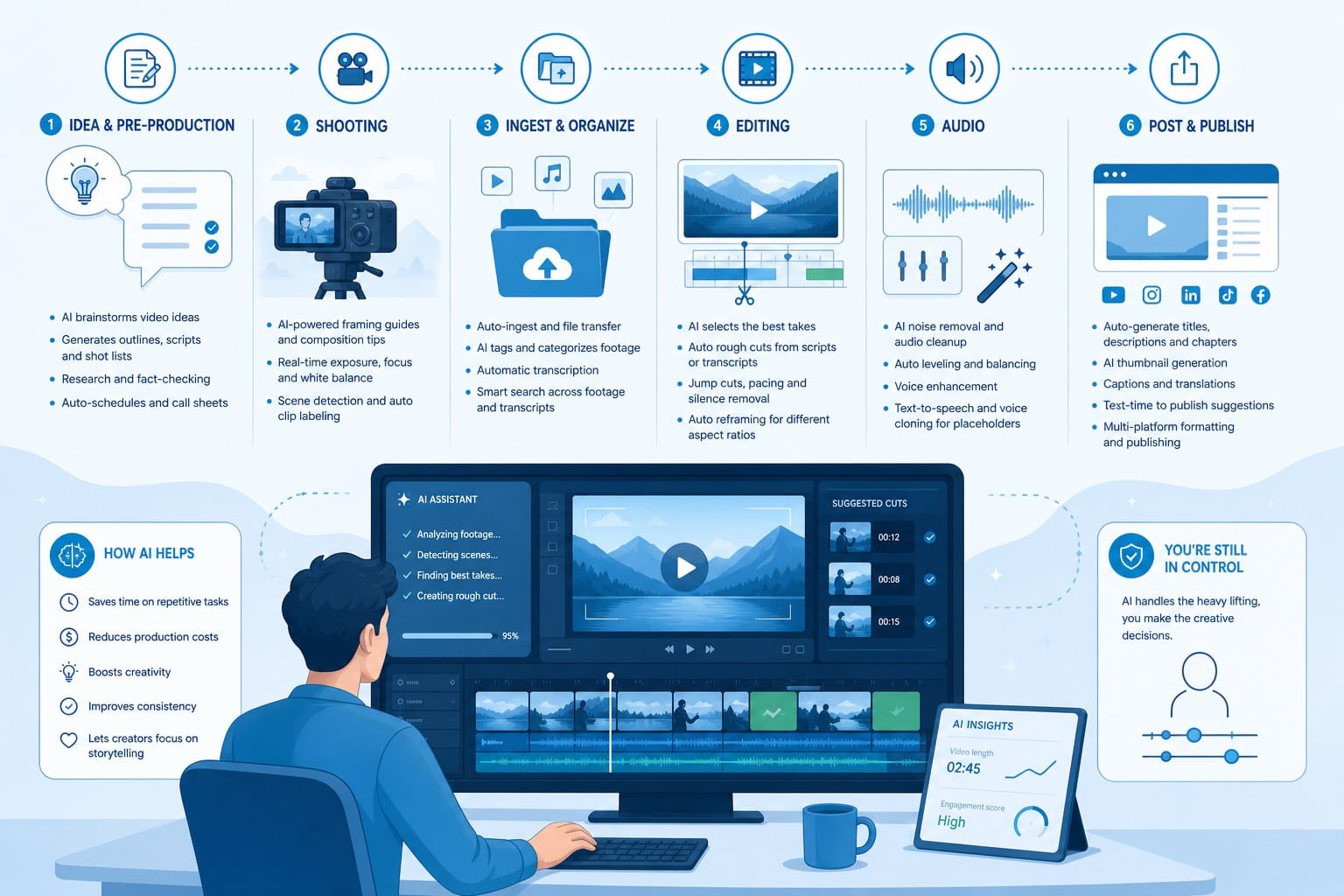
Research and scripting are two areas where AI has made enormous progress. If you are producing a video about the history of the Roman Empire, an AI model can pull together a coherent outline in seconds, suggest a narrative structure, and even draft a full script in your chosen tone. That does not mean you should publish the first draft without reading it. But it does mean you are starting with something solid instead of a blank page. The time savings here are real.
Footage sourcing is one of the most tedious parts of faceless video production. You know roughly what kind of clip you need for each line of your script, but finding it in a stock library means typing search terms, scrolling through results, previewing clips, and deciding whether they actually fit the mood you are going for. AI tools that understand the context of your script can automate this matching process, pulling relevant footage based on what the narration is actually saying at each point in the video. That is a significant upgrade from typing keywords into a search bar.
Motion graphics and animations are another area where automation is changing the game. Whiteboard videos, stickman animations, and explainer-style graphics used to require either expensive software or an expensive freelancer. AI platforms can now generate these assets automatically based on the content of your script. If you are creating educational content and you want a simple animation to illustrate a concept, you no longer need to build it frame by frame.
Voiceover generation has also matured considerably. AI voices are not perfect, but the best ones are smooth enough that viewers in many niches do not notice or care. For faceless channels, this is a major unlock. You do not need a recording setup, you do not need to re-record lines when the script changes, and you do not need to manage audio files separately from the rest of your project.
Editing and assembly, which includes cutting clips to match the narration, adding transitions, syncing music, and producing a final export, can now be handled end-to-end by AI platforms that understand your script structure. Instead of arranging clips on a timeline yourself, you describe what you want and the system builds it for you.
This is exactly what Cliptude does. You start with a prompt or a script. The platform researches the topic if you need it to, generates a polished script, sources licensed footage that matches the narration, adds motion graphics where appropriate, layers in music, and produces a finished video ready for upload. The output supports YouTube long-form content, documentary formats, YouTube Shorts, TikTok clips, Instagram Reels, animations, and music videos.
For solo entrepreneurs and small media teams who do not have video editing skills, this kind of platform removes the biggest barrier entirely. You do not need to learn Premiere Pro or DaVinci Resolve. You do not need to hire an editor. You produce professional-quality videos from a text prompt.
For creators who are already producing content but want to scale their output, the math works out clearly. If a ten-minute video used to take you eight hours, and AI automation brings that down to two hours, you can produce four times as much content in the same time. That is the vid rush in practical terms.
One thing worth noting is the commercial rights question. If you are planning to monetize your videos on YouTube or sell content to clients, you need to make sure the footage, music, and graphics you use are properly licensed. Cliptude includes commercial rights in its output, which means you can upload and monetize without worrying about copyright claims derailing your channel.
Pricing is usage-based with a credit system, which makes sense for creators whose output varies from week to week. You are not paying a flat subscription fee whether you produce one video or twenty. You pay for what you actually create, which keeps costs predictable as you scale.
I also want to mention thumbnails here, because your thumbnail is part of the video production process even though it gets treated as an afterthought. A great video with a weak thumbnail will underperform. If you want help thinking through how to create compelling thumbnail text quickly, Thumbnail text generator: how to create click-worthy titles fast is worth reading alongside your broader automation setup.
Building a sustainable vid rush workflow you can actually stick to
Speed matters, but consistency matters more. The creators who build large audiences are not the ones who sprint for two weeks and then burn out. They are the ones who build systems they can repeat week after week without the work destroying them.
A sustainable vid rush workflow has three characteristics. It is predictable, meaning you know what steps to follow each time and you are not reinventing the process for every video. It is scalable, meaning you can increase your output without proportionally increasing your time or cost. And it is quality-consistent, meaning the videos you produce on week ten look at least as good as the videos you produced on week one.
Let me walk through what a practical AI-assisted workflow looks like for a faceless YouTube channel focused on long-form documentary content, since that is one of the primary audiences that benefits most from this approach.
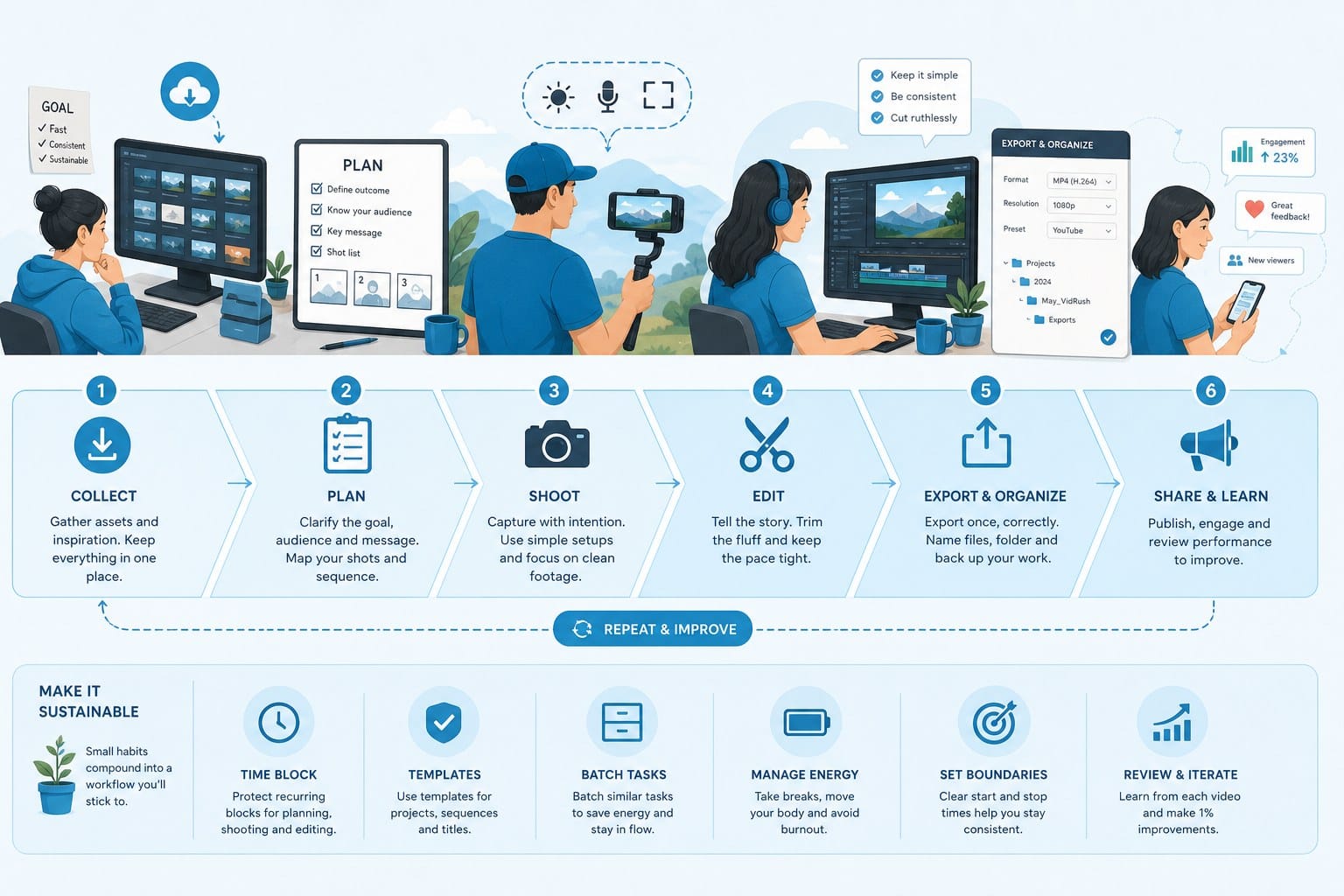
Step one is topic selection and research direction. This is the one part of the process where your human judgment matters most. You need to pick topics that your audience cares about, that have search volume, and that you can cover in a way that is meaningfully better than what already exists. AI can help you brainstorm and validate ideas, but the strategic decision about what to cover is yours.
Once you have a topic, you feed it into your production platform. With Cliptude, you can input either a bare prompt like "the fall of the Byzantine Empire, fifteen minutes, documentary tone" or a full script you have already written. The platform takes that input and begins generating the components of your video.
Step two is script review. Even when AI generates the script, I recommend reading through it before production begins. Look for factual errors, check the narrative flow, and make sure the tone matches your channel. This review step should take fifteen to thirty minutes for most videos, not hours. You are not rewriting from scratch. You are making targeted edits to something that is already 80 to 90 percent ready.
Step three is production. This is where the AI platform does the heavy lifting. Footage is sourced and matched to the narration. Voiceover is generated. Graphics are created and placed. Music is selected and layered. The video is assembled and exported. Depending on the length and complexity of the video, this process runs automatically while you are doing something else.
Step four is final review and upload. Watch the finished video once through and note anything that needs a small adjustment. Maybe one clip does not quite match the narration it was paired with. Maybe you want to swap the background music for something with a different energy. These tweaks are minor and fast. Then you export the final version, write your title and description, add your thumbnail, and schedule the upload.
For a ten to fifteen minute documentary video, this entire workflow can realistically take two to three hours from prompt to scheduled upload. Compare that to the eight to twelve hours a solo creator would spend doing the same work by hand, and the math speaks for itself.
Now let me talk about scaling. If you want to produce five videos per week instead of one, the workflow above scales without requiring five times the effort. The research and topic selection step gets faster as you build familiarity with your niche. The script review step becomes quicker as you train your eye for what the AI does well and where it needs help. The production and final review steps are roughly the same length regardless of whether you did one video last week or three.
The cost scales too, but predictably. Because Cliptude uses usage-based credit pricing, producing five videos costs roughly five times as much as producing one. There are no surprise fees and no pressure to justify a large flat subscription by overproducing.
For creators monetizing through YouTube AdSense, the economics make sense quickly. A faceless channel in a competitive niche like finance or history might earn several dollars per thousand views. A fifteen-minute documentary that earns a hundred thousand views generates meaningful revenue. If you produce that video for a fraction of what a traditional production would cost, your margins improve significantly.
For content creators and influencers focused on short-form platforms, the same workflow applies with minor adjustments. Instead of a fifteen-minute documentary, you are producing sixty to ninety second clips optimized for TikTok or Instagram Reels. The production time is shorter and the output volume can be much higher. Some creators in this space are producing daily content using AI automation without it becoming a full-time job.
I want to address one concern that comes up often when creators start thinking seriously about AI video production. The concern is authenticity. There is a real question about whether audiences can tell the difference between AI-assisted content and traditionally produced content, and whether they care.
The honest answer is that it depends on the niche and the execution. In niches where personality and on-camera presence are core to the appeal, like personal vlogs or fitness channels, AI automation plays a smaller role. But in niches where the content itself is the draw, like history documentaries, science explainers, finance breakdowns, and true crime, audiences respond to good storytelling and production quality regardless of how the video was made.
Faceless channels have proven this point at scale. Some of the most viewed YouTube channels in the world never show a human face on screen. What they do show is well-researched, well-scripted, and well-produced content that holds attention. AI automation makes that kind of content accessible to creators who could never afford a traditional production team.
If you have been exploring tools to help with this and came across references to Vidrush or related platforms during your research, you might find it helpful to read Vidrush referral code on Reddit: what creators found instead. It gives you a clear picture of what creators were looking for and what they discovered when they dug deeper.
The bigger point is this: the vid rush is real, but you do not have to experience it as a sprint toward burnout. With the right automation workflow, it becomes a sustainable rhythm. You produce more, you earn more, and you spend less time locked in an editing program at midnight. That is the version of the vid rush worth building toward.
Ready to take the next step?
If you are ready to build a faster, more sustainable video production workflow, Cliptude gives you the tools to make it happen. From a single prompt or script, you can produce polished YouTube documentaries, shorts, animations, explainer videos, and more with full commercial rights and no editing skills required. Visit Cliptude to see how AI automation can transform your video output starting today.