Vidrush AI alternative: what Cliptude offers instead

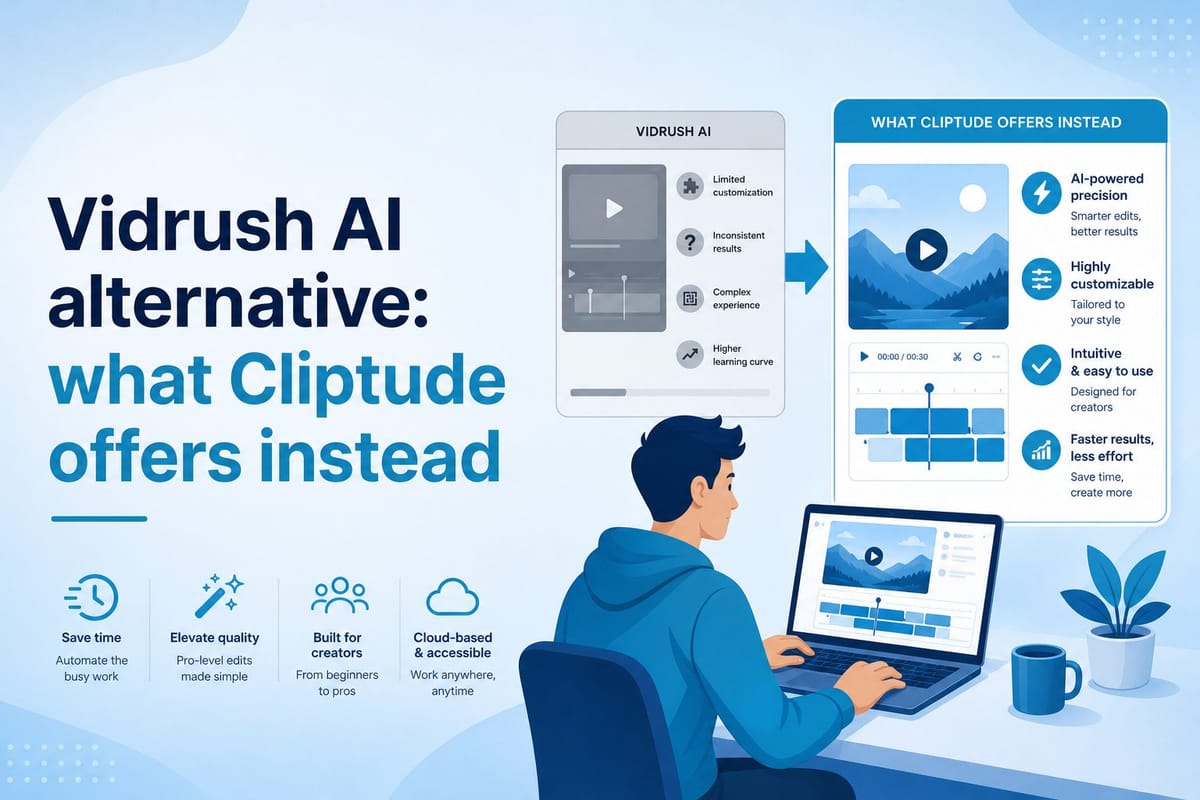
Table of contents
1. What creators actually want from an AI video tool
2. How Cliptude handles the full production pipeline
3. Why this matters if you are building a faceless channel or scaling content output
If you have been searching for a smarter way to produce videos without sitting in front of a camera or learning complex editing software, you have probably come across Vidrush AI at some point. It shows up in a lot of conversations about AI video tools, and for good reason: the idea of generating videos automatically from a prompt is genuinely appealing. But once you start digging into what different platforms actually deliver, the differences become clear pretty fast. Some tools handle one part of the pipeline well and leave you finishing the rest by hand. Others look impressive in demos but fall apart when you try to build a real publishing schedule around them. In this article, I want to walk you through what Cliptude offers instead, why it stands out as a serious alternative, and how it handles the things that matter most to creators who are building channels at scale.
What creators actually want from an AI video tool
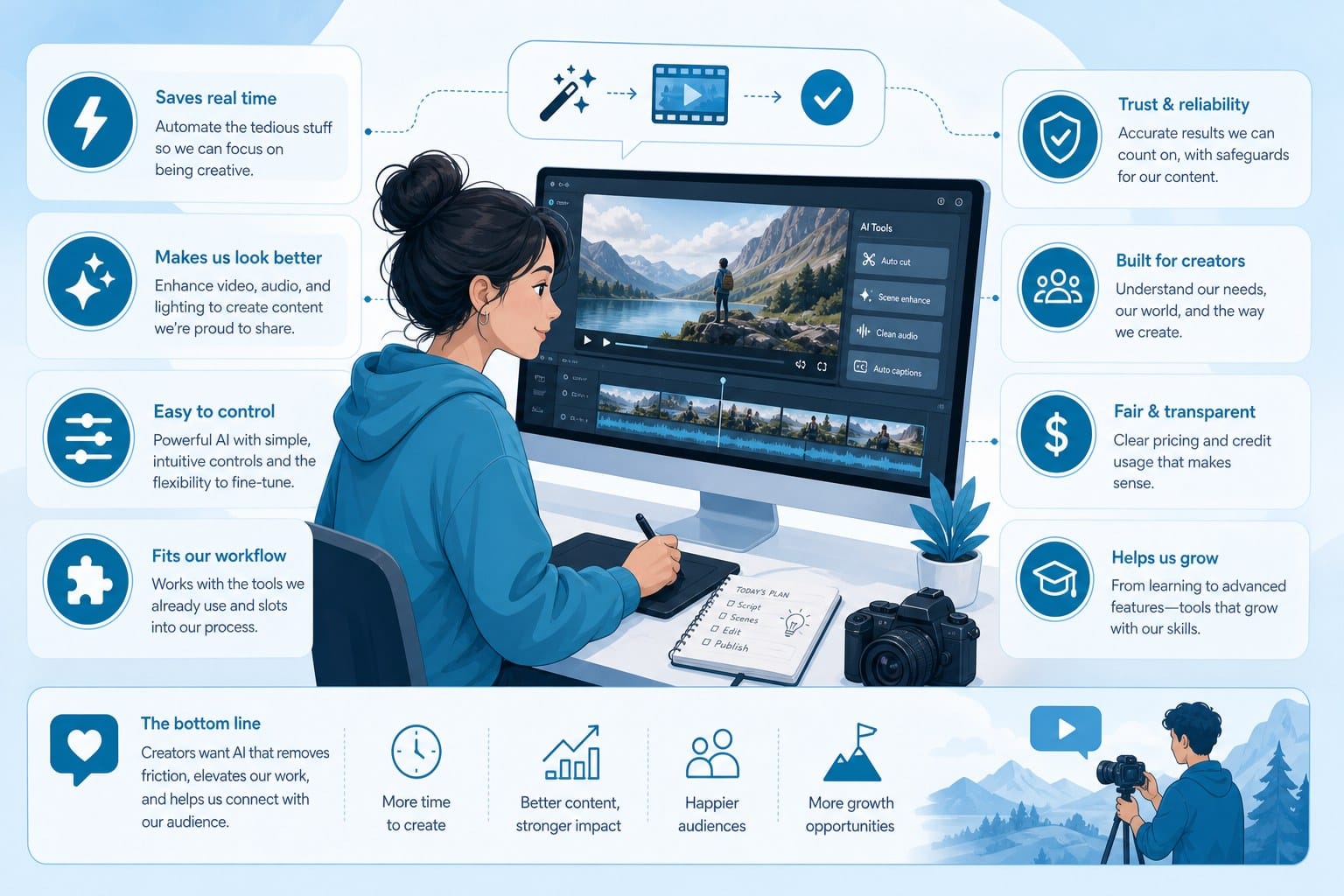
Before we compare anything, it helps to get specific about what the job actually is. Most creators who go looking for a Vidrush AI alternative are not just trying to make one video. They are trying to build a system. They want to put in a topic or a script and get back something that looks polished, sounds credible, and is ready to publish with as little manual cleanup as possible.
That is a much harder problem than it sounds. A lot of tools handle one or two parts of the pipeline well but leave you finishing the rest yourself. You might get decent footage sourcing but weak scripting. Or you might get a solid script but then have to hunt down your own b-roll, line up transitions, and sync the audio manually. The whole point of AI-powered video creation is supposed to be that the machine handles the heavy lifting from end to end. When it does not, you have not saved time so much as shifted the work around.
What most faceless YouTube channel creators and solo entrepreneurs say they need comes down to three things. First, they need content that actually makes sense as a video, not just a text article read aloud over stock footage. A good video has a hook, a rhythm, and a structure that holds attention through to the end. That is different from a good blog post, and the tool needs to understand that difference. Second, they need output that works across formats, because their audience is on YouTube Shorts, TikTok, and Instagram Reels all at once. Producing separate edits for each platform by hand erases most of the time savings the tool was supposed to provide. Third, they need to own what they produce. Full commercial rights, without having to read through three pages of fine print or worry about monetization restrictions showing up after the fact.
Those three requirements shape everything that follows. When I look at what Cliptude was built to do, all three of them are baked into the core product. They are not add-ons or features that unlock at a higher pricing tier. They are the baseline.
It is also worth acknowledging something that comes up constantly in this space: most creators are not video editors. They are writers, researchers, marketers, teachers, or subject matter experts who understand their audience deeply but have never opened a timeline editor in their lives. The tool they need has to work for them without requiring a crash course in post-production. If the learning curve is steep enough that you need to watch hours of tutorials before you can publish your first video, the tool is solving the wrong problem.
That is the baseline expectation going into this. A genuinely useful AI video platform does not just automate part of the process. It handles the whole thing well enough that someone without a production background can ship professional-looking content at volume. Keep that standard in mind as we go through what Cliptude actually does and how it compares to the alternatives you have probably already looked at.
One more thing worth naming here: the creator economy has gotten more competitive, not less. The channels that grow fastest are usually the ones that publish consistently, maintain quality across every upload, and cover topics thoroughly enough to own a niche rather than just graze it. That is a hard standard to meet if you are doing everything manually, and it is equally hard to meet if your tool handles half the job and hands the rest back to you. The gap between what you need and what the tool delivers ends up eating exactly the time you were trying to save. A full-pipeline approach is not a nice-to-have. For anyone trying to build something real, it is the requirement.
How Cliptude handles the full production pipeline
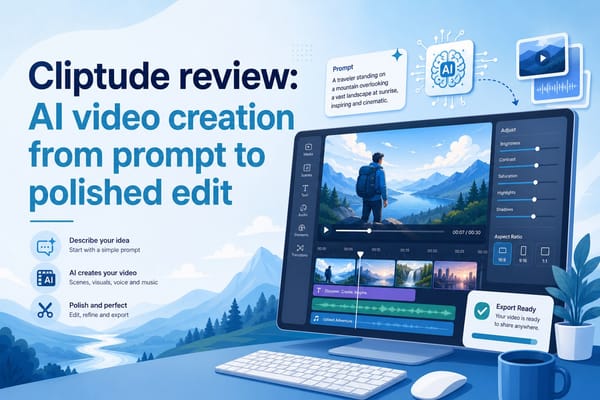
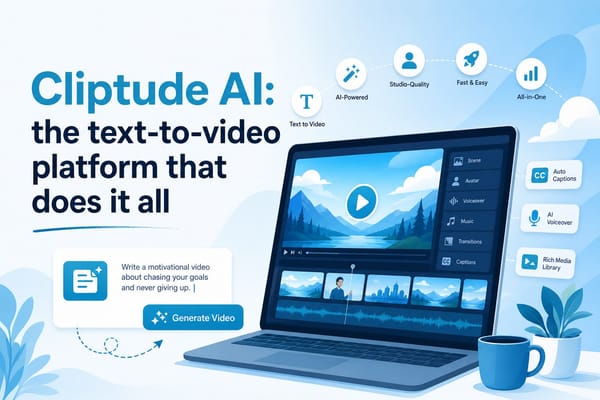
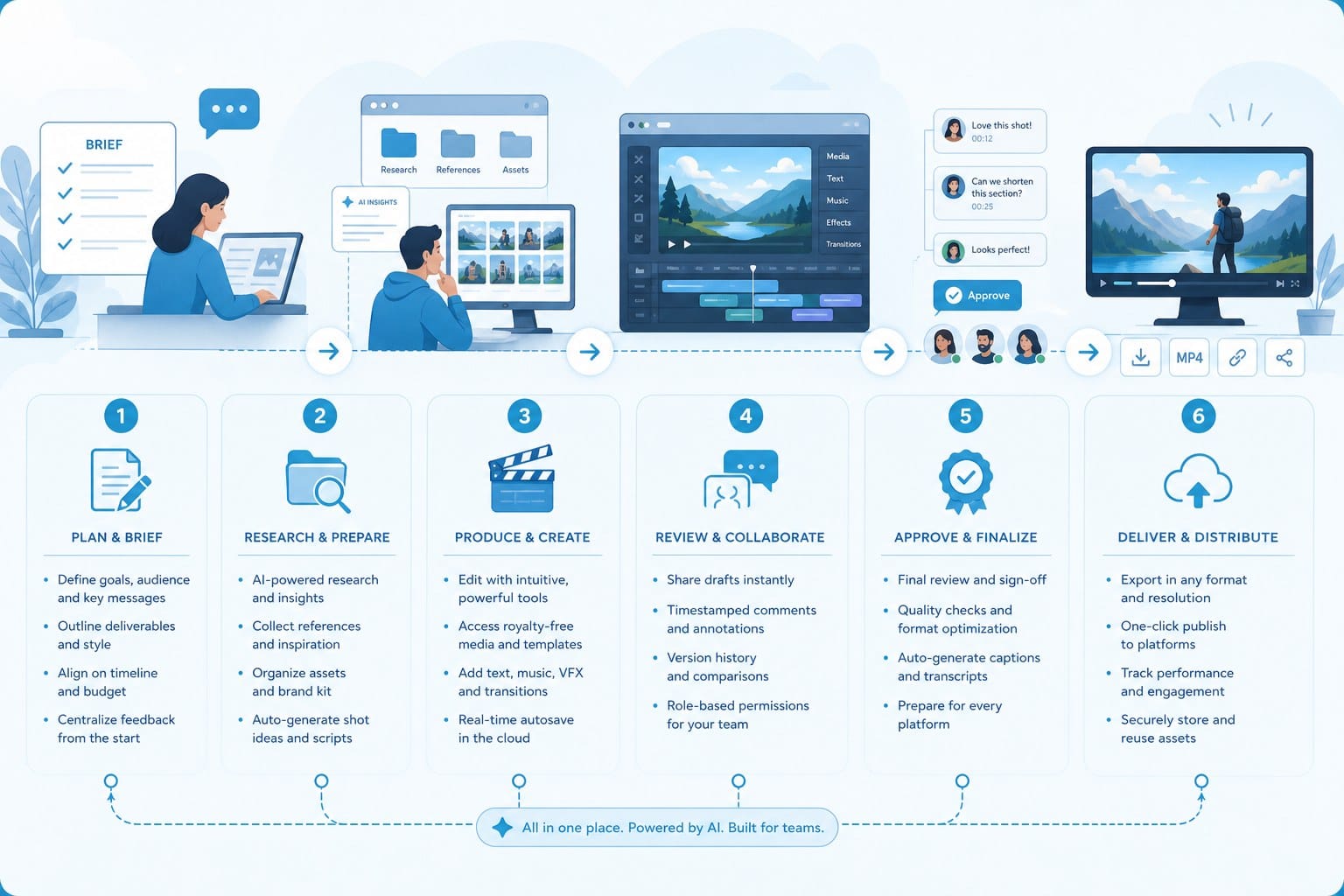
Cliptude takes what I would call a full-stack approach to AI video creation. When you drop in a prompt or a script, the platform does not just generate a slideshow with captions. It handles research, scripting, footage sourcing, motion graphics generation, and editing as a connected workflow rather than as separate steps you have to stitch together yourself. The output is a finished video, not a rough cut.
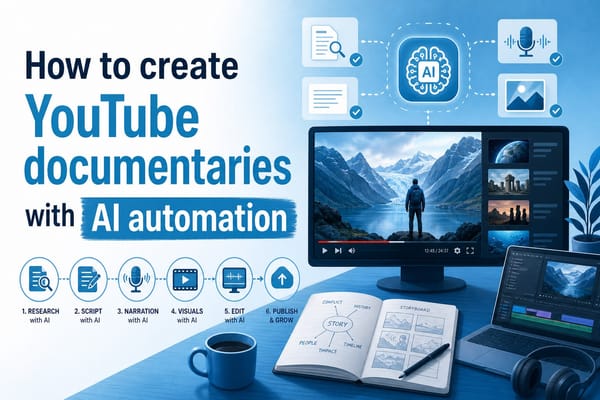
Here is what that looks like in practice. Say you want to produce a documentary-style video about the history of a major engineering project. You give Cliptude the topic. The platform researches it, builds a structured script that works as a narrative arc rather than a list of facts, pulls relevant footage from its library, and then edits that footage to match the pacing of the script. Motion graphics come in where they add clarity, not just as decoration. By the time the render is done, you have something that looks like a production team spent real time on it, even if the entire process took you twenty minutes.
For listicle content, which is one of the most popular formats for faceless YouTube channels, the workflow is just as clean. The platform understands that a listicle has a specific rhythm: hook, enumerated points with enough depth to justify each one, and a strong close that gives the viewer a reason to stay through the end. Cliptude builds to that structure automatically. You are not fighting the tool to get the format right or manually rewriting generated copy to fit the pacing a video requires.
Animation formats are another area where Cliptude earns its place. If you are making educational content or explainer videos, you have probably looked at whiteboard animation and stickman styles. These formats work especially well for abstract concepts where live footage would not tell the story clearly. Explaining how compound interest works, or walking through the mechanics of a historical battle, or breaking down a complex supply chain — these are all cases where animation communicates more than b-roll ever could. Cliptude supports these formats natively, which means you can pick the visual style that fits your content rather than being locked into a single look across everything you publish.
Shorts and vertical video are handled within the same workflow. The same prompt that produces a long-form YouTube video can be used to generate a short-form version optimized for TikTok or Instagram Reels. For creators who are cross-posting across platforms, that is a real time saver. You are not re-editing horizontal footage into vertical format by hand or paying a contractor to do it. The platform handles the reformatting as part of the process.
The footage sourcing deserves specific attention here. A lot of AI video tools pull from small, frequently recycled pools of stock footage and end up producing videos that look like they came out of the same machine — because they did. When your video looks like every other AI-generated video in your niche, it does not matter how good the script is. Viewers notice, and so does the algorithm. Cliptude sources footage more broadly and applies it contextually, meaning the clips you get are actually relevant to the point being made in the script rather than just vaguely related to the topic. That distinction matters more than most creators realize until they have watched a dozen AI-generated videos side by side and noticed how obvious the pattern is.
The credit-based pricing model is also worth understanding clearly. You pay for what you produce rather than committing to a monthly seat fee whether you publish ten videos that month or zero. For solo entrepreneurs and small media teams, usage-based pricing is genuinely practical. Your costs track your output, which makes it much easier to keep production profitable. If you have a slow month, your bill reflects that. If you go into production mode and publish aggressively, the pricing scales with you. That is a fundamentally different relationship with cost than the flat monthly subscription model that a lot of tools use.
Commercial rights are included across the board. Everything you produce on Cliptude is yours to monetize. You can run ads against it, license it to clients, use it in brand campaigns, or build an entire channel around it without worrying about whether the platform's terms of service are going to create problems down the road. For anyone who is serious about turning AI video into a business rather than a side experiment, that clarity matters. Ambiguous rights structures are a real problem in this space, and Cliptude's approach removes that concern from the equation entirely.
The editing layer is where a lot of competing platforms fall short. Generating a script and sourcing footage are relatively approachable problems. Actually cutting the footage to match the script, pacing the cuts to maintain viewer attention, and producing something that feels intentionally edited rather than algorithmically assembled — that is harder. Cliptude's editing output is designed to meet the standard of content that builds audiences, not just content that fills a publishing calendar. The difference shows up in retention metrics, which is ultimately the number that determines whether a channel grows.
If you are curious about how to make the most of the content you produce — including the metadata that helps YouTube surface your videos to the right audience — the YouTube description generator: a practical guide covers that in useful detail and is worth reading alongside this article. Strong video production only gets you so far if the description, tags, and title are not doing their part to put the video in front of the right viewers.
One more thing on the production pipeline: the research layer is what makes documentary and educational content viable at scale. These formats require background work to get right. The script needs to be accurate. The narrative needs to hold together across ten or fifteen minutes. The footage needs to illustrate the story rather than just accompany it as visual wallpaper. Doing that research manually for every upload is exhausting, and it is the step most creators start skipping first when volume picks up. Cliptude handles the research layer as part of the standard workflow, which means you are not sacrificing accuracy for speed or speed for accuracy. You are getting both.
Why this matters if you are building a faceless channel or scaling content output
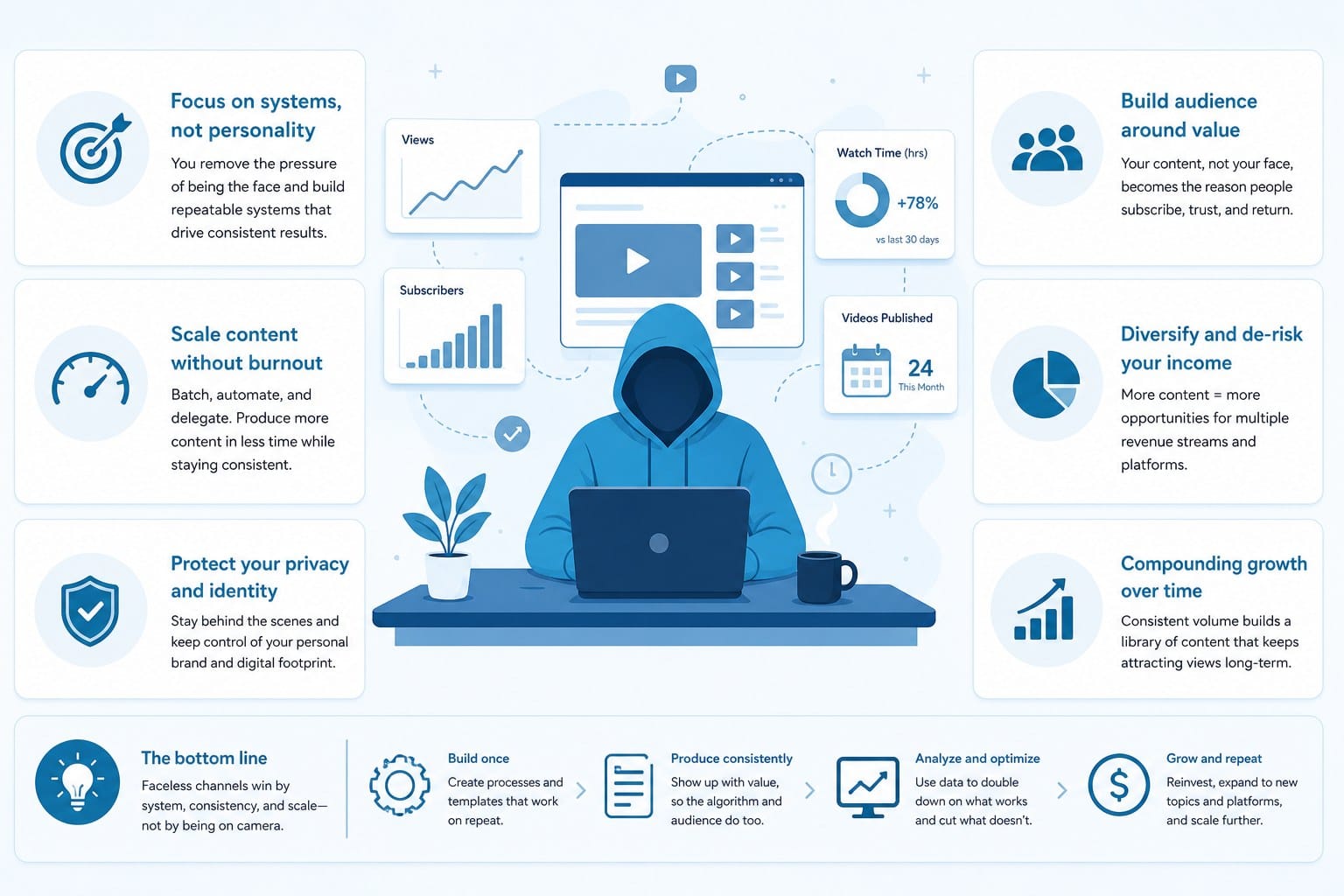
Faceless YouTube channels have become one of the most interesting business models for independent creators precisely because they remove the friction of being on camera. You do not need a studio setup, a ring light, or the willingness to perform for an audience. What you need is the ability to produce content that is genuinely useful or entertaining, consistently, at a volume that builds momentum. The model works because it separates the skill of content creation from the personal branding that traditional YouTube requires. But it only works if you can maintain quality and volume at the same time.
That is the real challenge. Publishing one video a week used to be enough to build an audience steadily. Now the channels that grow fastest are often the ones publishing three to five times a week across multiple formats, maintaining quality across every upload, and going deep enough on their niche to become a reliable resource rather than just another voice covering the same topics as everyone else. That standard is nearly impossible to meet manually, and it is also impossible to meet with a tool that handles part of the process and hands the rest back to you.
For documentary content — which tends to perform well in niches like history, science, technology, true crime, and geopolitics — the research-to-script-to-video pipeline Cliptude provides is especially valuable. Audiences for these formats are knowledgeable. They notice when a video gets details wrong or when the narrative structure is loose. They also notice when a video is clearly just stock footage and a voiceover with no real editorial judgment behind it. The bar is higher than it looks, and meeting it consistently requires more infrastructure than most solo creators can build manually.
For educational content creators using animation formats, the value proposition is slightly different. The challenge with whiteboard and stickman animation has always been that it requires a specific production skill set that most creators do not have and cannot easily acquire. Traditionally, you would hire a specialist, use a dedicated animation tool with a steep learning curve, or outsource the work to a production house. Cliptude folds animation capability into the same workflow you use for everything else. You are not managing a separate tool, a separate contractor, or a separate quality control process for animated content. It is part of the system.
Marketers who produce content for clients or for their own brands will find the commercial rights structure important for reasons beyond just YouTube monetization. When you are creating content at scale on behalf of a client, you need to be able to hand over the deliverable cleanly. That means full ownership, no platform watermarks, and no restrictions on how the content gets used. Cliptude's rights model is clean and straightforward, which removes a potential friction point from client relationships and keeps your deliverables professional.
The thumbnail and hook problem is also worth addressing directly, because it is one of the most common places where otherwise solid content operations break down. The best-produced video in the world does not grow a channel if nobody clicks on it. And click-through rate is determined almost entirely by the title and thumbnail before a single second of the video plays. If you want to get sharper at writing titles that drive clicks, the piece on how to use a clickbait text generator to boost video clicks is a useful companion read to this one. Pairing strong production with strong titles is how you actually convert views into subscribers and subscribers into a business.
For anyone who has been doing a more detailed side-by-side comparison of platforms in this space, the post on Vidrush alternative: meet Cliptude for AI video creation goes deeper on the specific feature comparison if that level of detail is helpful for your decision.
I also want to make a point about sustainability, because it does not come up enough in these conversations. Building a content operation that actually scales without burning you out requires tools that do the work, not tools that reduce the work by thirty percent and leave you doing the rest at eleven at night. The creators who build something durable over time are usually the ones who found a system early and stuck with it rather than constantly patching together half-solutions. Cliptude is built to be that system. The format support is broad enough to cover the content types that actually perform. The commercial rights are clean enough that you can monetize without second-guessing. The pricing tracks your output rather than charging you for capacity you are not using. And the production quality is designed for the kind of content that builds audiences rather than just filling a publish calendar.
For creators who have been searching for a Vidrush AI alternative and have not yet found something that handles the whole pipeline well, Cliptude is worth a close look. Not because it is the newest tool or the one with the most aggressive marketing, but because it was built around the actual job that serious content creators need to get done. That job is not making a single impressive demo video. It is building a reliable, repeatable system for producing content that performs — at volume, across formats, with full commercial rights, and without requiring you to become a video editor to use it.
The question of which AI video tool to use is really a question about what you are trying to build. If you are experimenting casually and quality is a secondary concern, almost any tool will work well enough. But if you are trying to build something real — a monetized YouTube channel, a content business, a reliable pipeline for client work — you need a tool that treats the full production process as its actual job rather than as a stretch goal it almost reaches. That is the standard Cliptude is built to meet, and from everything I have looked at in this space, it is the right standard to hold any serious AI video platform to.
Ready to take the next step?
If you are ready to see what full-pipeline AI video production looks like in practice, head to Cliptude.com and start your first project. You can go from a prompt to a polished, publish-ready video without touching a timeline editor, and every video you produce comes with full commercial rights. Try it and see how much faster your content operation can move.