
Vidrush alternative for AI-powered video creation

Table of contents
1. What vidrush offers and where it leaves gaps
2. How Cliptude handles the full video creation pipeline
3. Who should make the switch and how to get started
If you have been searching for a vidrush alternative that can handle the heavy lifting of video creation from start to finish, you are in the right place. Piecing together research, scripts, footage, and editing just to publish one video is exhausting, and the tools you use make a real difference in how fast you can grow a channel or scale a content business. This article walks you through what to look for in an AI video platform, where vidrush leaves certain creators behind, and why Cliptude deserves a serious look if you want a fully automated, end-to-end solution that does not require you to touch a single editing tool.
What vidrush offers and where it leaves gaps
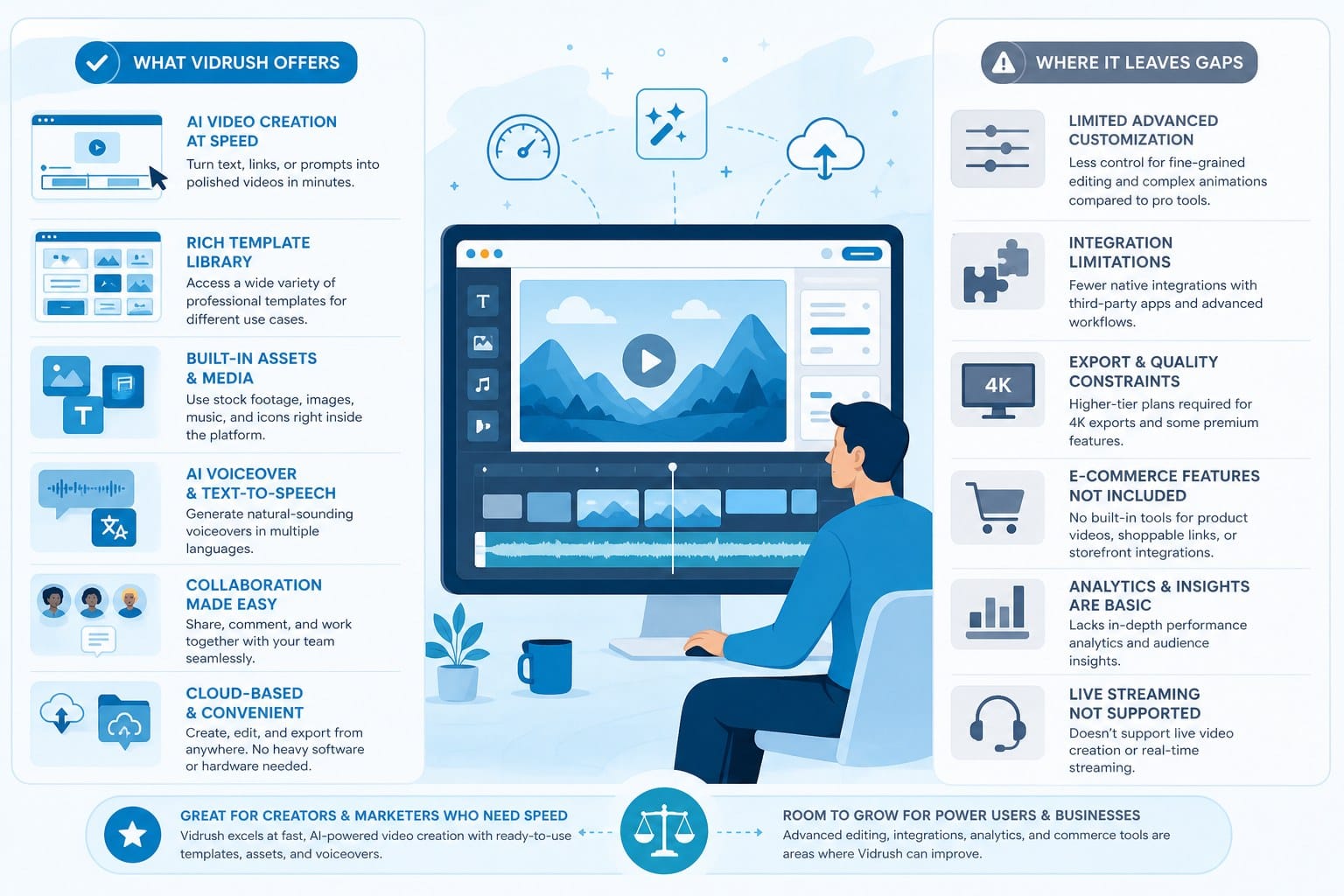
Vidrush is an AI video tool that helps creators generate videos without sitting in front of a camera. It appeals to faceless channel creators who want to publish content at scale without the hassle of filming themselves. The platform lets you input a topic or a script and get a video output, which is genuinely useful for people just starting out and testing whether AI-assisted production fits their workflow.
That said, vidrush has real limitations that become obvious once you push past basic video creation. The platform handles short-form content better than long-form documentary or educational videos. If you want to publish a ten-minute explainer, a detailed listicle, or a documentary-style video with a clear narrative arc, the output often feels thin. The footage can feel repetitive across multiple videos, and the motion graphics options are narrow enough that polished, animation-forward content is hard to achieve without going outside the tool entirely.
For creators focused on TikTok clips or very short YouTube Shorts, vidrush can get the job done. But the moment you need something with depth, such as custom animations, layered narration, or a proper three-act structure, the cracks start to show. You end up doing significant manual work on top of what the tool produces, which defeats the purpose of using AI automation in the first place. If you are spending two hours cleaning up and re-editing a video that an AI tool was supposed to build for you, the time savings disappear fast.
Pricing is another sticking point for creators who want to scale. When you are producing dozens of videos per month, you need a cost structure that makes sense relative to your output volume. Usage-based models can work well for high-volume creators, but only when the per-video cost stays reasonable and quality stays consistent. Creators who have hit vidrush's output ceiling often find that the cost-to-quality ratio stops making sense right around the time they need it to work the hardest.
Solo entrepreneurs and small media teams also run into a specific frustration: vidrush does not handle enough of the research side of production. You still have to determine your topic angle, gather facts, verify claims, and structure your script before the tool adds any real value. That is a meaningful time investment that compounds quickly when you are trying to run a content operation on your own without a dedicated research assistant or writing staff.
Think about what a typical production cycle looks like without strong AI research support. You identify a topic. You spend an hour reading articles, watching reference videos, and taking notes. You outline a script. You write the script, revise it, and then finally hand it off to a video tool. By that point, you have already spent three or four hours before the AI does anything. Vidrush picks up late in that chain, which means the automation benefit is limited to the back end of production. The front end, where most of the work actually lives, is still entirely on you.
A strong vidrush alternative needs to engage the full pipeline from the very beginning. It needs to handle research, scripting, footage sourcing, motion graphics, and editing in one place. It needs to produce content that fits multiple formats, from long-form YouTube videos to short social clips, without requiring you to reformat everything manually. And it needs pricing that scales with your actual output rather than charging you a flat fee regardless of how many videos you publish.
The other format limitation worth naming is animation. Many successful faceless YouTube channels rely on whiteboard-style explainers, stickman animations, and illustrated storytelling because those formats perform well with educational and informational audiences. Vidrush does not go deep on these formats, which means animation-forward creators either have to use a separate tool or produce content that does not match the visual style their audience expects. That kind of tool-switching adds friction and breaks the efficiency that AI video production is supposed to create.
None of this means vidrush is a bad product. It serves a specific audience at a specific stage of their content journey. But if you are past the beginner stage and looking to build a real content business, whether that means a monetized YouTube channel, a client-facing video agency, or a brand content operation, you need a platform that was built to handle serious production demands from end to end.
How Cliptude handles the full video creation pipeline
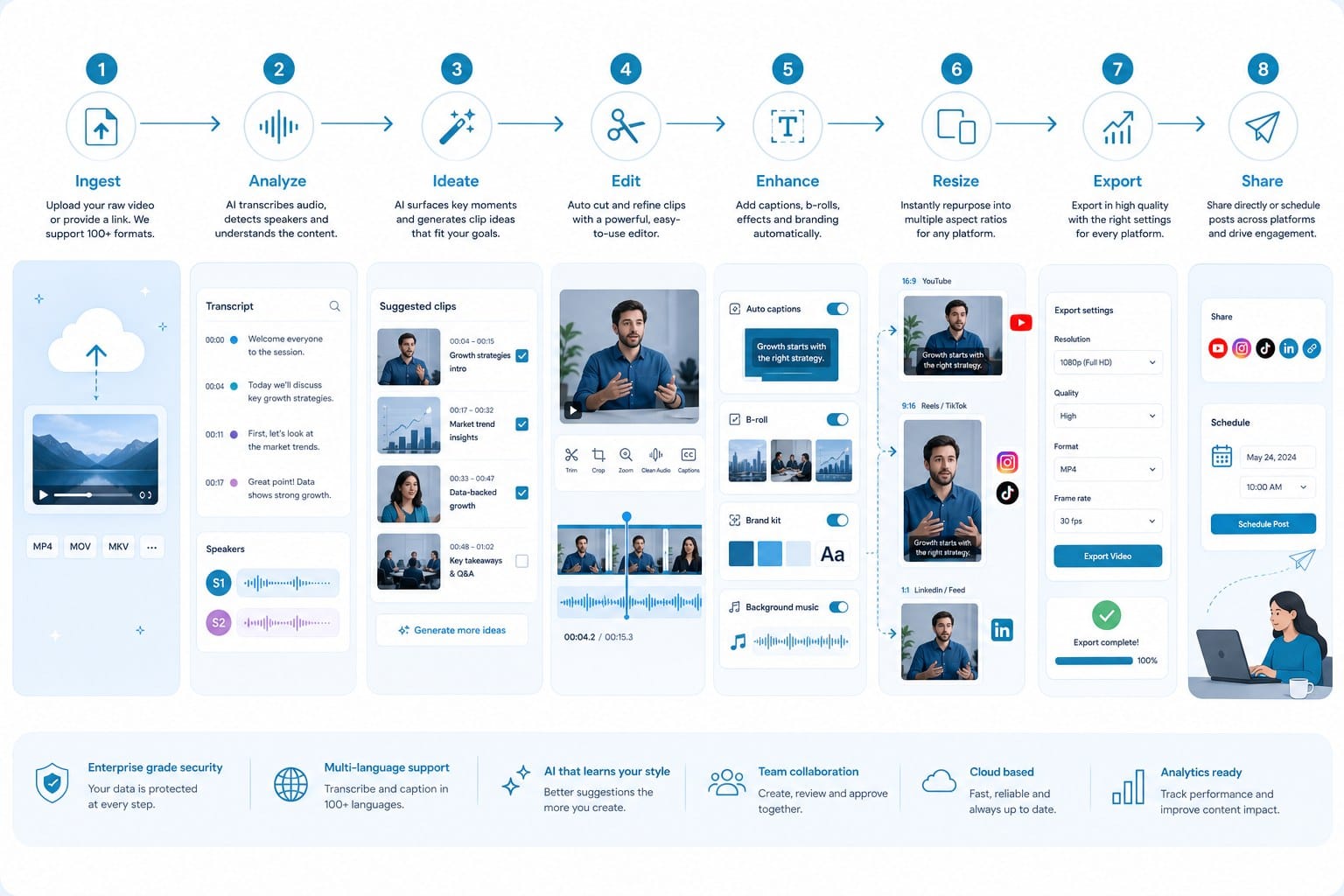
Cliptude is built around a direct idea: you should be able to go from a prompt or a rough concept to a polished, publish-ready video without opening a single editing tool. Every step in the production pipeline, research, scripting, footage sourcing, motion graphics, and final editing, happens automatically inside the platform. You are not offloading part of the work. You are offloading all of it.
Here is how the workflow actually runs. You start by entering a topic, a prompt, or a script draft. If you have something specific in mind, you can steer the content in that direction. If you just have a general idea, the platform can take it from there. Cliptude researches the subject automatically, pulling in the facts, context, and supporting details needed to build a credible, informative video. This is the step that most AI video tools skip entirely or handle poorly, and it is where serious educational and documentary creators spend the most time when working manually.
For a history channel covering a specific battle or political event, or a finance channel explaining a concept like dollar-cost averaging, the research phase matters enormously. Accuracy builds audience trust. When an AI platform can gather and synthesize that information before the script is ever written, you are getting a head start that changes how long the entire production takes. What used to take three or four hours of reading and note-taking now happens in the background while you move on to the next topic.
Once the research is done, Cliptude generates a script structured around the video format you have chosen. A YouTube listicle gets a different structure than a documentary-style narrative. A short Instagram Reel gets different pacing than a ten-minute explainer. The platform shapes the script to fit the format rather than giving you a generic block of text that you have to reformat yourself. Tone, pacing, and narrative architecture all adjust based on what you are making.
Footage sourcing happens automatically after the script is locked. This is one of the clearest areas where Cliptude separates itself from tools like vidrush. Instead of pulling in the same handful of stock clips that every other AI video tool cycles through, Cliptude builds a visual track that is matched intentionally to the content of each specific video. The footage feels like it belongs to the story rather than being pasted in from a generic library. Over dozens of videos, that difference in visual quality is noticeable and it matters for viewer retention.
Motion graphics are generated automatically as well. If you are making a whiteboard-style explainer or a stickman animation, the platform handles those visual elements without requiring you to open a design tool, purchase a template pack, or hire a motion graphics designer. For faceless YouTube channels focused on educational content, this capability is significant. You can produce animation-forward videos that look professional and fit the expectations of that format without any design background at all.
To understand what this kind of automated production looks like in practice, this breakdown of text to video: create polished YouTube content with AI goes into useful detail on the process and what makes it work for creators who are serious about output quality.
The editing step is fully automated too. Cliptude assembles everything into a finished video with proper pacing, transitions, and visual flow. The output is not a rough cut you have to clean up before publishing. It is a completed video ready to upload to YouTube, TikTok, Instagram Reels, or whichever platform your audience uses. For a solo creator or a small team, that final step being handled automatically is the difference between publishing ten videos a month and publishing two.
Commercial rights are fully included with Cliptude content. Every video you produce on the platform belongs to you commercially. You can monetize your YouTube channel, sell videos to clients, run them as paid ads, or use them in branded campaigns without navigating licensing restrictions. For creators and marketers building a content business rather than just a hobby channel, this is not a minor detail. It is a foundational requirement, and many AI video tools handle it poorly or leave it ambiguous.
Pricing follows a credit-based model, meaning you pay for what you actually produce. If you publish twenty videos one month and five the next, your cost reflects that difference. This structure makes far more sense for creators with variable publishing schedules than a flat subscription that charges you the same amount in slow months as in productive ones. It also means you can test the platform without committing to an ongoing plan before you know whether it fits your workflow.
Multilingual content is another area where Cliptude reaches beyond what most AI video tools attempt. Many platforms are built entirely around English-language content, which effectively locks out creators who are building audiences in other languages. Cliptude produces videos in languages including Kannada, Nepali, and others, which opens up significant opportunities for regional content creators and channel operators targeting non-English-speaking audiences.
The guide on how to create Kannada YouTube videos with AI shows exactly how this works in practice for a specific regional market. And for creators targeting South Asian audiences more broadly, this piece on Nepali content creation made easy with AI video tools illustrates what becomes possible when an AI video platform is actually built with language diversity in mind rather than treating it as an afterthought.
Language support matters more than it might seem at first. YouTube's fastest-growing audiences are not in the English-speaking world. Creators who can produce high-quality local-language content at scale have a real competitive advantage over channels that only publish in English. If you are targeting a regional market and your competitors are still producing content manually in that language, Cliptude gives you an output rate they cannot match without a full production team.
For faceless YouTube creators specifically, the platform covers the full range of formats you might want to explore. Long-form documentary content, listicle videos, educational explainers, animated shorts, music videos, and social media clips are all supported. You do not have to switch tools depending on what format you are making that week. One platform, one workflow, multiple output types. That kind of consistency matters when you are trying to maintain a publishing schedule across different content categories.
The practical effect of having research, scripting, footage, animation, and editing all inside one automated system is that production time collapses. A video that would take a solo creator six to eight hours to produce manually, from initial research through final export, can be completed in a fraction of that time. The exact time depends on complexity and length, but the compression is real and consistent. For any creator who is trying to grow their output without growing their team, that efficiency is the core value proposition.
Who should make the switch and how to get started
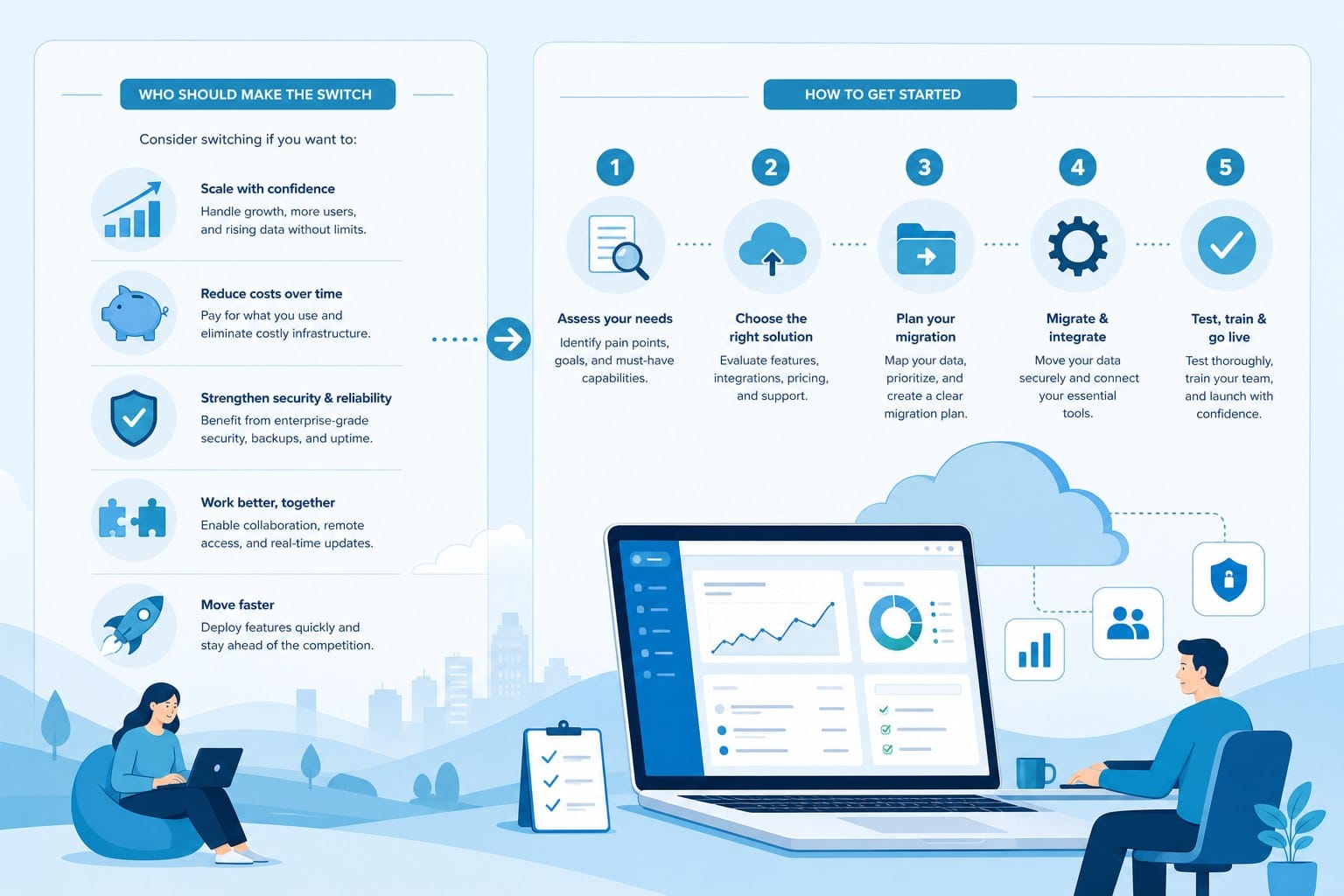
If vidrush is meeting your needs right now, that is worth acknowledging. A basic faceless channel publishing short clips a few times a week might not have hit the platform's ceiling yet. But there are several types of creators who consistently run into vidrush's limits and would see immediate improvements by moving to Cliptude.
Faceless YouTube channel operators who want to publish documentary and listicle content on a consistent schedule are the clearest fit. The ability to go from a prompt to a published video without touching editing software means you can hold a real publishing cadence without burning out or falling behind. If you are running a history channel, a true crime channel, a personal finance channel, a science channel, or any other niche that depends on research-heavy content, the automated research and scripting features alone reclaim hours per video that you are currently spending manually.
Consider what a consistent history channel looks like in practice. You want to publish three videos per week. Each video is eight to twelve minutes long. Each topic requires research into events, dates, figures, and context that your audience will fact-check in the comments. Under a manual workflow, those three videos require somewhere between fifteen and twenty-five hours of production work weekly, and that estimate is conservative if you are doing it properly. Under Cliptude's automated workflow, that same output becomes achievable without a team. You focus on topic selection and review. The platform handles everything else.
Content creators scaling across multiple platforms are another strong fit. If you are publishing to YouTube, TikTok, and Instagram Reels simultaneously, you need a tool that understands the differences between those formats and outputs accordingly. Cliptude produces content suited to each platform's requirements rather than generating a single version you have to resize, recut, and reformat manually for each destination. That format intelligence saves meaningful time at scale, especially if you are managing multiple channels or client accounts at once.
Solo entrepreneurs and small media teams who lack video editing skills will find the end-to-end automation genuinely practical rather than just convenient. You do not need to know how to use Premiere Pro, DaVinci Resolve, or any other editing application. You do not need to hire a freelance video editor. You do not need to buy motion graphics templates or learn After Effects. The platform handles all of it. For a one-person operation trying to compete with content teams that have dedicated editors and animators, that kind of capability gap is significant.
Educational content creators who want animation formats have a particularly compelling use case. Stickman animations, whiteboard-style explainers, and illustrated educational graphics are built into Cliptude's output options. If you are teaching a concept, whether it is a math principle, a historical process, a business strategy, or a scientific mechanism, and you want a visual format that helps viewers understand it clearly rather than just hear it narrated over stock footage, you can produce that kind of video without any animation background. The format that used to require hiring a specialist is now available to any creator through the platform.
Marketers and agencies producing video for clients have a strong use case as well. The full commercial rights included with Cliptude content mean you can deliver client videos, produce paid ad creative, and build out branded content libraries without any licensing complications. When a client asks for twenty short-form product explainers or a series of educational videos for their YouTube channel, you can fulfill that scope at a speed and price point that would be impossible with a traditional production workflow.
Getting started is intentionally simple. You go to the platform, enter your topic or script, choose your video format, and let the system build the video. The interface is designed around the idea that you should not need a tutorial or onboarding session to produce your first video. If you can describe what you want in one or two sentences, the platform can build the video from that description. The learning curve is minimal because the decision-making has been moved inside the automation.
The credit-based pricing means you are not locked into a subscription that does not match your actual publishing pace. You buy credits, use them to produce videos, and buy more when your output requires it. For creators with unpredictable schedules, seasonal publishing patterns, or a content business that is still finding its rhythm, that flexibility is a practical advantage over flat monthly plans.
Think about the long-term economics of your production time. Every hour you spend on research, scripting, editing, and motion graphics is an hour you are not spending on channel strategy, audience engagement, sponsor outreach, or generating new content ideas. The highest-leverage activities for a growing channel are rarely found inside a video editing timeline. When a tool like Cliptude compresses a multi-hour production process into a fraction of that time, you get those hours back and can redirect them toward the work that actually moves the needle on growth.
Over the course of a month, that time recapture is substantial. If you are currently spending thirty hours a month on video production and Cliptude cuts that to eight, you have twenty-two hours that can go toward strategy, audience building, monetization development, or simply publishing more content. That is not a marginal gain. It is a structural change in how your content business operates.
For creators who are currently using vidrush and feeling the friction of its limitations, whether that friction shows up in video quality, format variety, production speed, or the amount of manual work that still lands on your plate, Cliptude is the logical next step. It is built for creators who take their output seriously and want a platform that can scale with their ambitions rather than capping out when those ambitions grow.
The gap between what vidrush offers and what a truly end-to-end AI video platform delivers is wide enough to affect your results in visible ways. Cliptude closes that gap by automating the parts of production that consume the most time and asking the least from you in return. The research gets done. The script gets written. The footage gets sourced. The animations get built. The edit gets finished. You review, approve, and publish. That is what a complete AI video pipeline actually looks like when it is working properly.
Ready to take the next step?
Ready to see what a fully automated video production pipeline looks like in practice? Visit Cliptude, enter a prompt, choose your format, and watch the platform take it from research all the way through to a finished, publish-ready video without a single edit from your end.



