
Vidrush referral code alternatives and how Cliptude compares

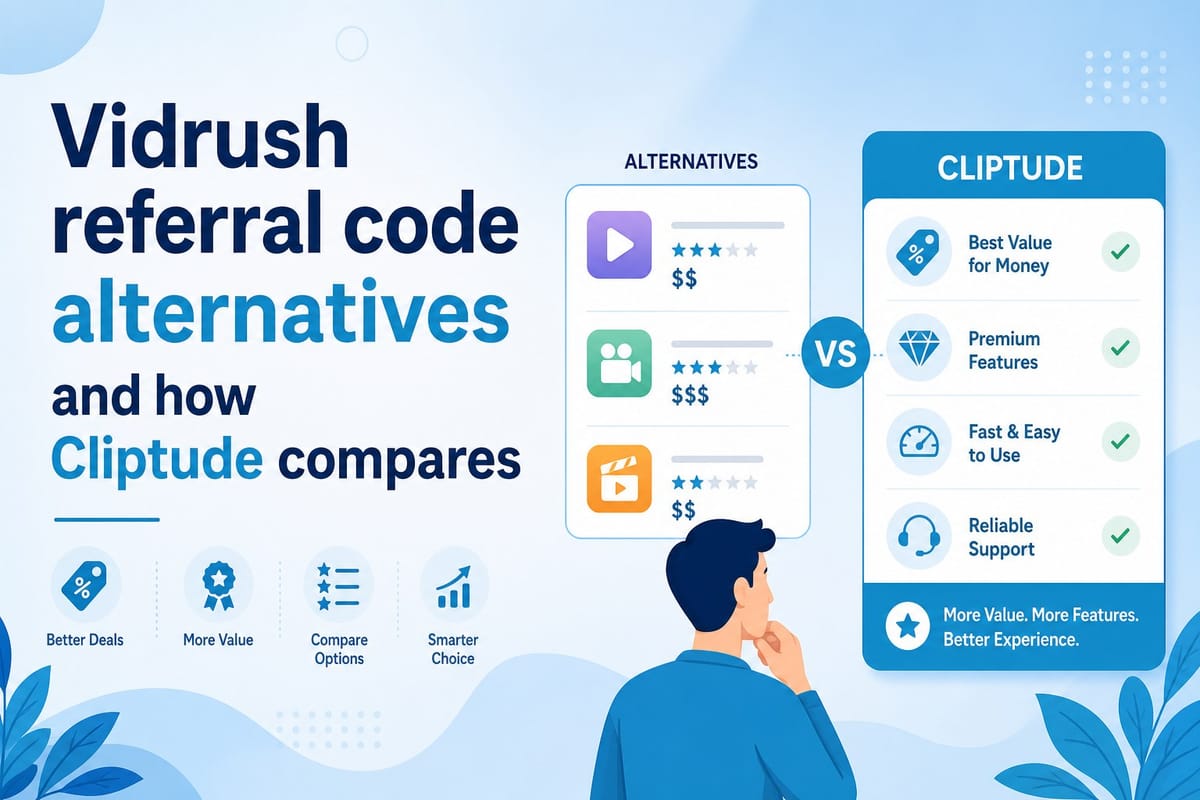
Table of contents
1. Why people search for a Vidrush referral code free deal
2. What real alternatives to Vidrush look like and what to compare
3. How Cliptude compares as an end-to-end AI video platform
If you have been searching for a vidrush referral code free deal, you are probably trying to cut costs on AI video creation. That makes sense. Video production is expensive, and any discount helps when you are building a faceless YouTube channel or scaling content for social media. But before you spend time hunting for coupon codes that may or may not work, it is worth asking a bigger question: is the platform itself the right fit for what you need? Referral codes expire, get deactivated, and often save less than the time you spent finding them. The smarter move is to evaluate what a platform actually does before chasing discounts. In this article, I walk through why people search for Vidrush referral codes, what the real alternatives look like, and how Cliptude compares as an end-to-end AI video solution.
Why people search for a Vidrush referral code free deal
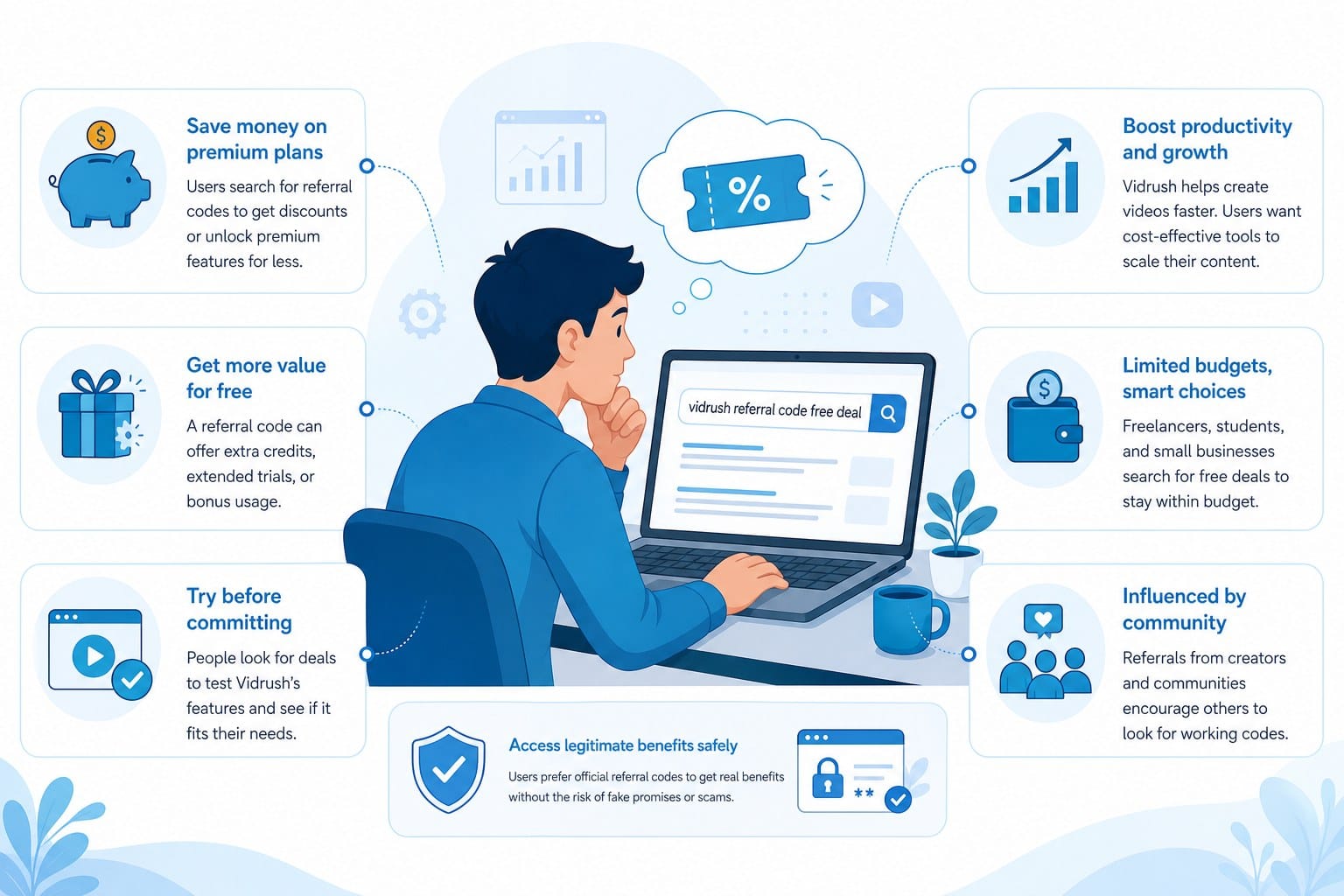
When someone searches for a referral code, they are usually trying to do one of two things. Either they want to try a product at a lower price before committing, or they have already decided to buy and they want to stretch their budget further. Both are reasonable goals, especially for solo creators who are watching every dollar.
Vidrush is a platform that lets creators generate AI-powered videos, and it has attracted a solid audience of faceless YouTube channel operators and content marketers. The referral code model is common in this space. A user shares their unique link, a new user signs up through it, and both sides get some kind of credit or discount. It is a straightforward growth mechanism that benefits the platform as much as the user.
The problem is that referral codes have a shelf life. They expire. They get shared so widely that platforms deactivate them. Sometimes the discount is meaningful. Often it amounts to a few dollars off a plan that still costs more than you expected. When you factor in the time you spend combing through forums, Reddit threads, and YouTube comment sections looking for a working code, the actual value you recover is usually lower than it looks on paper.
There is also a deeper issue that most creators do not think about until after they sign up. A referral code is a discount layered on top of a platform's existing pricing model. If that pricing model does not match how you actually work, a small discount does not fix the mismatch.
Here is a concrete example. Imagine you are a creator who produces videos in bursts, maybe ten videos in one heavy month and two the next. A flat monthly subscription with a referral discount still charges you the same amount regardless of output. You pay for capacity you do not use during slow months, and you feel the ceiling during heavy months if your plan has a video limit. That is not efficient for every workflow, and a one-time signup discount does not change the underlying structure.
I have watched a lot of creators go through this cycle. They find a referral code, sign up, use the platform for a month or two, and then realize the tool either does not do what they hoped or the pricing model does not suit them. Then they start looking for the next thing, and the cycle repeats. The smarter move is to spend a little more time upfront evaluating what a platform actually delivers before chasing discounts.
So what do most faceless YouTube creators and content teams actually need from an AI video tool? In my experience, they need a few core things.
First, they need a tool that handles research and scripting so they are not starting from a blank page every time. Staring at an empty document and trying to outline a twelve-minute video on a topic you are not an expert in is time-consuming and draining. A good AI video platform should take that burden off the table.
Second, they need access to quality footage or animation so the finished video looks professional. Stock footage libraries vary enormously in quality and relevance. A platform that sources footage automatically and matches it to the script saves hours of manual searching and licensing work.
Third, they need some kind of editing or assembly process that does not require hours of manual work in a timeline editor. Most faceless channel operators are not trained video editors. They should not have to become one just to publish consistent content.
Fourth, they need commercial rights to the content they produce. Monetizing that content is usually the whole point. If the platform is vague about ownership or restricts commercial use, that is a deal-breaker that no referral code can fix.
Not every platform delivers all four of those things. Some are strong on scripting but weak on footage. Some have good footage libraries but a clunky editing interface. Some do not clearly state whether you own what you produce. These details matter far more than whether you can find a referral code before checkout.
This is also where the search for a vidrush referral code free offer often leads creators to discover that what they actually need is a different tool entirely. When you start comparing features rather than just prices, the landscape looks completely different. You can get a fuller picture of how Vidrush and its alternatives stack up by reading this detailed breakdown: Vidrush referral code: Is Cliptude a better alternative.
The takeaway here is not that discounts are bad. It is that discounts are the wrong starting point. Start with what you need, find the platform that delivers it, and then see how the pricing compares. If a referral code exists for the right platform, great. But the platform selection should come first.
What real alternatives to Vidrush look like and what to compare
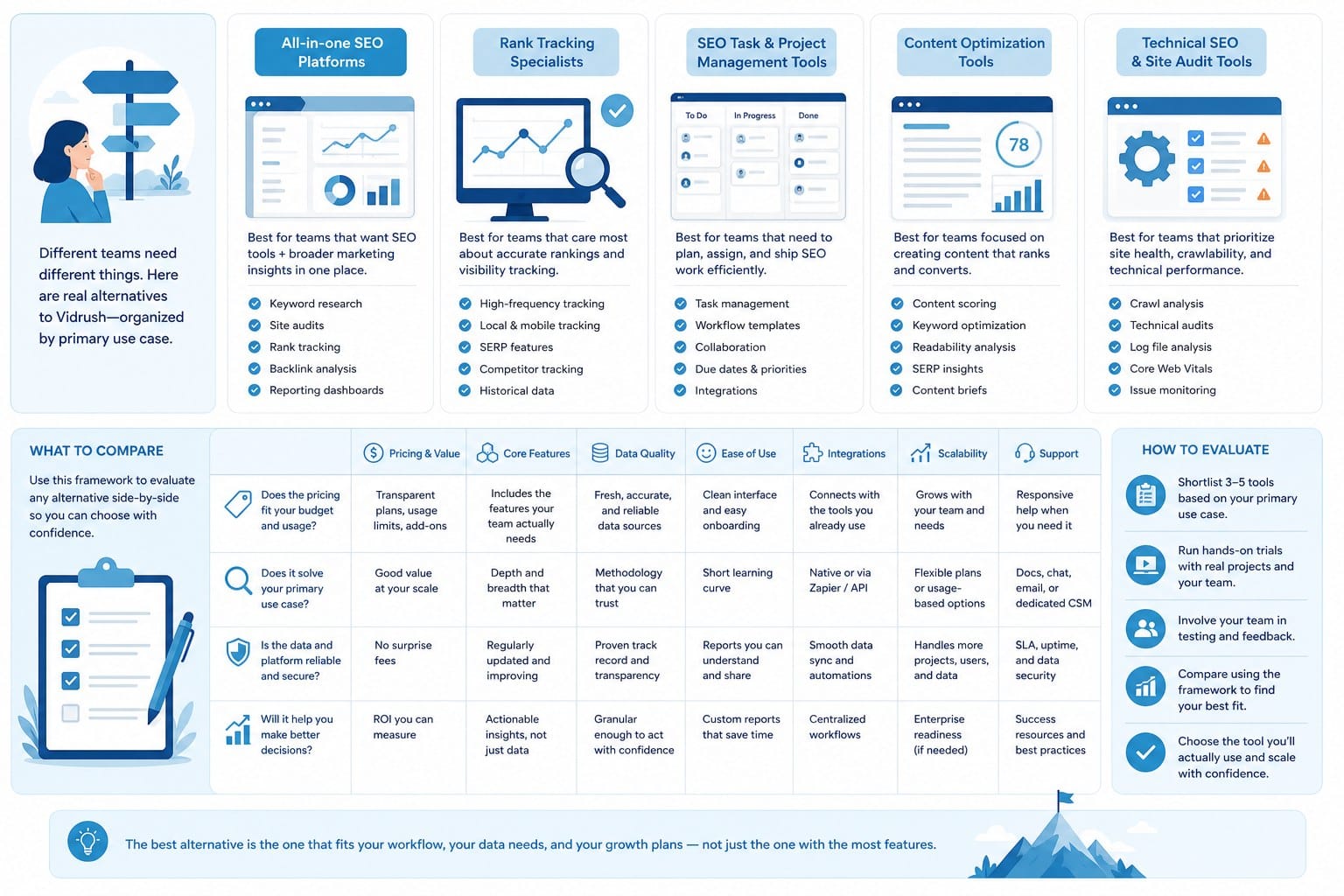
When you are evaluating AI video platforms as alternatives to Vidrush, the comparison should go well beyond price. Price matters, but it is one dimension of a multi-dimensional decision. Here is how I think about what actually separates good platforms from mediocre ones in this space.
How much of the production process does the platform automate?
This is the first and most important question. Some tools are essentially AI script writers with a basic slide builder attached. You still have to find footage, edit it, add voiceover, and handle motion graphics yourself. That is a significant amount of work. If you are a solo creator or a small team without editing skills, that gap is a real operational problem, not just a minor inconvenience.
A genuinely useful AI video platform should be able to take a topic or a script and carry it through to a finished, polished video with minimal manual intervention. That means automated research, scripted narration, sourced footage, motion graphics, and editing all happening inside one pipeline. The fewer steps you manage manually, the more videos you can produce in less time. Automation depth is not a luxury feature. It is the core value proposition of any platform in this category.
When you are comparing platforms, ask yourself: where does the automation stop, and where does the manual work begin? If the honest answer is that the platform gives you a script and a rough template and then you are on your own for everything else, that is not a full-stack AI video tool. It is a script assistant with a branded interface.
Does the platform support the content formats you actually need?
Not all AI video tools handle all formats well. If you are making long-form documentary content for YouTube, you need a platform that can manage longer scripts, multi-segment structures, and varied footage sources. A tool optimized for sixty-second clips is going to struggle with a fifteen-minute history deep dive.
If you are making YouTube Shorts or TikToks, you need fast turnaround and vertical video formatting. If you are making educational content, you might need whiteboard animation or stickman animation styles, which require a fundamentally different visual production approach than stock footage-based videos.
A platform that only does one or two of these formats well is going to limit your options as your channel grows. If you start a channel producing long-form content and later want to repurpose that content into Shorts, you do not want to discover that your platform cannot handle the conversion or that you need to pay for an entirely separate tool to do it.
Before you commit to any platform, map out the formats you expect to produce over the next twelve months, not just what you are making right now. Build that into your comparison.
Does the platform support the languages your audience speaks?
This factor gets overlooked constantly, and it is a significant missed opportunity for a lot of creators. A large and growing share of faceless YouTube creators are building channels in languages other than English. Hindi, Nepali, Spanish, Portuguese, Indonesian, and Arabic are all substantial YouTube markets with audiences that are hungry for content and less saturated with competitors than English-language niches.
If the platform you are considering only works well in English, you are cutting yourself off from those markets. Even if you are currently building an English-language channel, that limitation matters if you ever want to expand or diversify.
This is a technical challenge for AI video platforms, not just a localization checkbox. Generating a well-paced, natural-sounding script in Hindi requires different language model capabilities than generating one in English. The same goes for voiceover synthesis, which has to sound natural in the target language rather than like a robotic translation. If multilingual support matters to you, look for evidence that the platform has actually built for it, not just claimed it. Resources like Nepali AI video generator for YouTube: create videos automatically and How to make AI YouTube videos in Hindi with the right tools show what genuine multilingual support looks like in practice and why it matters for creators targeting those audiences.
Does the pricing structure match how you actually work?
Flat monthly subscriptions work well if your output is consistent month to month. But a lot of creators work in bursts. They might go heavy on production for a few weeks, then slow down while they focus on research, promotion, or other parts of their business. A flat subscription charges you the same whether you produce two videos or twenty, which means you either feel pressure to keep up production to justify the cost or you feel like you are wasting money during slow stretches.
Usage-based pricing tends to suit variable production patterns much better. You pay for what you actually create. If you have a slow month, your costs drop. If you have a heavy production month, you use more credits, but you have the output to show for it. For solo entrepreneurs and small teams managing tight budgets, that alignment between cost and output is genuinely valuable.
When you are looking at alternatives to Vidrush, map each platform against these four factors: automation depth, content type support, language options, and pricing structure. A referral code might save you ten or twenty dollars on signup. If the platform fails on any of these factors, that saving evaporates within the first month.
Commercial rights and scalability
Two more factors are worth adding to the comparison before you make a decision.
On commercial rights: if you are building a channel to monetize through YouTube ads, brand deals, or content licensing, you need to own the rights to what you produce. Some platforms are deliberately vague about this. You should be able to find a clear statement of commercial rights before you sign up, not buried in terms of service that require a lawyer to parse. If a platform cannot clearly tell you that you own what you make, that is a red flag.
On scalability: what works for one video a week may not work for five. What works for a single channel may not work for three. If you have ambitions to grow your output or expand to multiple channels, the tool you choose now should be able to support that without forcing you into an expensive enterprise tier every few months. Ask whether the platform can grow with you before you commit to it.
Taking all of these factors together, a systematic comparison will almost always reveal that the platform best suited to your needs is not necessarily the one with the easiest-to-find referral code. It is the one that handles the most of your production process, supports the formats and languages you need, prices itself to match your workflow, and gives you clean commercial rights to everything you produce.
How Cliptude compares as an end-to-end AI video platform
Cliptude is built around a straightforward idea: a creator should be able to go from a prompt or a script to a finished, polished video without needing video editing skills, a camera, or a production team. I want to be specific about what that means in practice, because broad claims in this space are common and often misleading.
The full production pipeline in one place
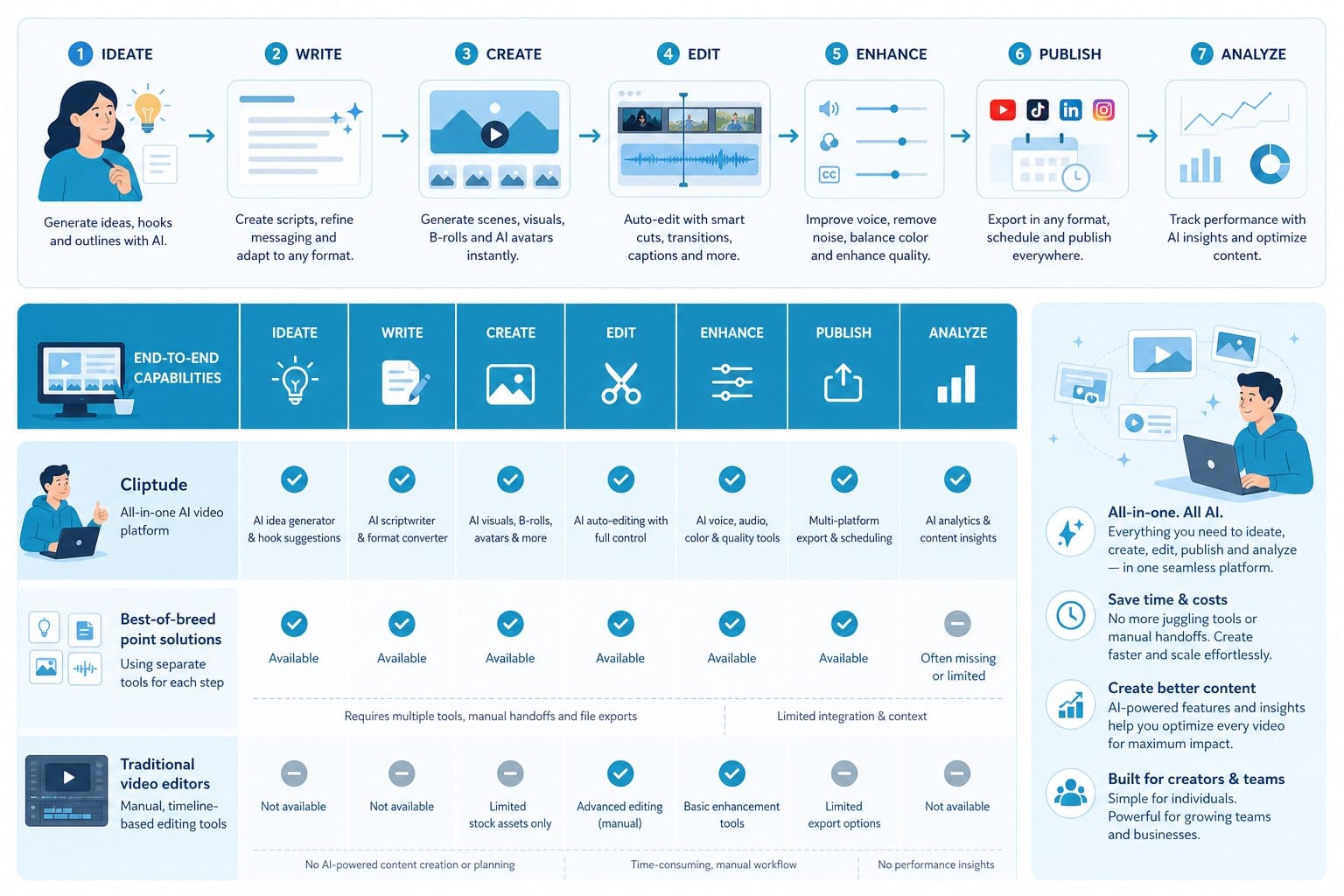
When you give Cliptude a prompt or a script, the platform handles research, scripting, footage sourcing, motion graphics, and editing automatically. That is the complete production pipeline integrated into a single workflow. You are not bouncing between a script tool, a stock footage library, an animation app, and a video editor. You are not managing four separate subscriptions or learning four separate interfaces.
For creators who are not trained video editors, this integration removes real barriers. Traditional video production requires knowledge of editing software, an eye for visual pacing, an understanding of motion graphics, and often a significant investment in stock footage licenses on top of the software costs. Cliptude removes those barriers by automating the technical work. You focus on the topic and the message. The platform handles the production.
For creators who are experienced editors, the integration saves time rather than replacing skill. The platform gets you to a finished draft automatically, and you can use that time on strategy, distribution, or producing more content rather than spending it on mechanical editing tasks.
Content type support across formats
Cliptude supports a wide range of video formats. Long-form YouTube documentaries and listicles are a core use case. These are often the bread and butter of faceless channels that build audiences around history, science, personal finance, technology, or true crime topics. A ten-to-twenty-minute video in one of these niches requires a structured script, consistent pacing, and well-matched footage throughout. The platform handles that automatically.
But the format support goes well beyond long-form. Cliptude also handles YouTube Shorts, TikTok videos, and Instagram Reels. Short-form content operates on a completely different production logic from long-form. It requires fast hooks, tighter pacing, vertical formatting, and rapid turnaround. A platform optimized only for long-form would struggle with this. Cliptude supports both, which means you can use a single platform to serve multiple content strategies.
For creators focused on educational or explainer content, Cliptude also supports whiteboard and stickman animation styles. These formats are popular in the educational YouTube space because they are visually engaging without requiring on-camera presence or complex production setups. A creator making videos about math, coding, history, or science can generate whiteboard animations automatically from a script, which significantly lowers the production barrier for this kind of content. Music video generation is also supported, which opens up a different set of creative and monetization possibilities.
The practical benefit of this range is that you do not have to switch platforms as your content strategy evolves. If you start with long-form YouTube videos and later decide to experiment with Shorts or educational animations, you are already on a platform that supports those formats. That is worth more than it sounds when you consider the time and money involved in migrating to a new tool.
Pricing structure built for variable output
Cliptude uses a usage-based credit model. This is a meaningful structural advantage for creators whose output varies from month to month, and it directly addresses the efficiency concern that drives most people to search for a vidrush referral code free deal in the first place.
Instead of paying a flat subscription whether you produce two videos or twenty, you pay based on what you actually create. During a slow month, your costs drop naturally. During a heavy production month, you use more credits, but you have the content output to show for it. That alignment between cost and output is more valuable over the long term than a one-time signup discount.
A referral code gets you a lower price for one billing cycle. A pricing model that matches your actual usage patterns keeps costs aligned with production over every billing cycle. That compounds significantly over the course of a year, especially for creators who have uneven production schedules.
For solo entrepreneurs and small media teams managing tight budgets, this kind of flexibility is not just convenient. It is often the difference between a tool that fits the business model and one that does not.
Language support for non-English markets
Cliptude supports video creation in multiple languages, which is a genuine competitive advantage for creators targeting non-English audiences. Hindi, Nepali, and other major languages are supported, which opens up significant opportunities in markets that are growing rapidly and are less saturated than English-language YouTube niches.
This is not a minor feature. Non-English YouTube markets have large and engaged audiences. Creators who build channels serving those audiences early tend to face less competition and can establish authority faster than they would in equivalent English-language niches. If you are a creator with the ability to serve a Hindi-speaking or Nepali-speaking audience, a platform that supports that language at the production level is a material advantage.
As noted earlier, multilingual support in AI video is a genuine technical challenge. Generating natural-sounding scripts and voiceovers in a language other than English requires meaningful investment in language model capabilities and voice synthesis. Platforms that have made that investment are qualitatively different from platforms that add a translation layer on top of English-first infrastructure.
Commercial rights and what they mean for monetization
Cliptude grants creators full commercial rights to the videos they produce on the platform. If you are building a monetized YouTube channel, producing content for brand clients, or licensing content to other businesses, you need that assurance clearly stated. It is not buried in terms of service. It is a straightforward part of how the platform operates.
For creators building any kind of content-based business, this matters enormously. The value of a YouTube channel is tied to the content on it. If you do not have clear commercial rights to that content, the asset you are building is on unstable ground. Full commercial ownership is a baseline requirement, and Cliptude meets it.
Who this platform is built for
Cliptude is designed for solo creators and small teams who want professional-quality video output without a professional production team behind them. It is also designed for marketers who need consistent video content across multiple formats and channels without the time or budget to produce each video manually.
For creators scaling output for TikTok, Instagram Reels, and YouTube Shorts, speed is critical. Short-form content works best when you can produce it consistently and frequently. Waiting days for a single video to be produced manually is not a viable strategy at scale. Automated production that compresses the timeline from days to hours changes what is possible for a small team.
For creators building faceless YouTube channels in long-form niches, the combination of automated scripting, footage sourcing, and editing means you can realistically sustain a publishing schedule that would otherwise require a full production team. That is the kind of operational leverage that compounds over time as your channel grows.
For marketers producing content for clients or building a content agency around AI video, the commercial rights, usage-based pricing, and format range mean Cliptude can fit into a variety of business models without forcing you into enterprise pricing tiers before you are ready.
The honest comparison
When I put all of this next to the experience of spending an afternoon hunting for a referral code on another platform, the contrast is clear. A referral code is a small, temporary saving. A platform that genuinely fits your workflow, supports the content types you need, prices itself to match your usage patterns, and hands you full commercial rights to your output is a structural advantage. That kind of fit compounds over time as you build your channel or your content business.
The goal of a referral code search is cost efficiency. Usage-based pricing, format flexibility, and a fully automated production pipeline deliver cost efficiency at a level that no one-time discount can match. The right tool for your workflow will save you far more time and money over the course of a year than any signup discount.
If you are evaluating Cliptude against other options, think about what you actually need to produce week over week, not just what is cheapest to sign up for. You can explore what Cliptude offers at https://cliptude.com.
Ready to take the next step?
If you are ready to stop searching for temporary discounts and start building a video production workflow that actually fits how you work, Cliptude is worth a closer look. The platform handles the full production pipeline, supports formats from long-form YouTube to Shorts and animations, prices based on what you actually use, and gives you full commercial rights to everything you create. Visit https://cliptude.com to see how it works and what it can do for your channel or content business.



