Vidrush referral codes explained and a better alternative

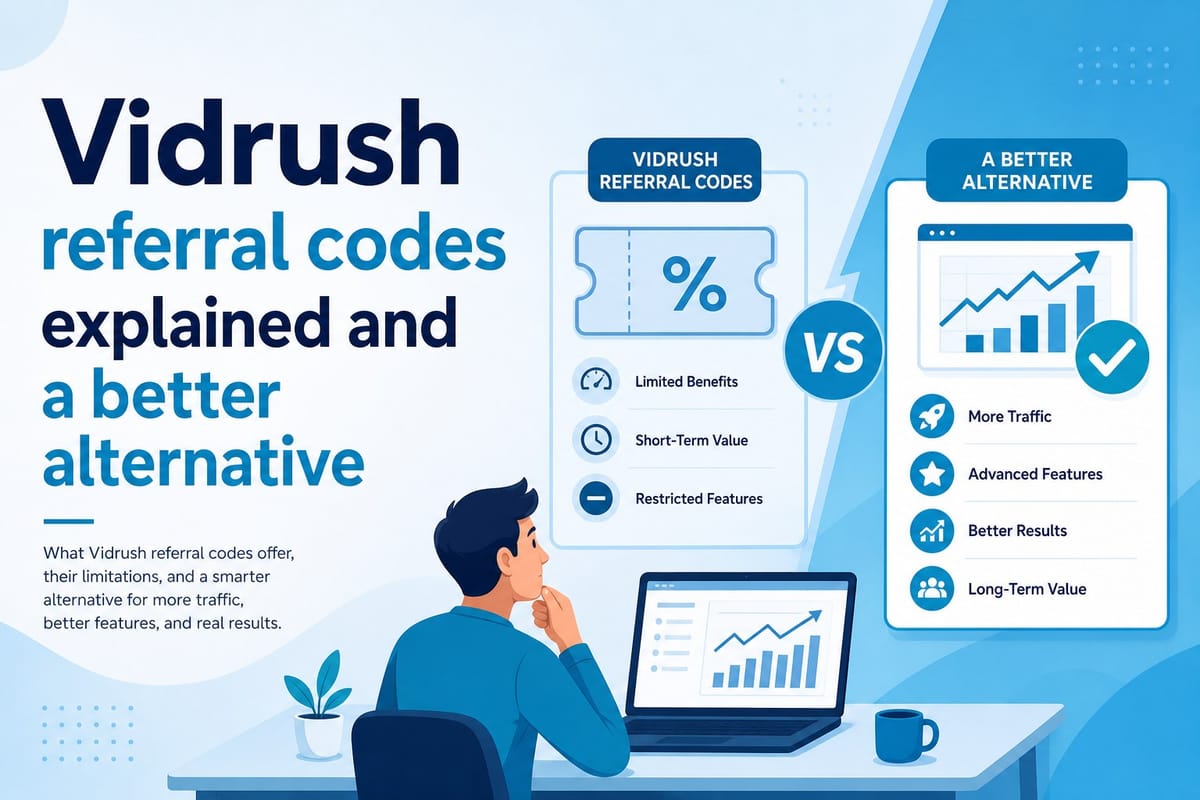
Table of contents
1. What a Vidrush referral code is and how the system actually works
2. Why the referral code hunt often signals a deeper concern about platform fit
3. A stronger alternative for faceless creators who are done searching for codes
If you have been searching for a vidrush referral code buy deal, you are not alone. Dozens of creators type that exact phrase into Google every week hoping to unlock a discount before they commit to a subscription. The problem is that most of what you find is outdated, broken, or simply not worth the time. This article walks you through what Vidrush referral codes actually are, why they rarely deliver the savings people expect, and why a growing number of faceless YouTube creators are quietly moving to a different platform altogether.
What a Vidrush referral code is and how the system actually works
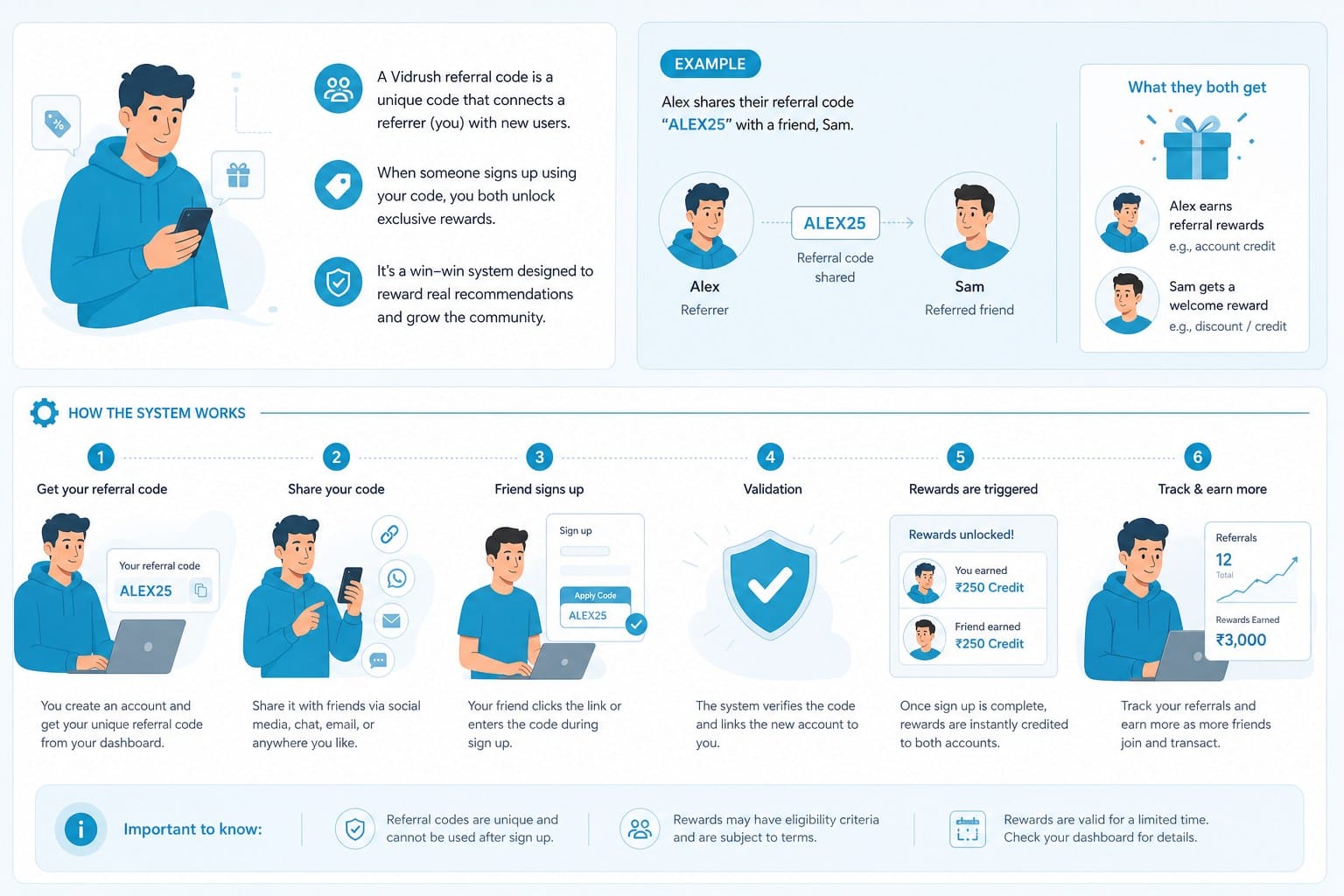
Vidrush is an AI-assisted video creation tool that has built a community of creators who want to produce faceless YouTube content without sitting in front of a camera. Like most software-as-a-service products, it uses a referral program to grow its user base. The idea is simple: an existing member shares a personal referral link or code, a new user signs up through that link, and both people receive some kind of reward.
In practice, the rewards vary a lot. Some referral programs pay the referring user a small cash commission. Others give the new user a percentage off their first month. A few platforms do both. Vidrush has run promotions along these lines, but the details change often enough that any specific discount number written here today could be wrong by next week. That built-in instability is the first real problem with the vidrush referral code buy search.
The internet is full of blog posts, YouTube comments, and Reddit threads listing codes like VID10 or RUSH20. Most of those codes were tied to limited-time promotions that expired months or even years ago. When you try them at checkout, nothing happens. You end up spending twenty minutes hunting for a discount that no longer exists, which is a frustrating way to start your relationship with any tool.
The second problem is the source of the codes themselves. Affiliate marketers and coupon aggregator sites often publish Vidrush referral links that are personal to the affiliate. When you click those links, the affiliate earns a commission whether you find value in the product or not. That is not inherently dishonest, but it does mean the person sharing the code has a financial reason to make the platform sound better than it might actually be for your specific workflow.
Referral programs are a normal part of how software companies grow. There is nothing wrong with using one when it genuinely works. The problem is that the search for a vidrush referral code buy deal often leads creators through a rabbit hole that wastes real time and sometimes steers them toward platforms that are not the right fit for what they want to build.
So what are creators actually building when they look at tools like Vidrush? Most fall into a few clear categories. Some run faceless documentary channels covering history, true crime, or science. Others produce listicle videos like top-ten countdowns. A smaller group focuses on animated explainers or whiteboard-style educational content. Each of these formats has different production requirements, and not every AI video tool handles all of them equally well. A tool that excels at punchy sixty-second Shorts may struggle badly with a twelve-minute historical documentary, and vice versa.
If you want to understand more about how Vidrush approaches video automation in general, the post Vid rush: how to create videos faster with AI automation gives a solid overview of what the platform does and where it fits in the broader AI video landscape. That context is worth having before you decide whether a referral discount would even make the tool worth trying.
One more thing worth noting about the referral code search: many of the communities where these codes get shared, especially on Reddit, have grown skeptical of them. Creators who have already cycled through hunting for codes, finding expired ones, and then paying full price anyway tend to ask a different question. Instead of asking where to find a code, they start asking whether the platform itself is worth the full subscription price. That shift in thinking is significant, and it points toward the deeper issue behind the search in the first place.
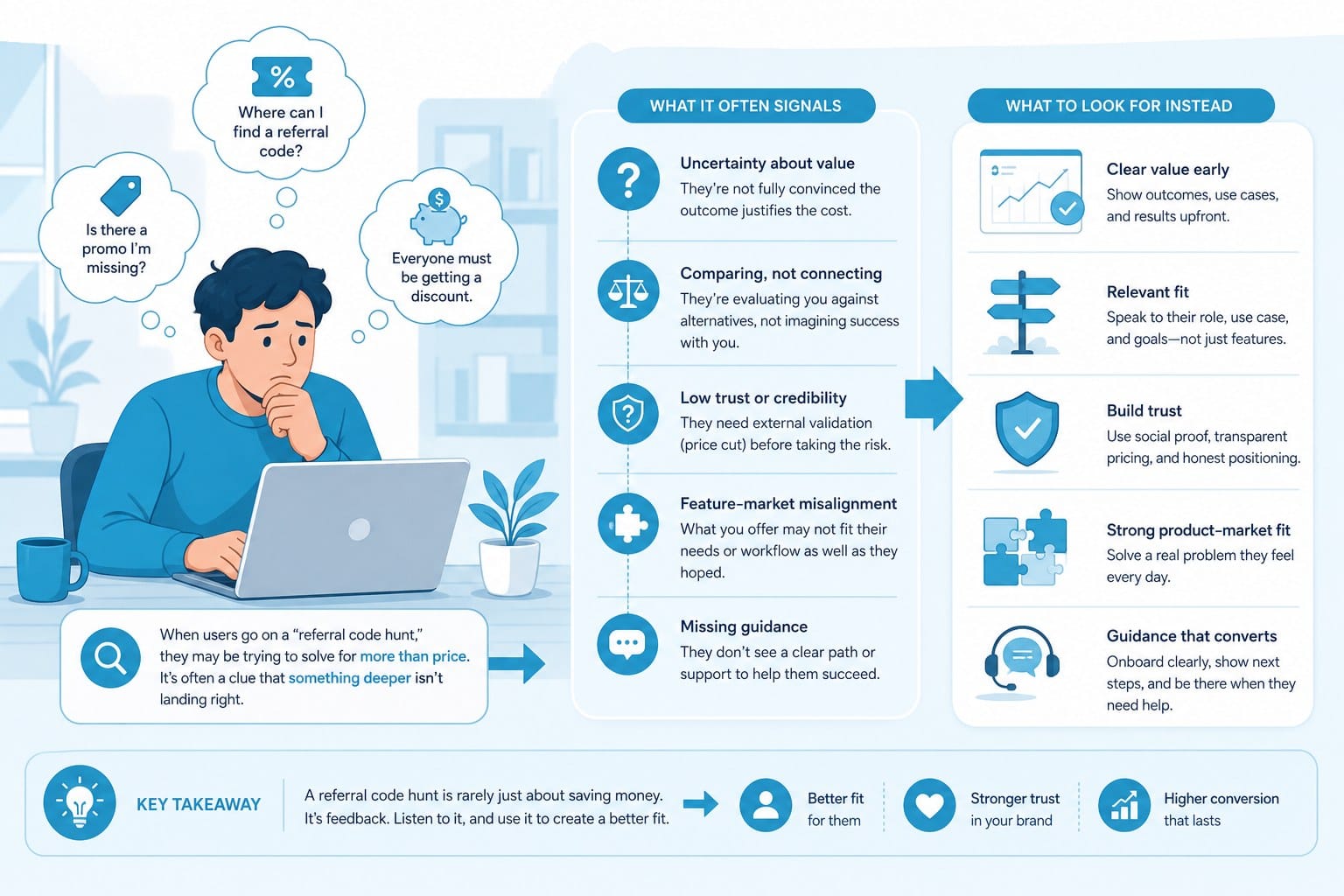
The referral code hunt is rarely just about money. It is about uncertainty. When you are not fully convinced a tool will solve your specific production problem, a discount feels like a way to lower the risk of finding out you were wrong. Understanding that dynamic is the first step toward making a smarter decision about which platform actually deserves your time and budget.
It is also worth pointing out that the AI video space has changed rapidly over the past two years. Tools that were category leaders in 2022 have been overtaken by platforms that offer fuller production pipelines, better footage libraries, or more flexible pricing. A referral code that gets you into an older platform at a discount may still leave you behind creators who chose a more capable tool at full price. The discount becomes irrelevant when the underlying product does not keep up with what the market now offers.
Finally, there is the question of what happens after the discounted period ends. Many referral code offers apply only to the first month or the first payment. After that, you are on the standard pricing. If the tool was only attractive at a discount, you now face the choice of paying full price for something that was borderline at a reduced rate or canceling and starting your search over again. That cycle costs more time than the original discount saved.
Why the referral code hunt often signals a deeper concern about platform fit
When you look at the pattern of how people search for vidrush referral code buy terms, something interesting emerges. The search usually happens at a specific moment: after someone has already spent time on the platform or watched demos, feels uncertain about the value, and is looking for a price reduction to lower the risk of committing. The code hunt is often a proxy for a more honest question, which is whether the platform is worth paying for at all.
That is not a criticism of Vidrush specifically. It is a pattern that shows up with almost every subscription software tool in the creator economy. The referral or discount code becomes a psychological way to make a purchase feel safer. If you can get twenty percent off, the downside of being wrong feels smaller.
But here is the practical reality. If a platform is not the right fit for your workflow, a discount does not fix that. You end up paying less for something that still does not do what you need. And in the AI video space, the gap between what different tools actually produce can be enormous.
Consider a concrete example. You want to build a faceless YouTube channel focused on historical documentaries. You need a tool that can research a topic accurately, write a compelling and structured script, source relevant licensed footage, add motion graphics, and deliver a polished video you could reasonably post without spending hours in an editor afterward. That is a complex production pipeline with multiple distinct stages. Some AI video tools handle one or two of those stages and leave the rest entirely to you. Others claim to do all of it but produce output that looks generic, poorly synced, or robotic in a way that viewers notice immediately.
Creators who have gone through this process and written honestly about it on Reddit often describe a recognizable pattern. They try a tool, find it handles certain parts of the workflow reasonably well but falls apart at others, and then start looking for alternatives. The Reddit community around AI video tools has become one of the more reliable sources of real-world feedback for exactly this reason, because the people posting there have no financial incentive to be positive.
The post Vidrush Reddit reviews: what creators are actually saying pulls together a lot of that community feedback in one place. Reading through it gives you a much clearer picture of where the platform succeeds and where creators run into genuine frustration than any marketing page will. The patterns in that feedback point directly to the production stages where creators feel unsupported and end up doing manual work they expected the tool to handle.
One concern that comes up repeatedly in those Reddit discussions is output quality at scale. A lot of faceless channel creators are not trying to make one great video. They are trying to build a content machine that produces several videos a week without requiring constant hands-on production work. When you start thinking at that volume, the pricing model of a platform matters just as much as its feature set.
Flat monthly subscription pricing works well if you know in advance how many videos you will produce each month and that number stays fairly consistent. But many creators have variable output. Some months they go hard and produce fifteen videos. Other months they produce three. A flat subscription means you are overpaying during slow months and potentially running into production limits during busy ones. Neither situation is good for building a sustainable content operation.
Usage-based credit pricing, where you pay for what you actually produce, tends to work better for creators with uneven output. It also makes it much easier to test a platform seriously without committing to a full month of subscription costs just to run a real evaluation. When the cost of a genuine test is low, you can make a smarter decision about long-term commitment.
The search for a referral code is often an attempt to simulate that lower entry cost. But if a platform offered usage-based pricing from the start, the test would be affordable without needing a code at all. That difference in pricing philosophy turns out to matter quite a bit when you are trying to figure out whether a tool fits your actual production needs before you commit real money.
Another issue that surfaces in creator communities is commercial rights clarity. If you are building a monetized YouTube channel, you need to be confident that the footage, music, and graphics in your videos are cleared for commercial use. Some platforms are vague about this in their terms. Others require you to read through lengthy legal documents to figure out what you actually own and what restrictions apply after purchase. Creators who are serious about monetization and long-term channel growth prioritize platforms that are explicit about commercial rights from the very beginning, before they have invested weeks of work building on top of a tool.
The combination of pricing uncertainty, platform fit questions, commercial rights ambiguity, and the general noise around referral codes creates a situation where the real decision a creator needs to make gets buried under tactical distraction. The tactical question is: can I find a code that saves me ten dollars this month? The strategic question is: which platform will actually help me build a channel that earns money a year from now? Spending energy on the first question often comes at the expense of answering the second one clearly.
There is also a quality ceiling issue that does not get discussed enough. Some AI video tools are built primarily to get content out quickly, and the output reflects that priority. The visuals may be passable, the script coherent enough, and the edit technically functional, but the result does not feel like something a viewer would choose to watch again or recommend. YouTube's algorithm favors watch time and engagement, not just upload frequency. A tool that helps you publish five mediocre videos a week may actually produce worse channel growth than a tool that helps you publish two genuinely good ones. The production pipeline quality matters for channel outcomes, not just for your personal satisfaction with the tool.
When creators start thinking through all of these layers, the referral code conversation becomes less interesting. The real question becomes which platform offers the most complete production pipeline, the clearest commercial rights, the most honest pricing model, and the best track record with channels similar to the one you are trying to build.
A stronger alternative for faceless creators who are done searching for codes
After going through the referral code search and finding mostly expired discounts and affiliate noise, a lot of creators land at the same question: what platform actually does what I need it to do without requiring me to hunt for workarounds before I even start?
That is where Cliptude enters the picture. The feature set matters more than any discount code when you are choosing a platform to build your channel on, so it is worth going through what the platform actually does in practical terms rather than in marketing language.
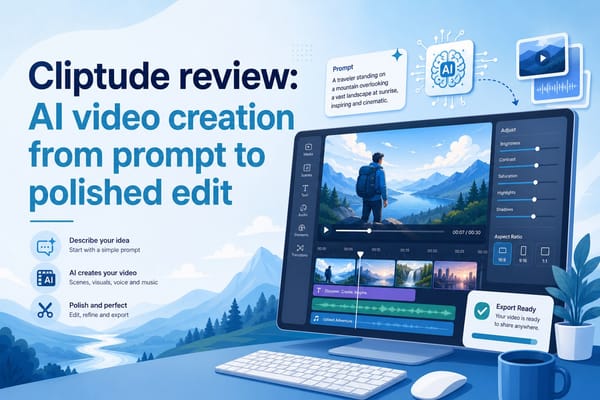
Cliptude is an AI-powered text-to-video platform built around a full production pipeline. You start with either a simple topic prompt or a complete script you have already written, and the system takes it from there. It researches the topic to ensure accuracy and depth, writes or refines the script, sources relevant footage from licensed libraries, generates motion graphics to add visual polish, and edits the whole thing into a finished video ready for upload. The output formats include long-form documentary-style videos, YouTube Shorts, TikTok clips, Instagram Reels, animated explainers, stickman animations, whiteboard videos, and music videos.
For a faceless channel creator who wants to produce documentary or listicle content consistently, that full pipeline matters enormously. You are not getting a tool that writes a script and then leaves you to figure out the visuals on your own. You are getting a tool that handles the entire production from a single input, which is a fundamentally different kind of time commitment.
Let me be specific about what that looks like in practice. Suppose you want to make a ten-minute video about the history of the space race. You type in that prompt or paste a script you have already drafted. Cliptude researches the topic to make sure the script is accurate and covers the subject with enough depth to hold a viewer's attention. It then matches footage and archival images to each segment of the script, adds motion graphics to make transitions and data visualizations look intentional rather than thrown together, and delivers a finished video file you can upload directly to YouTube. The whole process takes a fraction of the time it would take to do any of those steps manually, even if you had the skills to do all of them yourself.
For creators who focus on animated formats, the same pipeline applies but with a different visual output. Whiteboard animations and stickman-style videos perform well in educational niches because they feel deliberate and clear rather than like footage someone stitched together without a strong visual concept. Cliptude supports these formats natively, which means you do not need to switch tools depending on what style a particular video calls for. Your entire channel output, across multiple formats, can come from a single production environment.
The pricing model is usage-based credits. You buy credits and spend them as you produce videos. When you are in a high-output month, you buy more. When production slows down, you are not paying for capacity you are not using. This is fundamentally different from the flat subscription model that makes the referral code hunt feel necessary in the first place. The cost of testing Cliptude seriously is low from day one because you only pay for what you actually produce.
That pricing structure removes the specific anxiety that drives most referral code searches. If you can try a platform at a realistic cost without needing a promotional code to make it financially reasonable, you can make a genuine evaluation based on output quality rather than discount availability. The tool earns your continued use through the results it produces, not through a lock-in structure that makes leaving feel expensive.
Commercial rights are explicit on Cliptude. Videos produced on the platform come with full commercial rights, which means you can monetize them on YouTube, license them to other creators or businesses, or use them in paid advertising campaigns without worrying about hidden restrictions or licensing conflicts discovered after the fact. For creators building a real business around their channel, that clarity removes a significant and ongoing source of anxiety that should not have to be part of the creative process.
The platform is also designed with production scalability in mind. Solo creators and small media teams often hit a wall with video production because the bottleneck is not ideas or strategy. It is the time and technical skill required to turn ideas into finished, polished videos. When that bottleneck is removed by a tool that handles the full pipeline, the volume of content a small team can produce increases dramatically without requiring additional hires or expensive freelance editors. A solo creator who was previously managing two videos a week can realistically scale to five or more and maintain quality across that increased output.
Consider what that kind of scale means for channel growth. YouTube's algorithm rewards consistent posting frequency in addition to content quality. Channels that post more frequently, assuming the quality remains high enough to hold watch time, tend to grow faster because they generate more data points for the algorithm to evaluate and more opportunities for new viewers to discover the channel through search and recommendations. A production tool that genuinely doubles or triples your output capacity without degrading quality is not just a convenience. It is a competitive advantage that compounds over time.
The audience diversity that Cliptude supports is also worth addressing directly. Not every creator is building a long-form documentary channel. Some are focused entirely on Shorts and Reels, where the ideal video is sixty to ninety seconds and needs to hook the viewer in the first three seconds or lose them permanently. Others are building educational channels where every video needs a clear logical structure, accurate sourced information, and a teaching arc that takes the viewer from question to understanding. Cliptude handles both ends of that spectrum because the underlying pipeline adapts to the format and length you specify rather than forcing you into a single output style.
For anyone who has spent time on the vidrush referral code buy search and walked away frustrated, the underlying need is usually the same thing stated two different ways. You want professional-quality AI video production, and you want it at a price point that makes sense for where your channel is right now rather than where you hope it will be in eighteen months. Usage-based pricing addresses the cost side of that equation directly. Full pipeline automation from prompt to finished video addresses the quality and time side. Cliptude is designed to solve both problems simultaneously rather than requiring you to accept tradeoffs between them.
The post Vidrush referral code on Reddit: what creators found instead covers the specific moment when creators stop looking for discount codes and start looking for a platform that actually fits their production needs, and what they typically find when they make that shift. If you have been reading Reddit threads and trying to triangulate an honest recommendation before committing to any platform, that post is worth your time before you make a final decision.
The faceless YouTube space is genuinely competitive, but it is also accessible to solo creators who have the right tools supporting their output. The barrier to building a successful faceless channel is not talent, camera confidence, or even creative ideas. The barrier is production capacity, specifically the ability to turn ideas into polished finished videos at a frequency that gives the algorithm enough material to work with and gives viewers enough content to become regular subscribers. An AI platform that handles research, scripting, footage sourcing, motion graphics, and final editing in one automated pipeline removes that barrier in a way that a referral code on a partial-solution platform simply cannot replicate.
The tool you choose to build on matters more than the discount you find on it. If you are serious about building a channel that produces consistent, polished content at a volume that actually grows your audience and earns meaningful revenue over time, the platform decision deserves more attention than the pricing shortcut that brought you to this search in the first place. Cliptude is built specifically for that goal, with pricing that scales with your production rather than against it and a pipeline that handles the stages of video production that eat the most time for creators working without a team.
Ready to take the next step?
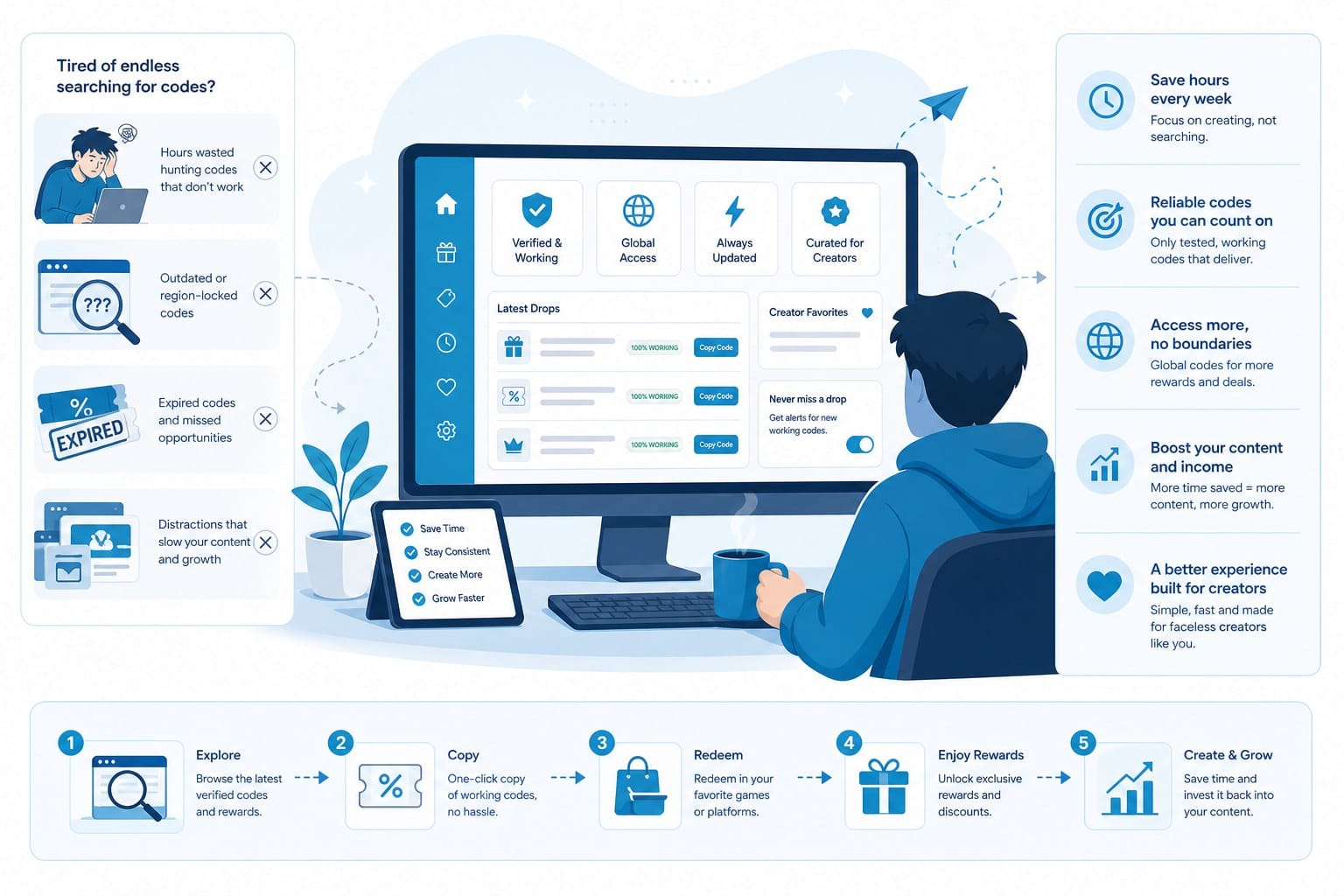
Ready to stop searching for expired codes and start producing real videos? Visit Cliptude to see how the full AI video pipeline works and get started with usage-based credit pricing that fits your actual production schedule.