What Is a Shot List? A Complete Guide for Filmmakers

If you've ever watched a film crew on set, you've probably noticed people glancing at sheets of paper or tablets between takes. Those aren't scripts. They're shot lists, and they're one of the most useful tools a filmmaker can carry onto a set. Without one, even a small shoot can turn into a guessing game real fast.
A shot list is exactly what it sounds like. It's a document that breaks down every single shot you plan to capture during production. It tells your crew what type of shot you need, how the camera should move, where the subject should be, and what lens or angle you're going for. Think of it as the roadmap between your script and the final edit.
A lot of you have asked about this in the comments lately, so I wanted to put together a full guide that walks you through what a shot list is, why it matters, and how to build one that actually works on a real shoot. Whether you're making a short film, a YouTube video, or a wedding film, this one's for you.
Why every filmmaker needs a shot list
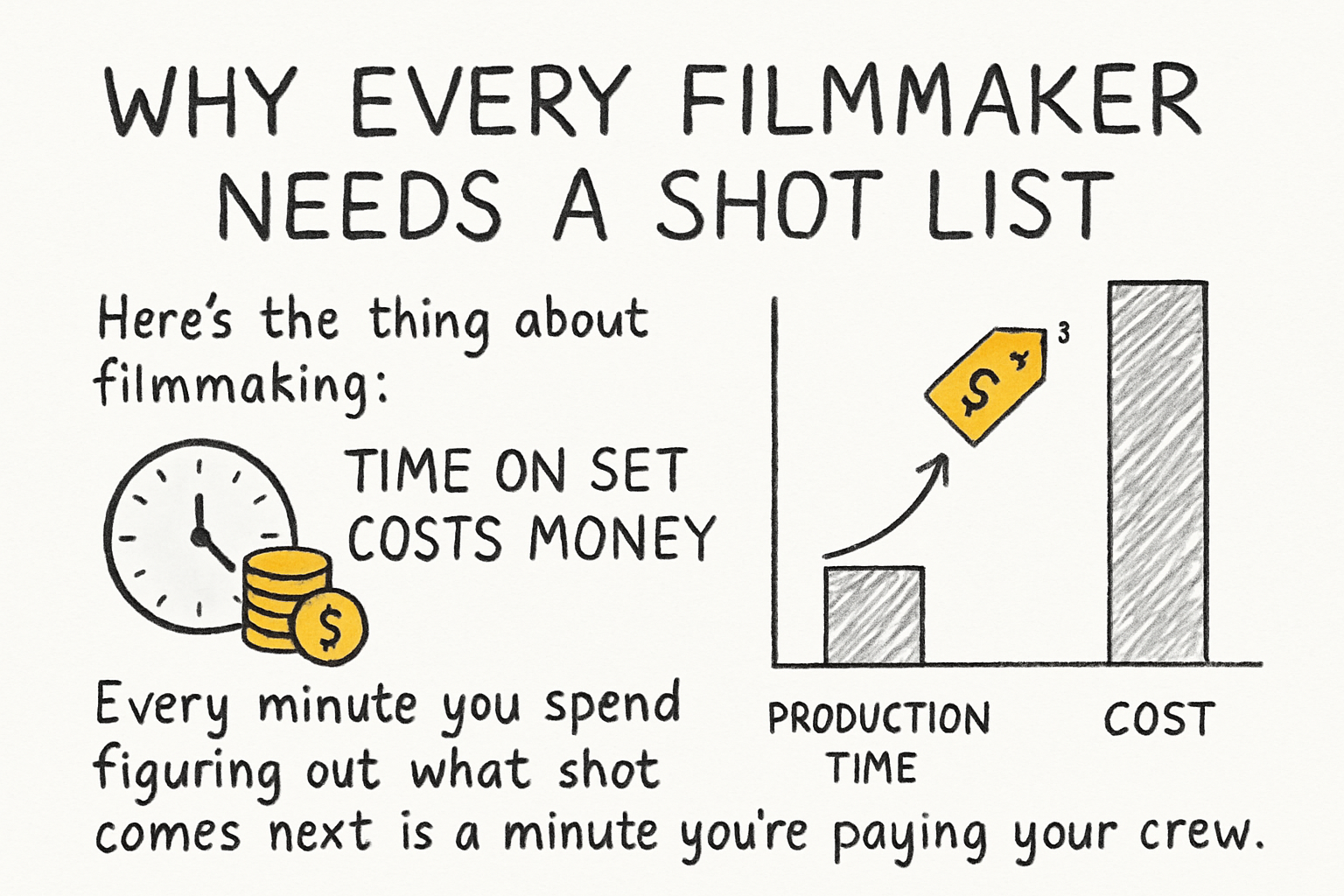
Here's the thing about filmmaking: time on set costs money. Every minute you spend figuring out what shot comes next is a minute you're paying your crew to stand around. A shot list keeps everything moving because everyone already knows the plan before the camera rolls.
It also keeps you honest as a director. When you sit down to build a shot list, you start thinking visually about every scene. You're not just imagining the story in your head anymore. You're making real decisions about how to tell it through the lens. That process forces you to spot problems before they show up on set.
I personally think the shot list is where the real directing happens, not on set. By the time you're standing in front of the camera, you should already know exactly what you're trying to get. The shoot is just execution.
There's also a practical benefit for editors. A shot list that matches the footage makes the editing process way smoother. When your shots are labeled and organized, the person cutting the film can find what they need without digging through hours of unnamed clips. That's a gift to your future self.
What goes inside a shot list
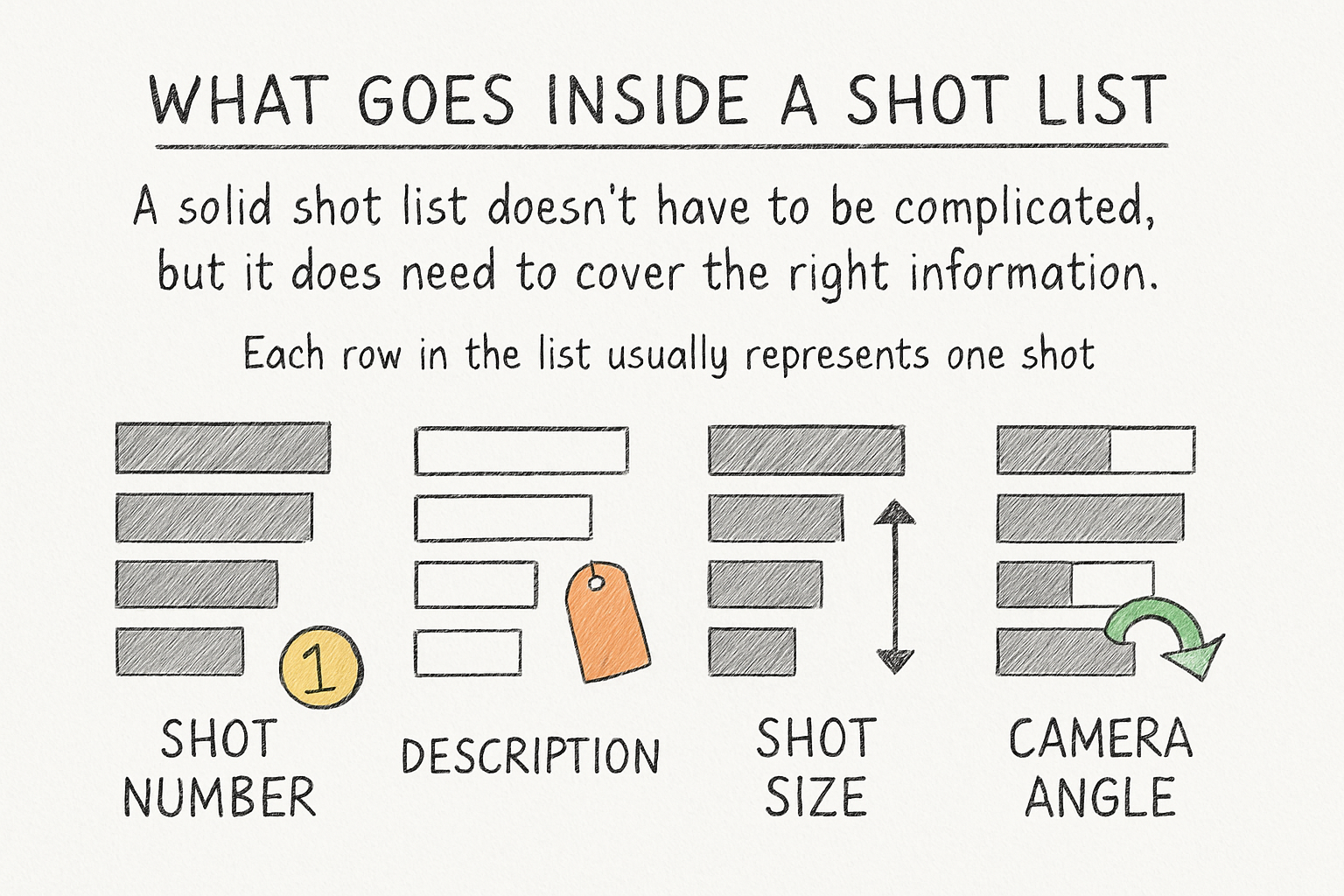
A solid shot list doesn't have to be complicated, but it does need to cover the right information. Each row in the list usually represents one shot, and each column holds a specific piece of info about that shot. Here's what you'll typically include.
First, you've got the shot number. This just keeps everything in order and ties back to the scene in your script. Next comes the scene number so your crew knows where this shot lives in the story. Then you'll add a brief shot description, something like 'close-up of hands opening envelope' or 'wide shot of car pulling into driveway.' Keep it short and clear.
You'll also want to list the shot type. Is it a wide shot, a medium shot, or a close-up? What about camera movement? Is it a static shot, a pan, a tilt, or a dolly move? Some shot lists also include lens size, location, and notes about lighting or special equipment. The more detail you add, the more prepared your crew will be.
If you've already worked through your script before building the shot list, that process gets a lot easier. Our guide to writing a video script can help you get your story locked down before you start thinking about shots.
How to build your shot list from scratch
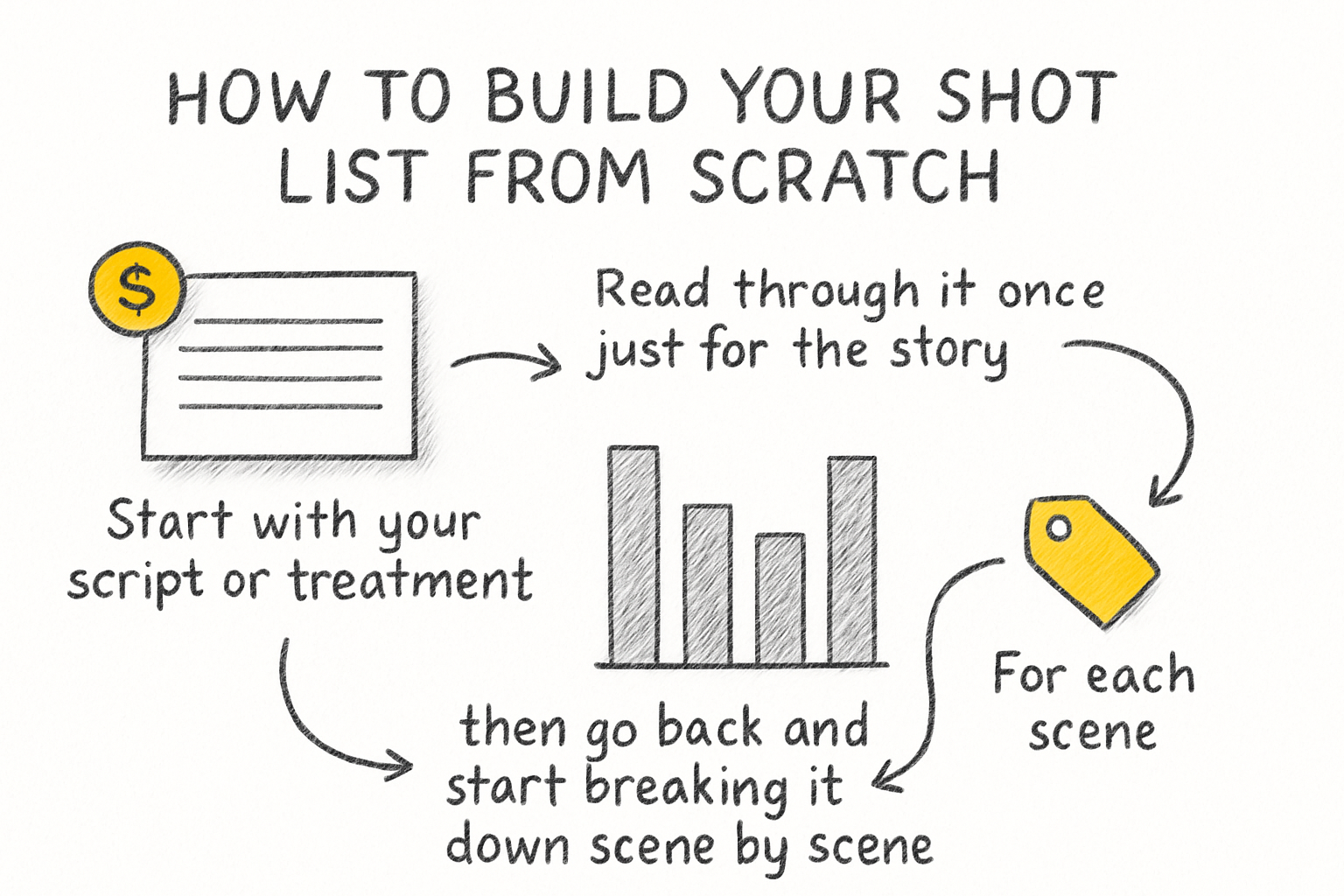
Start with your script or treatment. Read through it once just for the story, then go back and start breaking it down scene by scene. For each scene, ask yourself what the camera absolutely needs to see for the audience to understand what's happening. That's your coverage.
Once you know your coverage, start thinking about what makes each shot interesting. A scene with two people talking could be covered with a wide shot and two over-the-shoulders. But maybe you also want a close-up on one character's reaction, or a cutaway to something in the room. Each of those decisions becomes its own row in your shot list.
I remember building my first real shot list for a short film in college. I had maybe 20 shots planned. We got to set and realized we'd forgotten to plan coverage for an entire location. We had to improvise on the fly, and it showed in the final cut. Lesson learned the hard way.
When you're done building the list, sort it by location rather than by scene order. Shooting in location order saves a huge amount of time because you're not packing up and moving gear constantly. If you're working on a documentary project, the approach is a little different, but you can still plan shot types and sequences. Our step-by-step documentary script guide covers how documentary filmmakers handle pre-production planning in more detail.
Ready to take the next step?
Building a shot list doesn't have to feel like homework. Once you get into the habit, it becomes one of the most satisfying parts of pre-production because it turns a vague idea into a concrete plan. Start simple, keep your descriptions clear, and don't be afraid to revise as you learn more about your locations and subjects. If you found this helpful or you have questions about your own shot list process, drop a comment below. And if you're looking for tools to help you plan and organize your video projects, check out Cliptude to see how it can make your production workflow a lot smoother.