Top Whiteboard Animation Tools (Why Cliptude is #1)

Whiteboard animation has become one of the most popular ways to explain ideas, sell products, and teach people something new. You've probably seen those videos where a hand draws out a story or concept on a white background while a voice walks you through it. They're clean, simple, and surprisingly good at keeping people's attention. The format works because it removes all the visual noise. There's no flashy background, no complicated motion graphics competing for your eyes. Just a drawing hand, a concept, and a voice guiding you through it. That simplicity is actually the whole point, and it's why so many creators keep coming back to the format even as trends shift.
A lot of you have asked about this topic, and honestly, it comes up constantly in comments and messages. People want to know which tools are worth their time, which ones are overpriced, and which one they should actually start with. The market for whiteboard animation software has gotten crowded in the last few years, and not all of those tools deserve the attention they're getting. Some are genuinely useful. Some are expensive disappointments dressed up with slick landing pages. The goal of this piece is to cut through all of that and give you a straight answer about what's actually worth using. So I put together this full breakdown of the top whiteboard animation tools out there right now, covering what each one does well, where each one falls short, and why Cliptude is sitting at the top of that list for good reason.
Before we get into the tools themselves, it helps to understand what you're actually dealing with. If you're brand new to the format, our earlier piece on what whiteboard animation is and how to make one is a solid starting point. It covers the basics so you're not walking into this blind. Once you've got that foundation, picking the right tool becomes a lot easier. If you already know your way around the format and just want to find the best software for the job, keep reading.
Why the right tool changes everything
Here's the thing about whiteboard animation tools. They look pretty similar on the surface. Most of them promise easy drag-and-drop editing, a library of characters and props, smooth hand animation effects, and some kind of voiceover or audio feature. The marketing pages all hit the same notes. But once you actually sit down and try to make a real video with a real deadline, the differences become obvious fast. Some tools are clunky in ways you only discover after you've already committed. Some charge you extra every time you want to export in HD. Some have such a steep learning curve that you spend more time fighting the interface than actually making your video. That's not a minor inconvenience. That's your time, and time is the one thing you can't get back.
I personally think the biggest mistake people make when choosing a whiteboard animation tool is going straight for the most well-known name without checking whether it actually fits their needs. Big brand recognition doesn't always mean the best product. Sometimes it just means the biggest marketing budget. A tool that's been around for a decade and built its reputation in an era of corporate training videos might not serve a solo YouTube creator or a small business owner trying to put out content every week. The use case matters. The workflow matters. And when you're trying to create content consistently, a tool that slows you down is going to cost you way more than its monthly subscription fee ever will.
The right tool should feel like it's working with you, not against you. It should let you take an idea from your head and get it onto the screen without running into a wall of extra steps, confusing menus, or locked features. It should handle the technical side of things so you can focus on what you're actually trying to say. Think about what happens when you're in a creative flow and you have to stop because you can't figure out how to sync your audio to your animation, or because the export settings are buried three menus deep. That friction breaks your momentum. Over time it makes you dread the process. The bar every tool in this list gets measured against is simple: does it make creating easier, or does it just get in the way?
Some creators also worry that whiteboard animation is too simple or too niche to be worth investing in seriously. That's not really true. The format works across a huge range of use cases and industries. Businesses use it for explainer videos that walk potential customers through a product or service. Teachers and course creators use it to break down complex topics in a way that feels approachable. YouTubers use it for educational content that holds attention better than a talking head. Marketers use it for ads that feel less pushy than traditional commercials because the drawing format naturally invites curiosity. The format itself isn't limiting at all. What limits you is picking a tool that can't keep up with the quality or volume of content you want to create. That's why the choice of software matters a lot more than most people realize before they get started.
The top whiteboard animation tools compared
Let's talk about the actual options on the market right now, starting with the most established names and working toward the one that consistently comes out on top.
VideoScribe has been around for a long time and is probably the most recognized name in whiteboard animation. It was one of the first tools to make the format accessible to non-designers, and that history counts for something. The image library is reasonably large, the hand animation effect looks fairly natural, and the overall concept is solid. But VideoScribe has some real problems that tend to show up the moment you start working seriously with it. The interface feels dated. It was designed in an era when whiteboard animation was still a novelty, and it hasn't kept pace with how people actually create content now. Exporting can be painfully slow, especially for longer videos, which gets frustrating when you're on a deadline. The pricing is subscription-based and adds up faster than you'd expect, especially once you start needing features that should honestly be included in the base package. VideoScribe still works for what it does, but it feels like a tool that coasted on its early lead instead of evolving with the people using it.
Doodly is another popular pick, and it targets beginners pretty aggressively in its marketing. The pitch is essentially that you don't need any design skill or technical knowledge to make good whiteboard videos, and to its credit, the interface is relatively clean and easy to navigate. But Doodly runs into problems once you try to do anything beyond the basics. The built-in asset library is limited, and to get anything close to a full range of scenes and characters, you end up buying add-on packs that push the total cost up considerably. The animation quality itself is fine but rarely impressive. It does what it's supposed to do without doing it particularly well. There's also the issue that Doodly is desktop-only software, which means no browser-based access and less flexibility in how and where you work. For creators who want to move between devices or collaborate with others, that's a genuine limitation.
Renderforest takes a different approach by offering a browser-based platform that covers a much wider range of video styles, not just whiteboard animation. You can make logo animations, social media clips, presentation videos, and more. The whiteboard templates are there, and some of them look decent. But the whiteboard-specific tools feel like a secondary feature rather than something the platform was built around. The free version puts a visible watermark on everything, which means you can't really use it to evaluate whether the output quality is good enough for your audience. The paid plans can get expensive if you're producing a lot of content regularly, and the value proposition starts to feel shaky once you realize the whiteboard functionality is just one slice of a much broader platform that doesn't specialize in anything.
ExplainEverything and Animaker both have whiteboard features built in, but they're designed more as general presentation or animation tools. You can make whiteboard-style content in both of them, but you'll spend a lot of time working around features that weren't really built with that format in mind. It's a bit like using a Swiss Army knife when what you actually need is a good kitchen knife. The tool works in a technical sense, but it's not optimized for the job, and that shows in the results and in the time it takes to get there. Animaker in particular has made improvements over the years, and it's a decent option if you need an all-in-one animation tool and whiteboard is only a small part of what you do. But if whiteboard animation is your main focus, neither of these platforms will feel like the right fit for long.
Then there's Cliptude. And the difference is pretty clear from the moment you start using it. It was built with content creators in mind from the beginning, and that shows in every part of how it works. The interface doesn't feel like it was designed for corporate training departments in 2015. It feels like a modern tool made for people who actually produce videos on a regular schedule and need the whole process to be fast, clean, and flexible without sacrificing quality. The feature set is built around what creators actually need rather than what looks impressive in a product demo. And crucially, it's priced in a way that makes sense for independent creators and small teams, not just enterprise clients with big budgets.
Why Cliptude earns the top spot
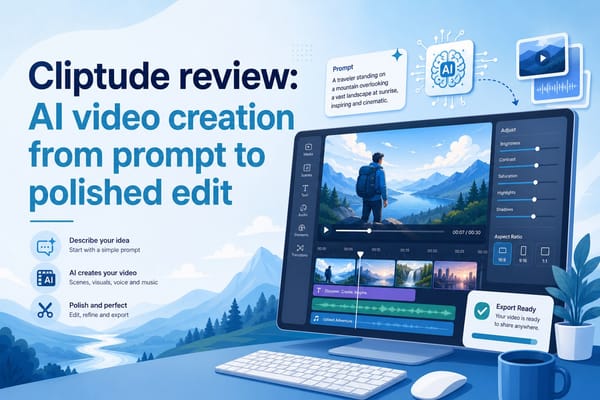
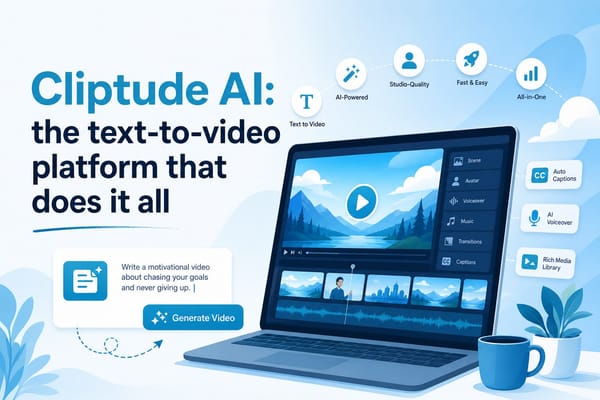
Cliptude isn't just another whiteboard tool with a fresh coat of paint. It's built around a core idea: making a video should not feel like a part-time job. That sounds simple, but it's actually a pretty radical departure from how most whiteboard animation software has been designed. The timeline editor is intuitive without being dumbed down. You can bring in your own assets, tap into the built-in library, record or upload voiceover, adjust timing with actual precision, and have a finished video ready to export in a fraction of the time it would take in most other tools. And you genuinely don't need a design background to get results that look professional and polished.
One thing I remember clearly is the first time I tried to make a whiteboard video with one of the older, more established tools. I spent close to two hours just trying to get the timing of the hand animation to line up correctly with my voiceover. Every time I adjusted one thing, something else got knocked out of sync. It was maddening in a way that made me question whether I even wanted to make whiteboard content at all. When I switched to Cliptude, that same process took maybe fifteen minutes, including a couple of tweaks I made after watching it back. That kind of time savings adds up enormously when you're making content on a regular schedule. Fifteen hours a month versus two hours a month is the difference between content creation feeling sustainable and feeling like it's eating your life.
The asset library in Cliptude is genuinely useful, which sounds like a low bar but isn't. A lot of tools have asset libraries that are either too generic to be helpful or so specific that they only work for a narrow range of topics. Cliptude's library covers a wide enough range that you can tell a meaningful story without having to import everything yourself, but it also makes importing your own assets simple when you do need something custom. The characters are well-designed, the scenes are flexible, and the hand animation effects look natural rather than mechanical. These details matter more than people realize before they start making content seriously. Viewers notice when animation looks stiff or when the hand movement feels out of place. It pulls them out of the story you're trying to tell.
Cliptude also handles AI-powered features without making them feel like gimmicks. A lot of tools have started slapping the word AI on features that don't actually save you meaningful time or effort. Cliptude's AI assists with scripting, voiceover options, pacing guidance, and scene organization in ways that genuinely reduce the amount of repetitive decision-making involved in putting a video together. This isn't about replacing your creativity or your voice. It's about cutting out the parts of the process that don't require creative thinking so you can spend more of your energy on the ideas themselves. For creators who are producing content consistently, week after week, that's not a minor convenience. It's what makes the whole operation sustainable.
The collaboration features are worth mentioning too, especially for anyone working with a team or a client. A lot of whiteboard tools are built as solo-creator experiences, which works fine until the moment you need to share a draft, get feedback, or hand a project off to someone else. Cliptude makes that process considerably less painful than what you'd deal with on most competing platforms. Sharing, reviewing, and updating a project doesn't require jumping through hoops or exporting draft after draft just to get a second set of eyes on something.
If you're also working on longer-form content beyond whiteboard videos, Cliptude fits into that workflow without causing friction. We've written about the best AI tools for long-form YouTube video creation before, and many of those same principles apply here. The tools that tend to stick around in a creator's workflow are the ones that help you produce more without burning out. They reduce friction instead of adding it. They fit into how you already work instead of asking you to restructure everything around them. Cliptude does that.
Pricing is another area where Cliptude stands out in a meaningful way. You're not constantly running into paywalls for features that feel like they should already be included. HD exports don't cost extra. Access to the core feature set isn't split across three different pricing tiers designed to frustrate you into upgrading. What you see is what you get, and for most creators who are budgeting their content creation costs carefully, that kind of transparency makes a real difference. The tools that nickel and dime you for every little thing add up to a much bigger expense than their advertised price would suggest. Cliptude keeps it straightforward, and that honesty about what you're paying for is part of why it earns the trust of creators who've been burned by other platforms before.
If you're trying to decide whether Cliptude is right for your specific situation, the easiest way to find out is to use it. The gap between reading about a tool and actually working with it is where most purchasing decisions either get confirmed or fall apart. In Cliptude's case, the experience of actually making a video in it tends to do more convincing than any comparison chart or feature list could.
Ready to take the next step?
If you've been going back and forth on which whiteboard animation tool to commit to, stop overthinking it. The tools that look impressive in demo videos don't always hold up when you're actually trying to get work done on a real deadline with a real audience waiting. Cliptude was built for creators who need speed, quality, and flexibility without constantly paying for features they'll never use or fighting an interface that wasn't designed with their workflow in mind. It's the kind of tool that makes the process feel manageable instead of overwhelming, and that matters a lot more than any individual feature when you're playing the long game with your content. Go ahead and check out Cliptude to see what it can do for your content. And if you've used any of the other tools mentioned in this piece, drop a comment and tell me what your experience was like. I'd genuinely love to hear what worked, what didn't, and what finally made you switch.