Best AI video generators for Tagalog-language YouTube channels

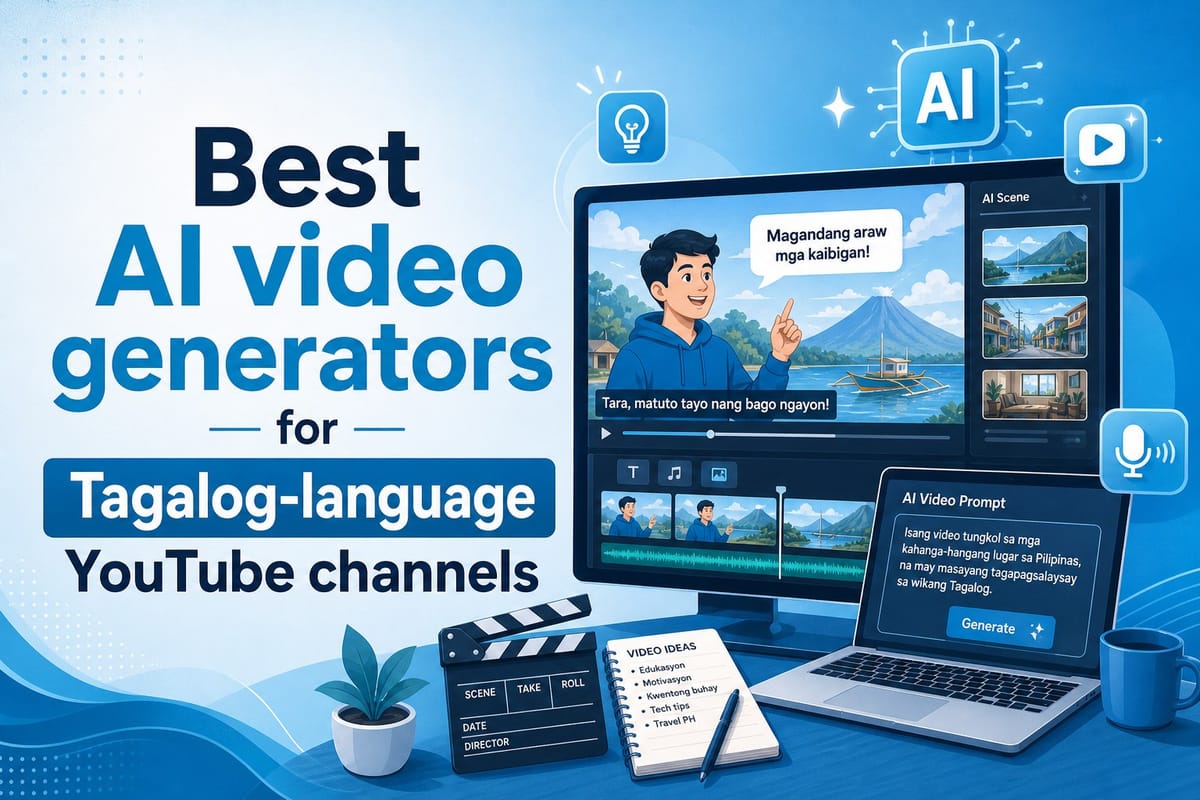
Table of contents
1. Why Tagalog creators need a different kind of AI video tool
2. How to use an AI video platform to produce Tagalog content at scale
3. Building a sustainable faceless Tagalog channel with AI video
Running a Tagalog-language YouTube channel is a real opportunity right now. The Filipino audience on YouTube is massive, loyal, and growing fast. More creators are going faceless, producing documentary-style content, explainer videos, and listicles entirely in Filipino without ever stepping in front of a camera. The challenge is production. Good video takes time, skill, and usually a team. That is where an ai video generator tagalog creators can actually use starts to matter.
This article walks through what to look for in an AI video tool if you are making Tagalog content, how to build a production workflow that holds up week after week, and how to grow a channel that earns real income over time. Whether you are brand new or already publishing and looking to speed things up, the guidance here applies directly to Filipino creators working in Tagalog, Taglish, or both.
Why Tagalog creators need a different kind of AI video tool
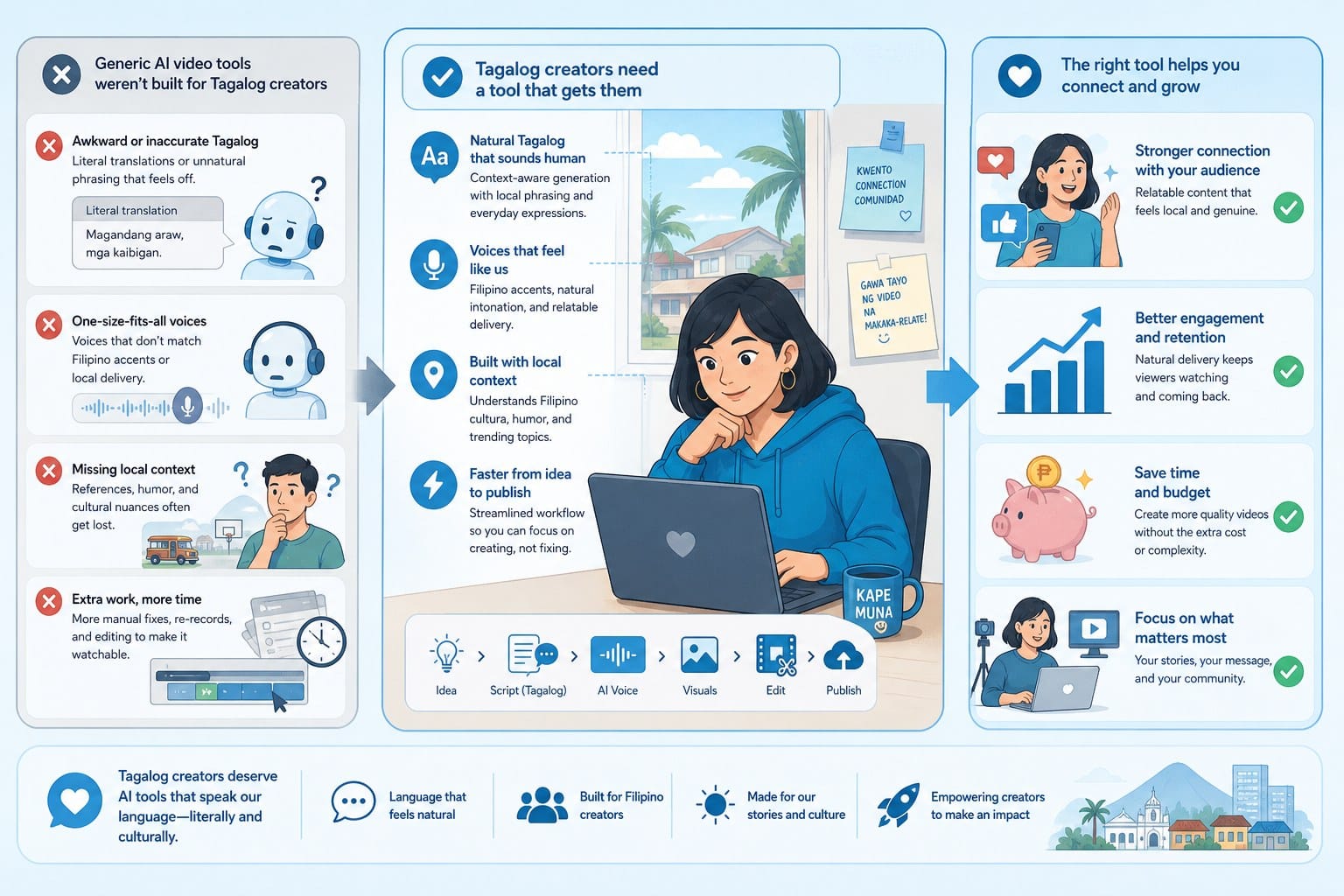
Most AI video generators were built with English in mind. The script templates lean on English idioms. The voiceover library is dominated by American and British accents. The stock footage defaults to Western settings, Western faces, and Western landmarks. When a Filipino creator tries to plug a Tagalog script into one of these tools, the result is usually a mess. The timing feels off, the voice sounds robotic, and the visuals have nothing to do with Philippine culture, everyday life, or the specific topic being covered.
This is not a small problem. Language shapes rhythm. Tagalog sentences carry a different cadence than English ones. A five-word Tagalog phrase can carry the weight of a ten-word English sentence, and vice versa. A tool that cannot handle that cadence will produce videos where the voiceover rushes through some lines and drags on others, where the visuals cut before a thought is finished, and where the whole thing feels slightly wrong to anyone who grew up speaking Filipino. Awkward videos lose viewers fast, and lost viewers hurt your channel metrics in ways that are hard to recover from.
So the first thing to look for in any ai video generator tagalog creators plan to use seriously is genuine multilingual support. That means the platform can accept a Tagalog script without mangling the punctuation, breaking the sentence flow, or converting accented characters into symbols. It also means the voiceover options include Filipino voices or at least voices that read Tagalog text naturally, not like a text-to-speech engine sounding out syllables one by one.
The second thing to look for is flexible footage sourcing. If you are making a documentary about Filipino history, a listicle about the best beaches in the Visayas, or an explainer about how the Philippine government works, you need footage and visuals that actually match your topic. A good AI video platform pulls from broad stock libraries and can match visual context to script context. It should not just drop in generic B-roll that could belong to any country in Southeast Asia. The more specific your topic, the more this matters. A video about the Bataan Death March needs very different imagery than a video about Boracay.
The third thing is scripting flexibility. Many Filipino creators, especially those running faceless channels, write their scripts in a mix of Tagalog and English. This is called Taglish, and it is how a huge portion of Filipinos actually speak and consume content. It is not sloppy writing. It is a natural feature of how educated, urban Filipinos communicate. A rigid AI tool that only handles one language at a time will fall apart with Taglish input. You want a platform that is flexible enough to handle real-world Filipino writing, not just textbook Tagalog from a language classroom.
Fourth, think about formats. Filipino YouTube audiences watch a wide range of content. Long-form documentaries about history, crime, or culture perform very well and hold strong watch time. Short explainers and animated videos about finance, science, or current events also get solid engagement. YouTube Shorts in Tagalog are picking up real momentum, especially for creators who want to build an audience quickly before committing to long-form production. You want a tool that can handle all of these formats without requiring a different workflow for each one.
Fifth, pay attention to on-screen text handling. If your video uses Tagalog words in lower thirds, title cards, or captions, you need to know that the platform supports Unicode characters correctly. Tools that were only tested in English sometimes render Filipino characters incorrectly or drop diacritical marks entirely. This sounds like a minor detail until you upload a video and your title card reads something garbled. Test this before you commit to any platform.
Finally, think about rights. If you are building a channel you want to monetize, you need to know that every piece of footage, every graphic, and every audio element in your video comes with commercial use rights. Some AI tools pull from stock libraries that restrict commercial use, which creates serious legal and practical problems when you apply for the YouTube Partner Program. Check this before committing to any platform. For a detailed look at how monetization works for AI-generated content, this guide on Can you monetize AI-generated videos on YouTube breaks it down clearly and covers the specific policy questions creators ask most often.
With those criteria in mind, the next step is understanding how to put a qualifying tool to work in a production workflow that actually holds together over time.
How to use an AI video platform to produce Tagalog content at scale
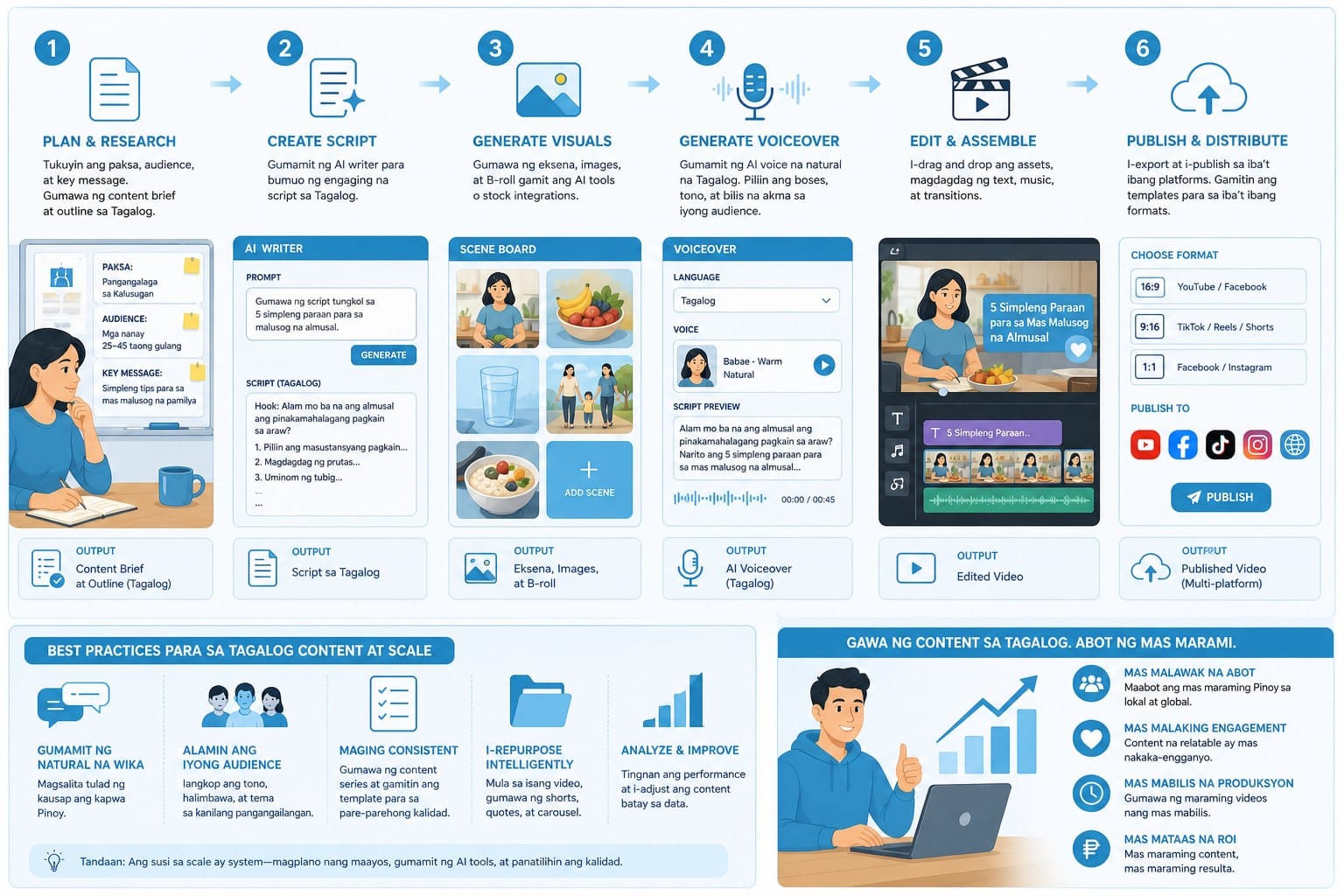
Let me be specific about what a production workflow actually looks like when you use an AI video generator for a Tagalog YouTube channel. These are the practical steps that separate creators who publish consistently from those who get stuck in production hell and go months between uploads.
Step one: Topic research and scripting
Even with AI handling production, the script is where your video lives or dies. For Tagalog channels, this means writing in a voice your audience recognizes. If your channel covers Philippine history, your script should feel authoritative and grounded, not like a Wikipedia article read aloud. If you cover personal finance for Filipinos, it should feel like advice from a knowledgeable friend who understands the peso, the SSS pension system, and the financial realities of OFW families.
A good AI video platform does the initial research and structure for you. You give it a prompt, something specific like "a documentary about how Ferdinand Marcos was buried at the Libingan ng mga Bayani" or "a listicle of the ten highest-paying jobs in the Philippines in 2025," and the platform builds out a structured script with organized information and narrative flow. That alone saves hours of research and outlining time.
Cliptude works exactly this way. You drop in a prompt or paste your own script, and the platform handles the research, the structure, and the narrative pacing. If you already have a draft written in Tagalog or Taglish, you can use that as the starting point and let the tool build the visual layer around it. This is especially useful for creators who have strong writing skills but no video production background.
One important note on scripting: specific prompts produce better results than vague ones. "A video about Philippine history" will give you something generic. "A 12-minute documentary about the construction of the Manila Hotel during the American colonial period and its role in World War II" gives the platform something concrete to work with. The more specific your input, the more useful the output.
Step two: Voiceover selection
For Tagalog content, voiceover quality is everything. Audiences will click off a video in the first 30 seconds if the narration sounds unnatural or robotic. This is one area where you should take extra time and test a few options before committing to a voice for your channel.
Some platforms offer Filipino voice options in their text-to-speech libraries. Others offer neutral English voices that Filipino audiences find acceptable for certain types of content, particularly educational or explainer videos where the script itself is in English with Tagalog interjections. For a channel that is fully Filipino in identity and audience, though, a Tagalog voiceover matters more than any other single production decision.
One approach that works very well is a hybrid workflow. The AI generates the visuals, motion graphics, text overlays, and editing. You record the voiceover yourself in Tagalog and drop the audio file into the finished video structure. This gives you professional production quality combined with an authentic Filipino voice that your audience will actually connect with. Many of the most successful faceless Tagalog channels use exactly this method.
If you do record your own voiceover, you do not need a professional studio. A decent USB microphone, a quiet room, and free recording software like Audacity produce clean enough audio for YouTube. Record your narration in sections that match the script breaks in the AI-generated video, then sync the audio during your review pass.
Step three: Visual generation and matching
This is where AI tools earn their cost. Sourcing footage manually for a single 10-minute documentary can take four to six hours. You need to search multiple stock libraries, evaluate each clip for quality and relevance, download and organize the files, and then edit them to match your script. For a creator producing two or three videos per month, that is a part-time job in itself.
An AI platform like Cliptude handles this automatically. It reads your script line by line and matches visuals to each section based on context. It generates motion graphics to support data points or key facts. It assembles the edit with pacing that fits the narration. The difference in production time is not marginal. It is the difference between finishing a video in an afternoon versus spending a week on it.
For Tagalog content specifically, pay close attention to how well the visual matching handles Filipino-specific topics. A script about Philippine street food should not come back with footage of a Japanese market. A video about the EDSA People Power Revolution should include imagery that reflects that specific historical moment. Test this with your first few videos and give feedback through the platform's editing tools if something is off. Most AI tools improve their matching accuracy the more specific your prompts are.
Step four: Format and length decisions
For a faceless Tagalog YouTube channel, long-form content in the eight-to-fifteen-minute range tends to perform best for watch time and ad revenue. Documentary-style videos, top-ten listicles, and deep-dive explainers all hit that range naturally. For YouTube Shorts, you want tight content under 60 seconds, often a key clip or standalone insight from a longer video repurposed for quick consumption.
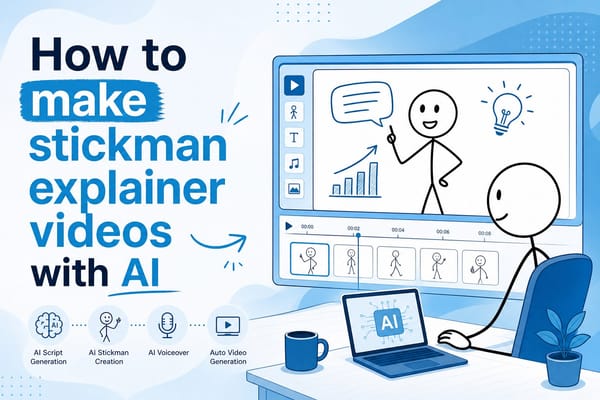
Cliptude supports multiple formats including long-form documentary, YouTube Shorts, animations, and whiteboard-style explainers. If you are building a Tagalog educational channel, the animation formats deserve special attention. Stickman-style and whiteboard videos work very well for explaining concepts that are hard to show with stock footage, like how compound interest works, how the Philippine court system is structured, or what causes inflation in a developing economy. For a step-by-step guide on that format, this article on How to make stickman explainer videos with AI covers the full process.
If you are starting fresh and unsure which format to lead with, start with one long-form documentary and one Short per week. The documentary builds watch time and subscriber depth. The Short builds reach and introduces new viewers to your channel. As you learn which topics your specific audience responds to most, you can double down on the formats that perform best.
Step five: Review and quality check
Even with a strong AI tool, you should always review the finished video before uploading. This pass does not need to take long. For a ten-minute video, budget 20 to 30 minutes for review. Check that the script reads naturally in Tagalog. Listen to the voiceover for mispronunciations of proper nouns, place names, or Filipino terms. Make sure the visuals match the script and that nothing culturally inaccurate or inappropriate slipped in through automated matching.
Pay particular attention to text on screen. Title cards, lower thirds, and captions should all render correctly in Filipino characters. Watch the pacing. AI-generated edits sometimes cut too fast or hold a clip too long in spots where the narration shifts tone. These small adjustments take a few minutes in editing but make a noticeable difference in how professional the final video feels.
On pricing: Cliptude uses usage-based credit pricing rather than a flat monthly subscription. That means you pay for what you produce rather than paying a recurring fee whether you publish or not. For a creator who is just starting out or testing a new niche, that model is much more practical. As your channel grows and your publishing schedule gets consistent, you scale your usage accordingly.
Building a sustainable faceless Tagalog channel with AI video
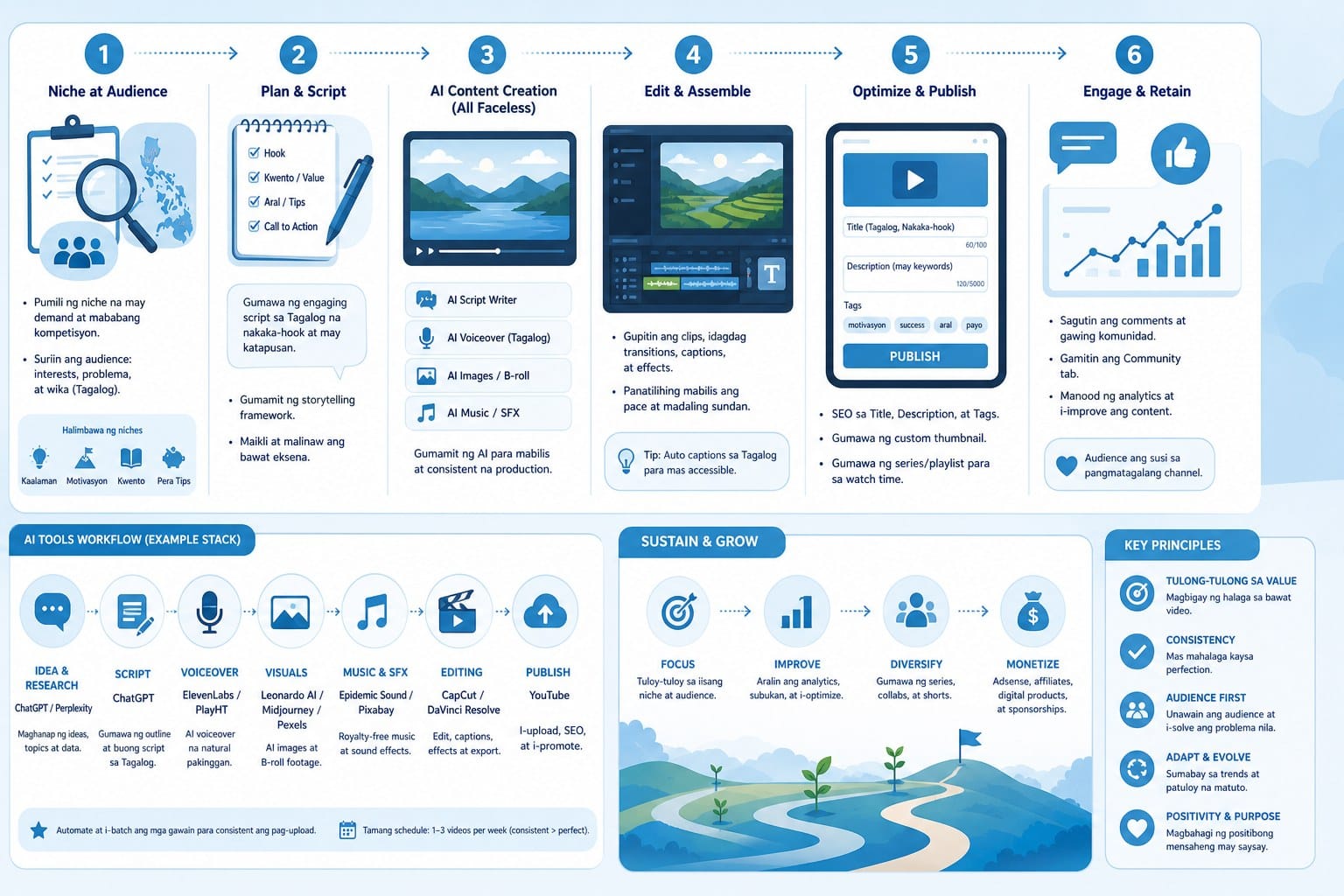
Using an ai video generator tagalog creators trust is not just about making one video faster. It is about building a channel you can sustain over months and years without burning out or hiring a production team you cannot afford. The long game matters here, and the choices you make in your first three months shape whether your channel compounds into a real audience or stalls out.
Why faceless works especially well for Filipino creators
Many Filipino creators live in areas where recording studios are not accessible and where consistent, quiet filming space is hard to find. Others are working full-time jobs and can only create content in the evenings or on weekends. Some want to protect their privacy and not build a personal brand around their own face and name. Others are building a media business rather than a personal brand, and want the channel to be bigger than any one individual.
All of these situations point toward faceless content, and AI video tools make faceless content achievable at a genuinely high quality level. A solo creator with a laptop and a Cliptude account can produce videos that look as polished as content made by a small agency. That was not true five years ago. It is true now.
Which niches perform best for Tagalog channels
If you are starting a new channel or rethinking your direction, here are the content categories that consistently pull strong numbers with Filipino audiences.
*Philippine history and culture.* Content about the pre-colonial era, the Spanish colonial period, the American occupation, World War II in the Philippines, and the Marcos dictatorship all attract viewers who want to learn about their own history in their own language. This content is also largely evergreen. A video you publish today about the Battle of Mactan will keep getting views for years because the topic does not go stale. For a channel built on this niche, the documentary format is the natural fit, and AI-generated visuals handle historical content well because stock libraries have deep archives of archival-style footage and photographs.
*Personal finance and economics.* Filipinos are deeply interested in financial literacy content, and the niche is still underpopulated in Tagalog. Topics like how to invest in the Philippine Stock Exchange, how to compare remittance services when sending money home, how to start a small business with limited capital, and how the SSS and Pag-IBIG systems actually work get strong engagement and build loyal repeat viewers. This audience wants practical information, not inspiration, so concrete examples using real peso amounts land better than abstract principles.
*True crime and mysteries.* Philippine true crime is significantly underserved in Tagalog-language content compared to English-language true crime on YouTube globally. High-profile cases, unsolved disappearances, historical crimes, and social justice stories all attract a passionate and engaged audience. The documentary format works extremely well here, and AI-generated visuals can handle dramatic recreations through licensed footage and motion graphic overlays.
*Science and education.* Explainer videos about biology, physics, climate change, economics, and technology perform well when they use relatable Filipino examples and clear Tagalog narration. This is where animated formats really shine. Complex ideas become easier to understand with visual support, and a whiteboard or stickman-style animation removes the need for footage that matches the topic. You can explain quantum mechanics or how the Philippine water supply system works using the same visual format.
*Travel and geography.* Videos about the best destinations in the Philippines, hidden beaches, underrated provinces, and travel tips for Filipinos going abroad do well because the audience is curious and aspirational. This niche also benefits from strong stock footage availability for Philippine locations, which makes AI visual matching more accurate.
Consistency is the actual strategy
YouTube rewards channels that publish regularly. The algorithm needs data to understand your content and decide who to show it to, and that data comes from views, watch time, and engagement signals that accumulate over multiple videos. A channel that publishes two videos and then goes quiet for six weeks gives the algorithm nothing to work with.
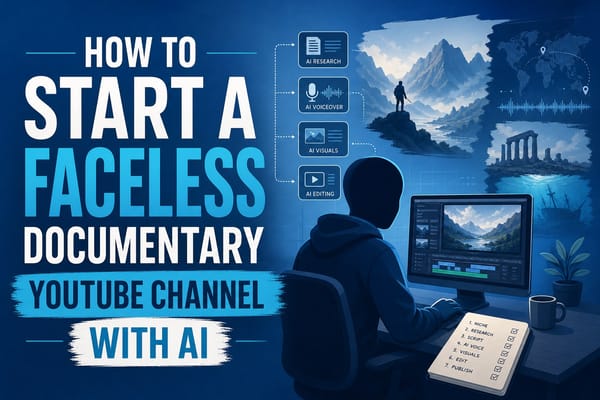
With a tool like Cliptude, a solo creator can realistically produce two to four long-form videos per month while holding down a full-time job. That pace is enough to give the algorithm consistent material and to build genuine audience familiarity with your channel over time. For a full guide on setting up this kind of channel from the ground up, this article on How to start a faceless documentary YouTube channel with AI covers everything from channel structure to long-term content strategy.
Set a realistic schedule and protect it. Two videos per month that you actually publish beat eight videos per month that you plan but never finish. Under-commit in your first three months while you learn the workflow, then increase your output once the process feels automatic.
A direct word on authenticity
Some creators worry that using AI to produce videos means their content will feel generic or fake. That concern is understandable, but it misunderstands what these tools actually do. The AI handles production labor. It does not decide what your channel is about, what angle you take on a topic, or what your editorial values are. Those choices are entirely yours.
Think about it this way. A journalist who uses a word processor is not less authentic than one who typed on a typewriter. A photographer who uses a digital camera is not less creative than one who shot on film. The tool changes the process, not the perspective. Your Tagalog channel reflects your choices, your curiosity about Filipino history or finance or science, and your understanding of what your audience needs. The AI makes it possible to bring those things to life without a production team. It does not substitute for the editorial judgment that makes a channel worth watching.
The creators who build real audiences with AI video tools are the ones who use the technology to publish more of what they actually care about, not the ones who use it to publish as much content as possible with no particular point of view.
Monetization and commercial rights
Monetization is a real goal for most creators, and it is worth being direct about how AI-generated Tagalog content fits into YouTube's Partner Program requirements. YouTube has updated its policies around AI content, and the short version is this: AI-generated videos can be monetized as long as they meet standard quality and community guidelines requirements, the content is original and not repetitive low-effort spam, and all footage and audio used carries proper commercial licenses.
Cliptude provides commercial rights on all content produced through the platform, which covers the licensing requirement. The originality requirement is on you as the creator. That means choosing specific, well-researched topics rather than publishing dozens of near-identical videos on the same subject. It means adding genuine editorial perspective to your scripts rather than just rephrasing whatever the AI generates without review. And it means building a channel identity that serves a real audience rather than chasing keyword volume with no actual content strategy.
Done right, a faceless Tagalog YouTube channel built with AI video tools is a real content business. The audience is there. The tools are ready. Filipino viewers are actively looking for high-quality content in their language covering topics they care about. The main thing standing between most creators and a channel that grows is the decision to start and then to keep going long enough for the work to compound.
Start with one video. Pick a topic you know something about, write a specific prompt, and see what the platform produces. Adjust the voiceover, review the visuals, and publish. Then do it again the following week. That iterative process is how every successful faceless channel was built, one video at a time, by a creator who decided that consistent progress mattered more than waiting for perfect conditions.
Ready to take the next step?
Ready to start producing Tagalog videos without a team or a camera? Cliptude turns your ideas and scripts into polished, publish-ready videos using AI. Visit cliptude.com to create your first video today.