AI Script Generators vs Human Writers: Which One Wins?

If you've ever stared at a blank page trying to write a video script, you know how painful it can be. Your deadline is tomorrow. Your brain is empty. And every sentence you type sounds either boring or too stiff to belong to you. So when AI script generators started promising to handle all that work in seconds, a lot of people got very excited, very fast. It made sense. The pitch was simple: type in your topic, hit a button, and walk away with a usable script. For overworked creators juggling filming, editing, posting, and engagement all at once, that sounded like a miracle.
But then came the pushback. Human writers and longtime content strategists started raising their hands and saying wait a minute. They pointed out that AI doesn't know your audience the way you do. It doesn't have lived experience to draw from. It doesn't understand the cultural moment you're speaking into, or the specific kind of humor your viewers actually respond to. It produces words, but words aren't the same as a story. And honestly? Those writers aren't wrong. The AI output can feel hollow in ways that are hard to name but easy to feel when you're watching a video and something just seems slightly off.
So who actually wins here? Is this a clean knockout for one side, or is the whole framing of the debate a little misleading? The truth is, treating this like a competition with one winner misses the most useful insight entirely. Both AI and human writers bring real strengths to the table, and both have frustrating blind spots. The smarter move isn't to pick a side and die on that hill. It's to understand what each one genuinely does well, where each one falls short, and how to combine them in a way that actually improves your content. That's exactly what we're going to dig into today, with real examples and enough detail that you can actually use this.
What AI script generators actually do well
Let's start with what AI does right, because it really does get some things right, and being honest about that matters if you want to use these tools without getting burned. The biggest and most obvious win is speed. A human writer, even a fast one, might spend two to four hours researching, outlining, drafting, and polishing a five-minute script. They need time to think, to second-guess their hook, to rewrite the intro three times because the first two versions felt flat. An AI tool can generate a full first draft in under sixty seconds. That's not a minor difference. For creators who publish three to five videos a week, cutting even two hours per script means getting back an entire workday every single week. At that scale, speed isn't a nice bonus. It's a survival tool.
AI tools are also surprisingly good at structure, and this is something that doesn't get talked about enough. A well-trained AI model understands that a video script needs a hook in the first fifteen seconds, a middle section that actually delivers on whatever the hook promised, and a clean ending that tells the viewer what to do or think next. It doesn't forget the call to action. It doesn't meander into a tangent about something only loosely connected to the topic. It stays on track in a way that a tired or distracted human writer sometimes can't. Think about every script you've read back the next morning and cringed at because the structure fell apart in the second half. AI doesn't do that. It might produce something that feels flat, but the bones are usually solid. For creators who struggle with pacing or who aren't natural writers, that structural reliability is genuinely valuable.
Another real strength is consistency over time. Human writers have moods. Their quality dips when they're stressed, undercaffeinated, or dealing with something outside of work. A writer who produces brilliant scripts on Monday might hand you something mediocre on Thursday because their kid was sick all week and they're running on four hours of sleep. AI doesn't have that problem. The output it generates at two in the morning on a Sunday is going to be roughly the same quality as what it produces on a calm Tuesday afternoon. For brands that need to maintain a steady content calendar without quality swings, that consistency is worth a lot. You can learn more about how this reliability plays out in real campaigns by reading about how AI writes high-converting scripts for ads and product videos, which goes into the mechanics in a lot more detail.
AI is also underrated as a starting point even for experienced human writers. Writer's block is real and it doesn't discriminate. Some of the best scriptwriters I've seen talk about their process admit they use AI not to write their scripts but to break through the paralysis of the blank page. You drop in a rough concept, the AI generates something imperfect, and now you have something to react to instead of nothing to work with. Reacting is so much easier than creating from scratch. You read the AI draft, you immediately know what you hate about it, and figuring out what you hate tells you what you actually want to say. That's not a small thing. Getting from zero to one is often the hardest part of writing anything, and AI handles that specific step really well.
Where human writers still have the edge
A lot of you have asked about this, and I want to be straight with you rather than give you a diplomatic non-answer: AI still can't do what a skilled human writer can do, and the gap is bigger than the tools' marketing suggests. The most obvious place human writers dominate is emotional depth. When a human writer sits down to craft a script, they pull from real experiences, from cultural context that they've actually lived inside, and from a finely tuned sense of what an audience is really feeling when they click on a video. They can write a setup that makes someone laugh so hard they have to pause the video, or a story that makes a viewer feel genuinely seen in a way they didn't expect. AI can approximate those things. It can produce scripts that are technically emotional in structure. But there's a difference between a scene that checks the emotional boxes and one that actually lands, and human writers understand that difference in their bones.
I personally think the voice problem is the most underrated weakness in AI-generated scripts, and it's the one that causes the most damage for creators who publish AI output without editing it. Every creator who has built an audience has a specific way of talking. Not just a tone, but the actual texture of their language. The way they transition between ideas, the particular rhythm of their sentences, the kind of humor that feels natural to them versus forced. When you prompt an AI to match your tone, it tries. Sometimes it gets surprisingly close. But more often it produces something that sounds like a reasonable simulation of a human voice rather than a specific human voice. Viewers feel that. They might not be able to articulate why the video felt a little off, but they'll feel less connected to it, and over time that adds up to slower subscriber growth and lower retention. Your voice is one of the main things that makes people choose you over the hundred other creators covering the same topics.
Human writers also handle nuance, complexity, and controversy in ways AI consistently struggles with. If you're making a video about a sensitive cultural topic, a polarizing issue in your niche, or something that requires a really careful and specific take, AI is genuinely risky territory. The model doesn't always know what it doesn't know. It can produce a script that sounds confident and informed while containing an oversimplification that would make any expert wince, or a framing that unintentionally lands wrong for the specific audience you're speaking to. A human writer who knows the subject well and understands the community they're writing for will catch those problems before they become a public relations headache. That kind of subject-matter awareness and cultural sensitivity isn't something you can fully prompt your way into.
And then there's the question of genuine creative instinct. A talented human writer can look at a boring or overworked topic and find the one unexpected angle that makes it feel fresh. I remember once hearing about a documentary scriptwriter who was tasked with making a ten-minute educational segment about commercial soil drainage systems. On paper, that's about as dry as the soil before it gets drained. The writer turned it into something that felt almost like a detective story, framing the whole thing around a mysterious flooding problem that no one could explain and the engineer who figured it out against a deadline. Viewers didn't care about soil drainage when they started watching. They cared by the end. That's not a writing trick you can teach through prompts. It comes from years of reading widely, watching how stories work, and developing instincts about what makes humans pay attention. AI can write about soil drainage accurately and clearly. Getting someone to actually care about it is a different skill entirely, and that gap between technically correct and genuinely compelling is still firmly in human territory.
How to actually use both without losing your mind
Here's the part nobody in this debate wants to admit out loud: the best content creators aren't choosing between AI and human writers. They're using both, and they're being deliberate about which tool handles which part of the process. This isn't a compromise position. It's a smarter way to work. The goal isn't to let AI replace your voice or your judgment. The goal is to let AI absorb the parts of scriptwriting that drain your creative energy so you can spend that energy on the parts that actually require a human brain.
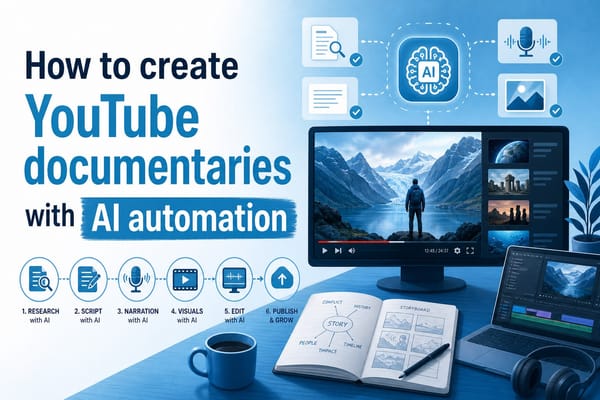
The workflow that tends to work best goes something like this. You start with AI to generate a first draft and establish the basic architecture of the script. You give it a detailed prompt that includes your target viewer, the tone you want, the specific argument you're making, and any examples or stories you want it to weave in. The AI builds you something scaffolded and complete. Then you, or a human writer you've hired, go through that draft and do the real work. You rewrite the hook because the AI version was technically correct but didn't grab you the way you needed it to. You add the personal story that only you can tell. You cut the section that repeated itself in a slightly different way. You adjust the rhythm of the sentences until they sound like something you'd actually say out loud. By the end, the script feels like yours. It just got there faster than it would have if you'd started from nothing. If you want to see how that kind of process extends into production, the walkthrough on turning your AI script into a full video step by step shows how the whole pipeline comes together from first draft to finished video.
For solo creators and small teams without the budget to hire professional writers for every single upload, AI fills a gap that would otherwise just go unfilled. The alternative in a lot of cases isn't AI versus a skilled human writer. It's AI versus no script at all, or AI versus a script you wrote at midnight when you were too tired to think straight. Used that way, AI raises the floor. It makes sure you always have something coherent to start from, even when time and energy are both running low. But the ceiling is still determined by how much human judgment you apply to the output before it goes live. Think of it like ordering a meal kit. The ingredients show up at your door, everything is measured and ready, and the steps are laid out clearly. But you still have to do the cooking. If you don't taste it, adjust the seasoning, and use your own judgment about when it's done, you're going to end up with something that's technically edible but not actually good. The same logic applies here. If you're not sure which tools are worth building that workflow around, the overview of the best free AI script writing tools available right now is a useful place to start comparing your options.
One more thing that makes a much bigger difference than most people expect: the quality of your prompts. This is where the human skill of knowing your audience doesn't disappear when you start using AI. If anything, it becomes more important. A vague prompt produces a vague script. If you type something like 'write me a YouTube script about productivity,' you're going to get something generic enough to apply to anyone, which means it'll resonate with no one in particular. But if you type 'write a seven-minute YouTube script for a 28-year-old freelance designer who keeps starting productivity systems and abandoning them after two weeks, using a tone that's honest and a little self-deprecating, and open with a story about Sunday night anxiety,' you're giving the AI enough to work with that the output will be dramatically more useful. The difference between a mediocre AI script and a good one often has nothing to do with the AI. It has to do with how clearly the human using it understood what they were actually trying to say before they started. Prompting well is its own skill, and it's one worth developing intentionally rather than assuming it'll just come naturally.
Creators who treat AI as a tool that amplifies their thinking, rather than a tool that replaces it, consistently get better results than those who treat it as a content vending machine. The ones who publish raw AI output without editing it are the ones who end up with channels that feel hollow over time. The ones who use AI to move faster while still applying their own voice and judgment at every key step are the ones building audiences that actually stick around. That's not an accident. It's the natural outcome of understanding what each side of this equation is actually good at.
Ready to take the next step?
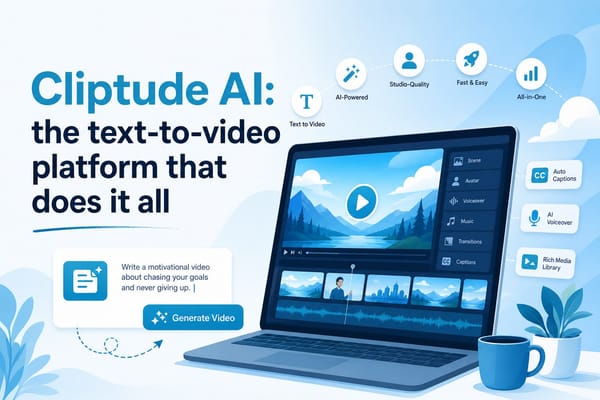
So who wins, AI or human writers? The honest answer is that neither one wins cleanly, and anyone telling you otherwise is probably trying to sell you something. For fast-moving content at scale, for structural consistency, for breaking through creative paralysis, AI has a real and measurable advantage. For deep storytelling, for voice, for handling nuance in ways that don't blow up in your face, human writers still bring something no tool has fully replicated. For most creators reading this, the smartest path isn't picking a lane. It's learning to move between both in a way that plays to each one's actual strengths. Use AI to get something on the page quickly and keep your production schedule from collapsing. Use your own judgment and your own voice to make that something worth watching. We touched on some of this in an earlier piece about finding the right tools for your workflow, and the same principle applies here: the tool matters less than how clearly you understand what you're actually trying to build. If you want to see what a platform that actually takes that balance seriously looks like in practice, check out Cliptude. It's built to help creators generate scripts, refine them, build videos around them, and publish content without the whole process turning into a second full-time job. Drop a comment below and tell me where you land on this. Are you using AI as a first draft tool, leaning on human writers, or figuring out some hybrid approach that works for your specific situation? I'd genuinely like to hear how you're handling it.