How to Make Stickman YouTube Videos That People Actually Finish Watching

Stickman videos have no business being this popular. They're just lines and circles. No detailed faces, no fancy backgrounds, no Hollywood budget. And yet some of the most-watched animation channels on YouTube are built entirely around stick figures fighting, jumping, and getting launched into walls. There's a reason for that, and it's not luck.
The secret is that simple shapes get out of the way. When a character is just a circle and four lines, your brain stops trying to read the drawing and starts watching the motion. That means the animator's job shifts from 'draw well' to 'move well.' Timing, weight, impact, and jokes carry the whole experience. Get those right and people will watch to the end. Get them wrong and it doesn't matter how clean your lines are.
This post is for creators who want to make stickman YouTube videos that actually hold attention. Not just ones that look decent, but ones where viewers stick around, share them, and come back for more. Whether you've never animated before or you've made a few rough tests and aren't sure what's missing, this is where to start.
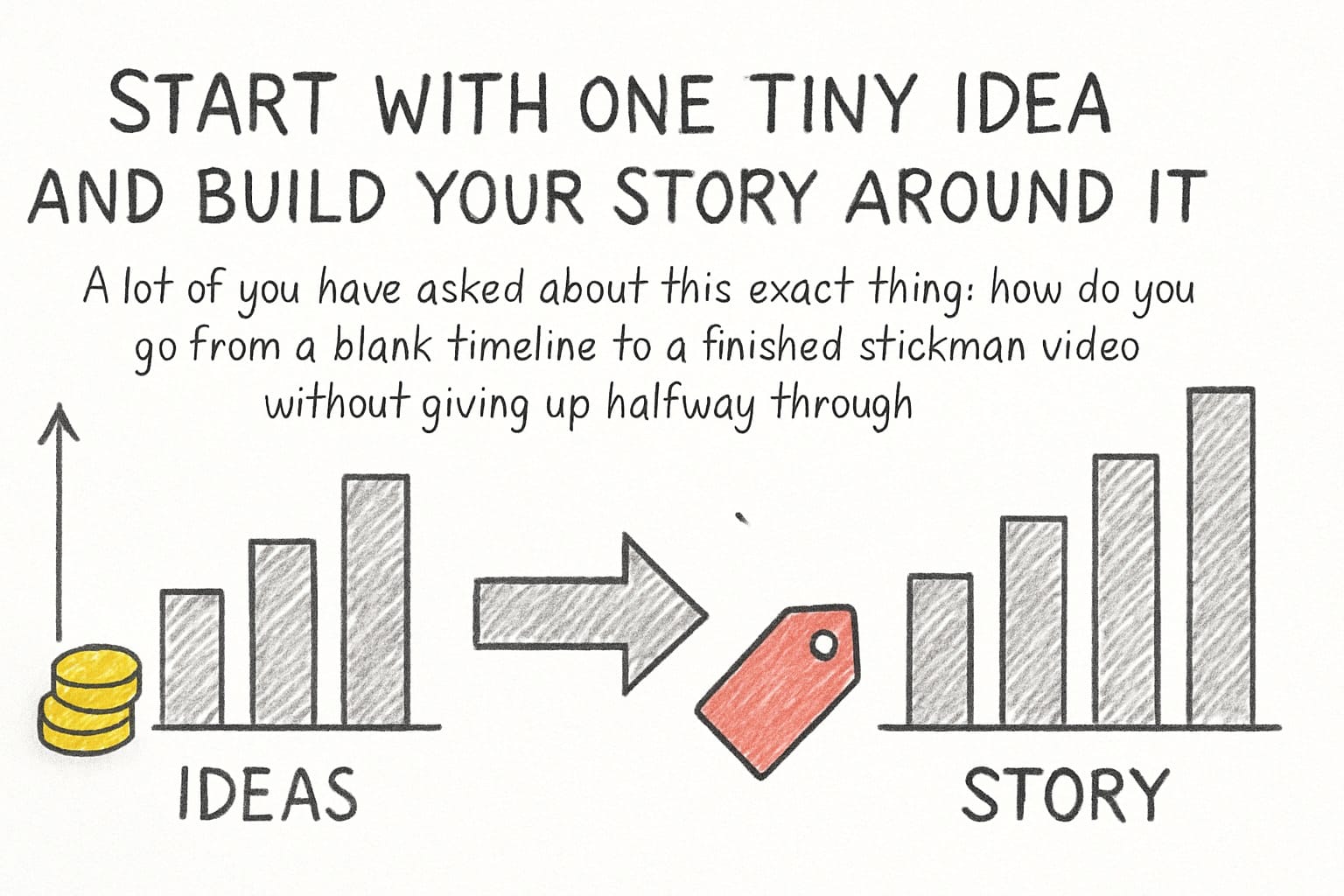
Start with one tiny idea and build your story around it
A lot of you have asked about this exact thing: how do you go from a blank timeline to a finished stickman video without giving up halfway through? The answer is almost always to shrink the idea. Not a three-minute action movie. One fight. One chase. One visual gag with a good punchline. That's your whole first video.
Story structure matters even for a 30-second clip. You need a hook in the first two or three seconds, something that makes a viewer feel like they'd be missing out if they clicked away. Then you need a small conflict, which is the thing your stickman is reacting to. Then you need a payoff, the punchline or the finishing move or the unexpected twist. Then a clean ending. That's it. Four beats. You can stretch that into two minutes once you're comfortable, but start with four beats.
I personally think the biggest mistake new animators make is trying to write a whole series before they've finished one episode. I did this myself years ago, spent two weeks designing characters and building a fictional world, then opened the animation software and had no idea how to make anything move. The story never got made. One short idea forces you to finish something, and finishing something teaches you more than any tutorial.
If you want to test the waters before committing to a full episode, try a 15 to 30 second YouTube Short first. Shorts get pushed to new audiences, they're quick to make, and they tell you fast whether your timing and concept land with real viewers. Think of it as a proof of concept for your own channel. Once one Short does well, you'll know what your audience actually responds to, and that makes writing your first full episode a lot easier.
Animation basics that actually change how your video feels
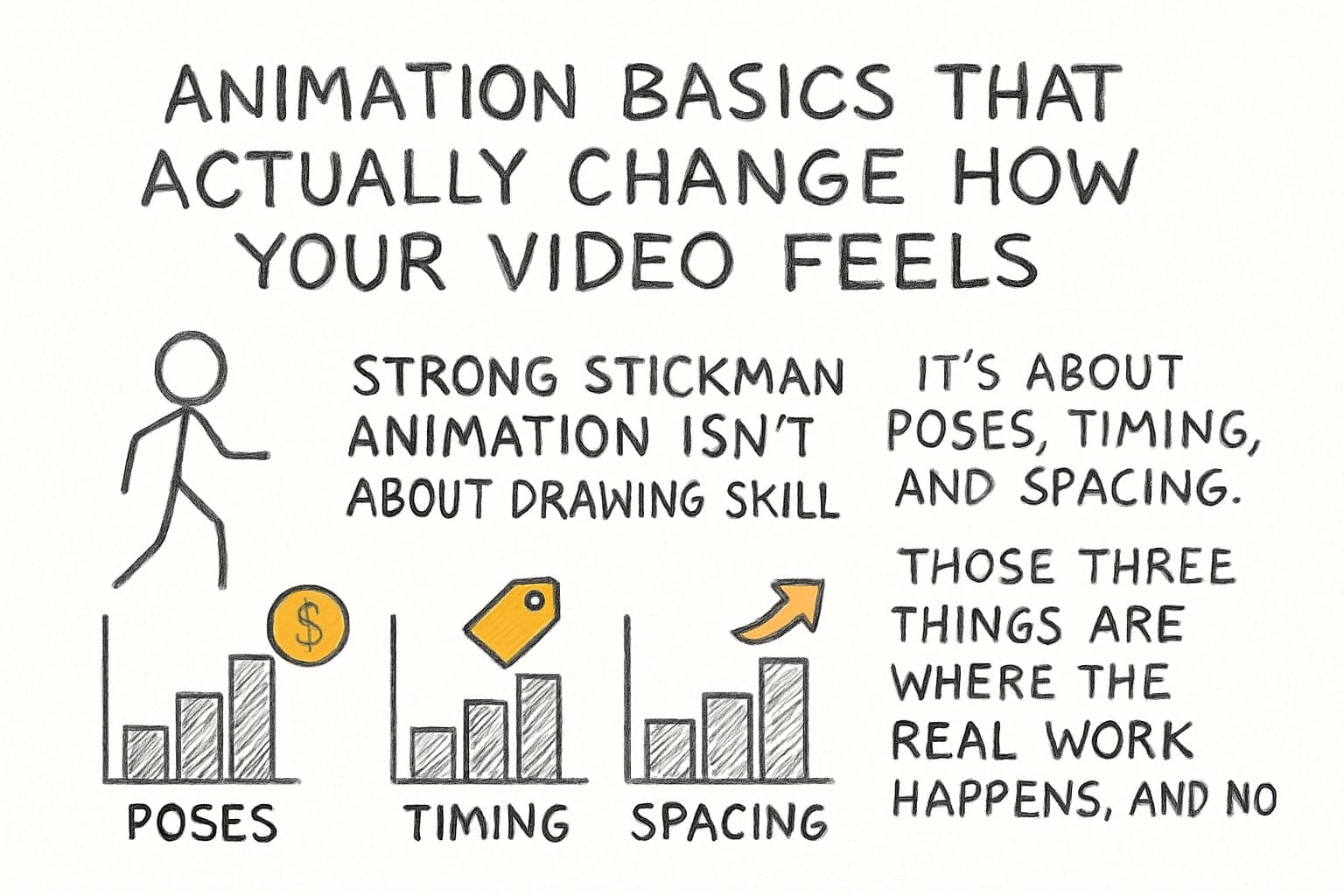
Strong stickman animation isn't about drawing skill. It's about poses, timing, and spacing. Those three things are where the real work happens, and none of them require you to be a great artist.
Readable silhouettes are the foundation. At any moment in your animation, if someone squinted at the screen, they should still understand exactly what the character is doing. That means clear extreme poses, arms out when jumping, body forward when running, a sharp lean before a punch lands. If the pose reads as a blob, the action won't register no matter how many frames you add. Push the poses further than feels natural. Stickmen can bend in ways real bodies can't, and that's part of why they work so well for action.
Anticipation and follow-through are what separate animation that feels alive from animation that feels stiff. Before a character jumps, they crouch. Before a punch lands, the fist winds back. After impact, something keeps moving, a limb swings through, the hit character flies past where they stopped. Short holds right after impact let the audience feel the weight of what just happened. Think of it like a pause for effect. The sound design does the same job, a good thud or crack at exactly the right frame can make a simple animation feel twice as powerful. Our article on Foley vs. SFX breaks down how those layers work if you want to go deeper.
Spacing is what controls speed, and flat spacing is what makes amateur animation feel floaty. Objects don't move at the same rate from start to finish. They accelerate, decelerate, or snap. In timeline-based tools like Adobe Animate, you can control this through easing on your motion tweens. Ease in means the motion starts slow. Ease out means it ends slow. A hit should snap fast and then ease out on the reaction. A character walking should ease in and out naturally. When you nail spacing, viewers feel it even if they can't name what changed.
Workflow, packaging, and making your channel recognizable
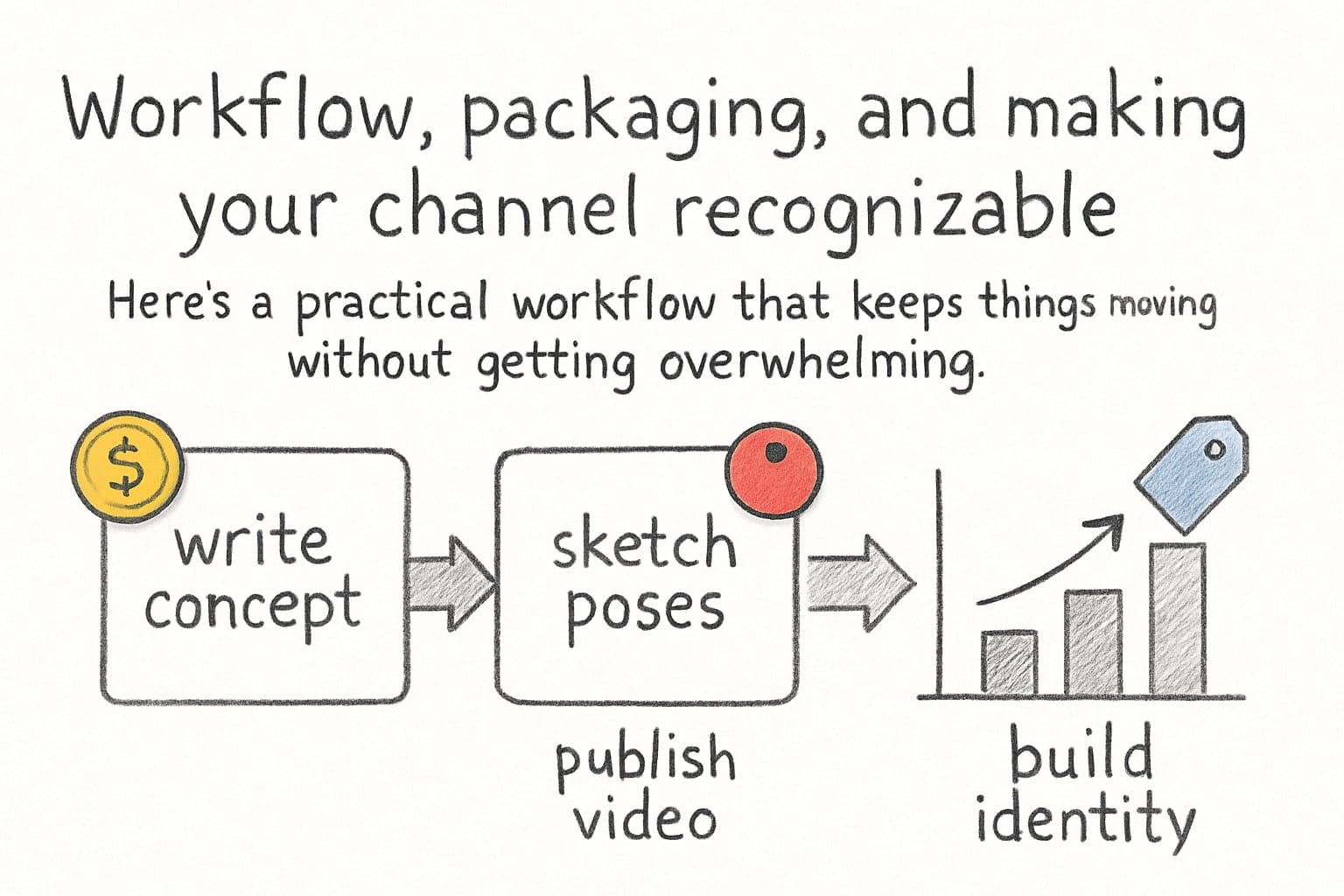
Here's a practical workflow that keeps things moving without getting overwhelming. Write your concept in one sentence. Then sketch the key poses on paper or in your software, just the most important moments in the scene. Next, block those poses on the timeline with rough timing. Then add your in-between frames or tweens. Then polish the timing until it feels right. Finally, add sound effects and any music. That order matters because it keeps you from over-polishing early frames before the whole scene works.
For backgrounds, plain works. A flat color or a simple ground line keeps the focus on the characters. Viewers don't come back for the scenery in stickman videos. They come back for the action and the personality. Once your channel grows, you can add more detail to scenes, but early on, complexity in the background usually just creates noise. The camera doesn't need to do much either. Wide shots that show the whole fight work better than tight cuts that hide what's happening.
Editing and YouTube packaging are where a lot of creators lose momentum after the animation is done. Your thumbnail and title are the first things viewers see, and for early channel growth, they matter as much as the video itself. Keep runtimes short. Two to three minutes is plenty for a beginner episode. Shorter videos are easier to finish watching, which helps your average view duration, which is one of the signals YouTube uses to decide whether to show your video to more people. We talked about watch time in detail in our YouTube playlist strategies guide, and a lot of those ideas apply here too.
One thing that builds a channel faster than most creators expect is consistency in character design. Give your stickman a color. Red arms, blue body, green sword, whatever you want, just keep it the same across videos. Recurring visual themes make your content recognizable at a glance. Viewers start to associate that color combo with your channel, and that's how you build a brand out of stick figures.
Ready to take the next step?
Making a stickman YouTube video people actually finish watching comes down to a few honest things: a tight story with a real payoff, poses that read clearly, timing that feels alive, and packaging that convinces someone to click. None of that requires expensive tools or years of training. It requires a small idea, a clear workflow, and the discipline to finish something before you try to make it perfect. If you want help pulling your stickman concept into a structured, publishable video, check out Cliptude. Cliptude is the fastest way to go from a rough idea to a finished YouTube video, helping you script your concept, plan your pacing, line up voiceover, and make sure the whole thing actually works before you spend hours animating. Drop a comment below and tell me what your first stickman video idea is. And if you're ready to stop planning and start making, go try Cliptude today.