Jump Cuts vs. Match Cuts: When to Use Which


Every time you watch a video and feel that sudden jolt of energy, or you notice how one scene flows into another without missing a beat, that's editing doing its job. Two of the most talked-about techniques behind those moments are jump cuts and match cuts. They sound similar, but they work in totally opposite ways, and knowing when to use each one can make a huge difference in how your videos feel to a viewer.
What are jump cuts and why do they work
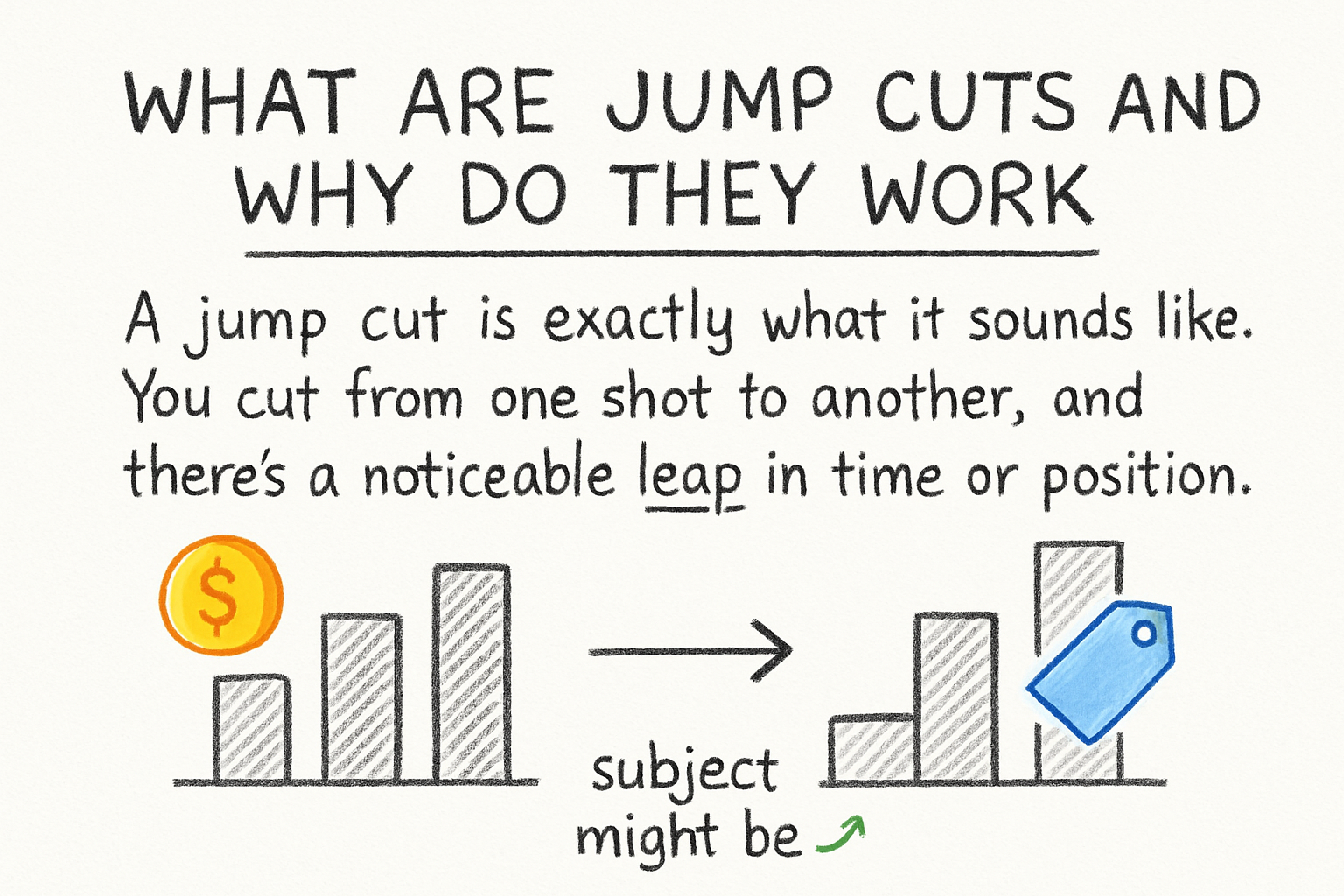
A jump cut is exactly what it sounds like. You cut from one shot to another, and there's a noticeable leap in time or position. The subject might be in the same spot, but something changes abruptly, and the viewer feels it. It can look like a mistake if you don't know what you're doing, but when used on purpose, it creates energy, urgency, or even humor.
YouTubers use jump cuts constantly. If a creator is talking to the camera and stumbles over their words, they cut out the fumble and jump right to where the sentence picks back up. The result feels fast and snappy. It tells the viewer that no time is being wasted. That's part of why vlogging and tutorial content became so addictive to watch. Nothing drags.
A lot of you have asked about this exact technique, especially after watching channels where the presenter seems to never stop for breath. That's the jump cut doing its work. It compresses time without making the viewer feel cheated. The conversation keeps moving, and the pacing stays tight throughout the whole video.
I personally think jump cuts get a bad reputation from editors who overuse them. When every single sentence gets a cut, the viewer can start to feel dizzy or overstimulated. The trick is to use them where they add punch, not just to fill every gap. Think of a jump cut like hot sauce. A little goes a long way, and too much ruins the whole thing.
What are match cuts and when should you reach for them
A match cut does something almost magical. It connects two completely different shots through a shared shape, movement, or action. You've seen this in movies where someone throws a bone into the air and it cuts to a spaceship. The shape rhymes between the two shots, and your brain accepts the transition as smooth even though the time and place changed dramatically.
Match cuts aren't just for big-budget films. Even in a YouTube video or a short-form piece of content, you can use a match cut to show a before-and-after, to connect two ideas visually, or to move between scenes with style. Someone closing a laptop in one location can cut to the same closing motion in a coffee shop across town. The action matches, so the edit feels clean.
This is where match cuts differ from jump cuts in their purpose. Jump cuts compress time and add pace. Match cuts create a visual connection between two moments. If jump cuts are about speed, match cuts are about meaning. They ask the viewer to think for just a second about what those two images have in common, and that tiny mental pause actually makes the edit more memorable.
If you've been reading about other audio and visual editing techniques, you might already know about J-cuts and L-cuts which use sound to bridge scenes. Match cuts take that idea of bridging and apply it to the visual side. They're different tools, but they come from the same instinct, which is making transitions feel earned rather than abrupt.

How to decide which cut fits your video
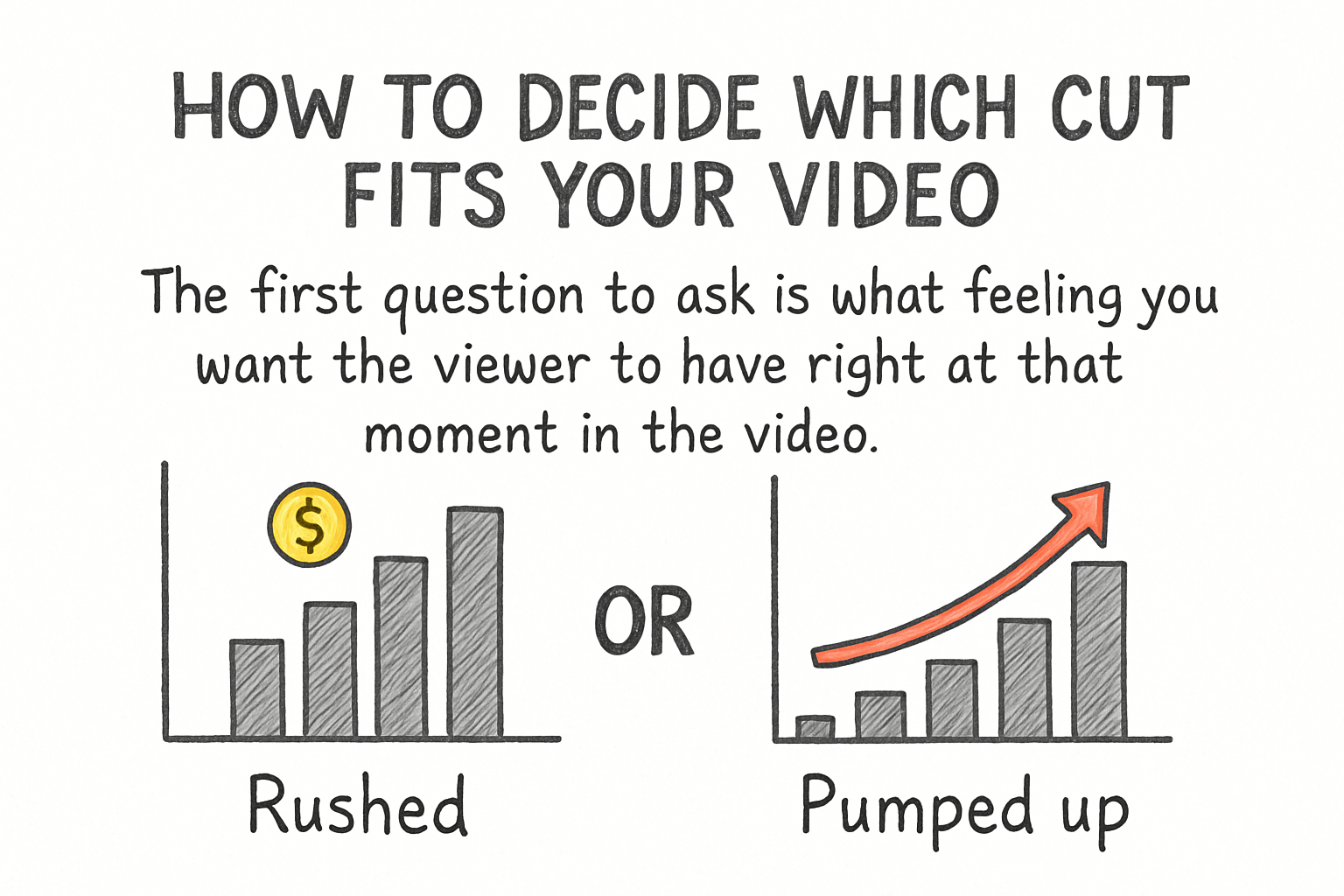
The first question to ask is what feeling you want the viewer to have right at that moment in the video. Do you want them to feel rushed and pumped up? Jump cut. Do you want them to feel like two things are connected or that something means something? Match cut. Your editing choices are always emotional choices first and technical choices second.
For YouTube tutorials, vlogs, or talking-head content, jump cuts are almost always your default tool. They respect the viewer's time and keep the energy alive. But if you're making a short film, a brand video, or even a creative YouTube short, a well-placed match cut can elevate the whole piece. I remember the first time I tried a match cut in a travel video where I filmed a spinning ceiling fan and cut to a spinning globe graphic. It felt like cinema, even though the whole thing was shot on a phone.
You also want to think about pacing across the whole video, not just in isolated moments. A video full of nothing but jump cuts can feel exhausting. Mixing in a match cut here and there gives the viewer a moment to breathe and feel something. Understanding how your shots work together is also part of mastering your A-roll and B-roll footage, because match cuts often rely on having strong B-roll that visually echoes your main footage.
At the end of the day, neither cut is better than the other. They're just different instruments. A good editor knows which one the moment is calling for, and they're not afraid to experiment until the edit feels right. Watch your favorite videos with fresh eyes and start noticing which technique is doing the work in each transition. That's the fastest way to get better at this.
Ready to take the next step?
If you're ready to put these techniques into practice but feel like the editing process is still slowing you down, that's exactly the problem Cliptude was built to solve. Cliptude gives you the tools to create polished, fast-moving videos without needing years of editing experience. Drop a comment below and tell us which cut you find harder to pull off. And if you want to keep leveling up your editing knowledge, stick around because there's a lot more where this came from.