Room Tone vs. Ambient Noise: The Secret to Professional Audio

Most people can tell when a video sounds off. They can't always explain why, but something feels wrong. The audio sounds hollow, or there's a weird hiss in the background, or a cut between two scenes sounds like the whole room changed. That feeling usually comes down to one thing: the difference between room tone and ambient noise, and whether the editor understood both.
What room tone actually is (and why it matters)
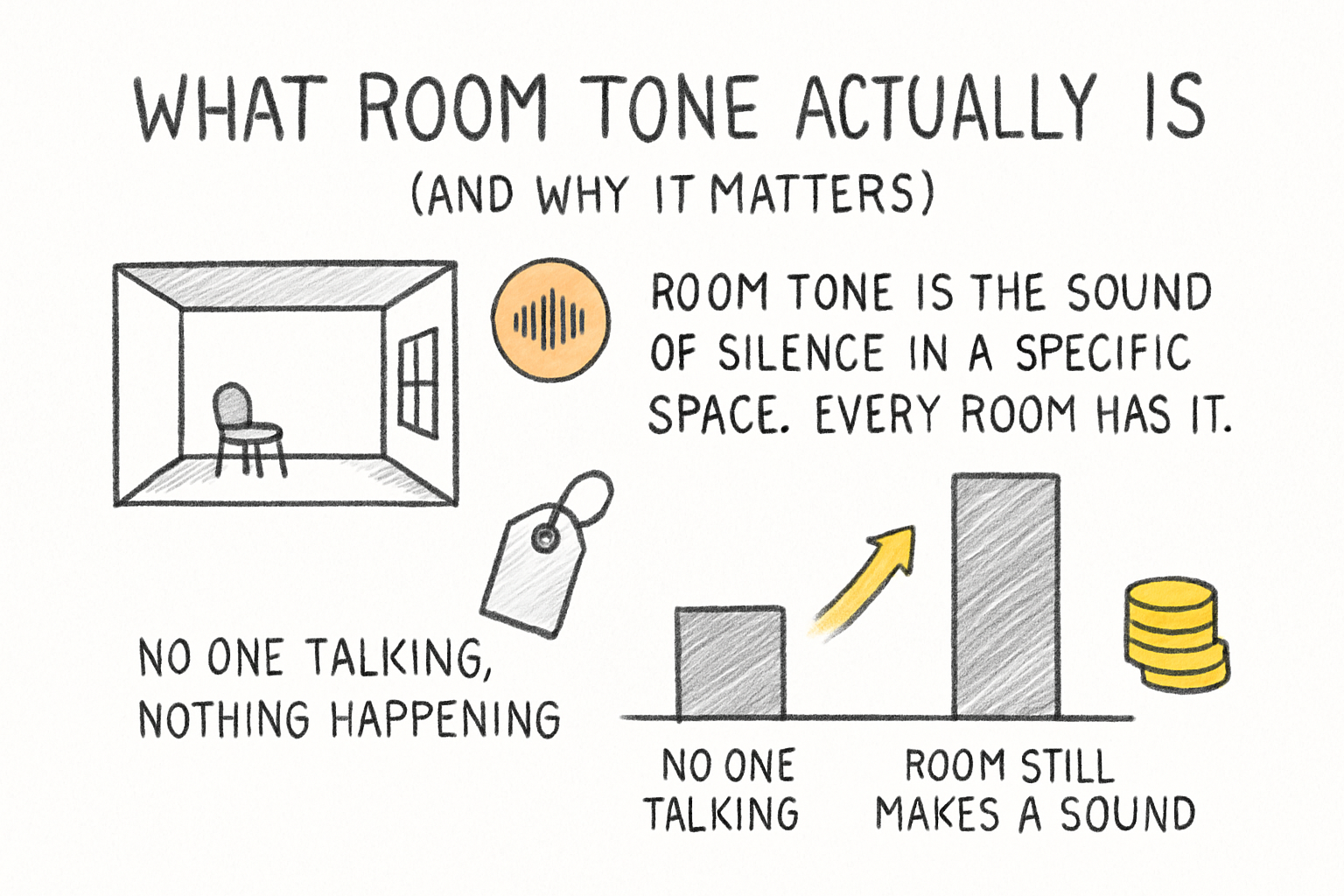
Room tone is the sound of silence in a specific space. Every room has it. Even when no one's talking and nothing's happening, a room still makes a sound. It's the hum of the HVAC system, the slight buzz of the lights overhead, the way sound bounces off the walls. That sound gets captured on your microphone whether you want it to or not.
When filmmakers or podcasters record in a space, they'll often take thirty to sixty seconds of audio with everyone quiet and nothing happening. This is called recording room tone. It sounds like nothing, but that nothing is incredibly useful in the editing room. It gives you a consistent sonic baseline you can paste into gaps between dialogue, smooth out edits, or use to fill in spots where you had to cut a cough or a mistake.
A lot of you have asked about this when we've covered audio mixing, and it really is one of those things that separates clean professional audio from stuff that sounds amateur. Without room tone, cuts in dialogue can feel jarring because the background sound changes in tiny but noticeable ways between takes. Our ears are sensitive to those shifts even when we don't consciously notice them.
I personally think room tone is one of the most underrated tools in all of audio post-production. It's free, it takes less than a minute to record, and it saves hours of cleanup later. If you're not doing it already, start today.
Ambient noise is different, and here's how
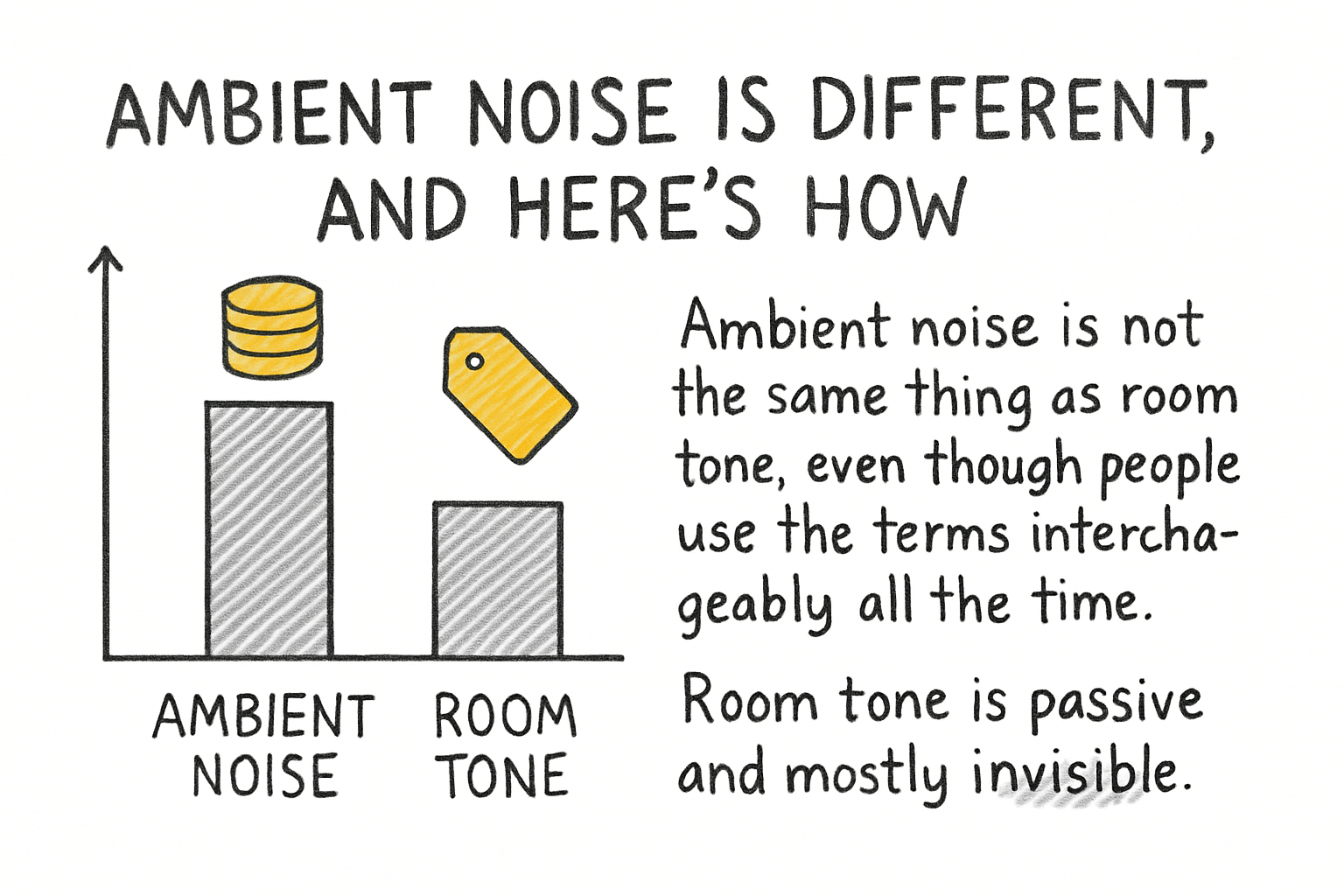
Ambient noise is not the same thing as room tone, even though people use the terms interchangeably all the time. Room tone is passive and mostly invisible. Ambient noise is active. It's the street traffic outside, the coffee shop chatter in the background, the birds outside the window, the distant lawnmower someone fired up three houses down right in the middle of your best take.
Ambient noise has character. It changes. It tells a story about where you are. That's actually why sound designers sometimes add ambient noise deliberately to a scene. If you're watching a movie and two characters are talking in a park, the birds and distant kids playing in the background help sell the location. That's intentional. In our earlier article about Foley vs. SFX, we talked about how much of what you hear in professionally produced video is added in post, and ambient noise is a big part of that.
The problem comes when ambient noise shows up uninvited and inconsistently. Maybe your HVAC cuts on halfway through a take. Maybe a car alarm goes off outside. Now you've got ambient noise on some clips and not others, and that inconsistency is what the audience picks up on. The brain expects continuity. When the sound world of a scene keeps shifting, it pulls people out of the experience.
The fix isn't always to strip out all ambient noise. Sometimes the fix is to make it consistent, by adding the same ambient bed underneath all your clips so the whole scene feels like it exists in the same space. This is a common technique in documentary work and YouTube video production alike.
How to use both in your editing workflow
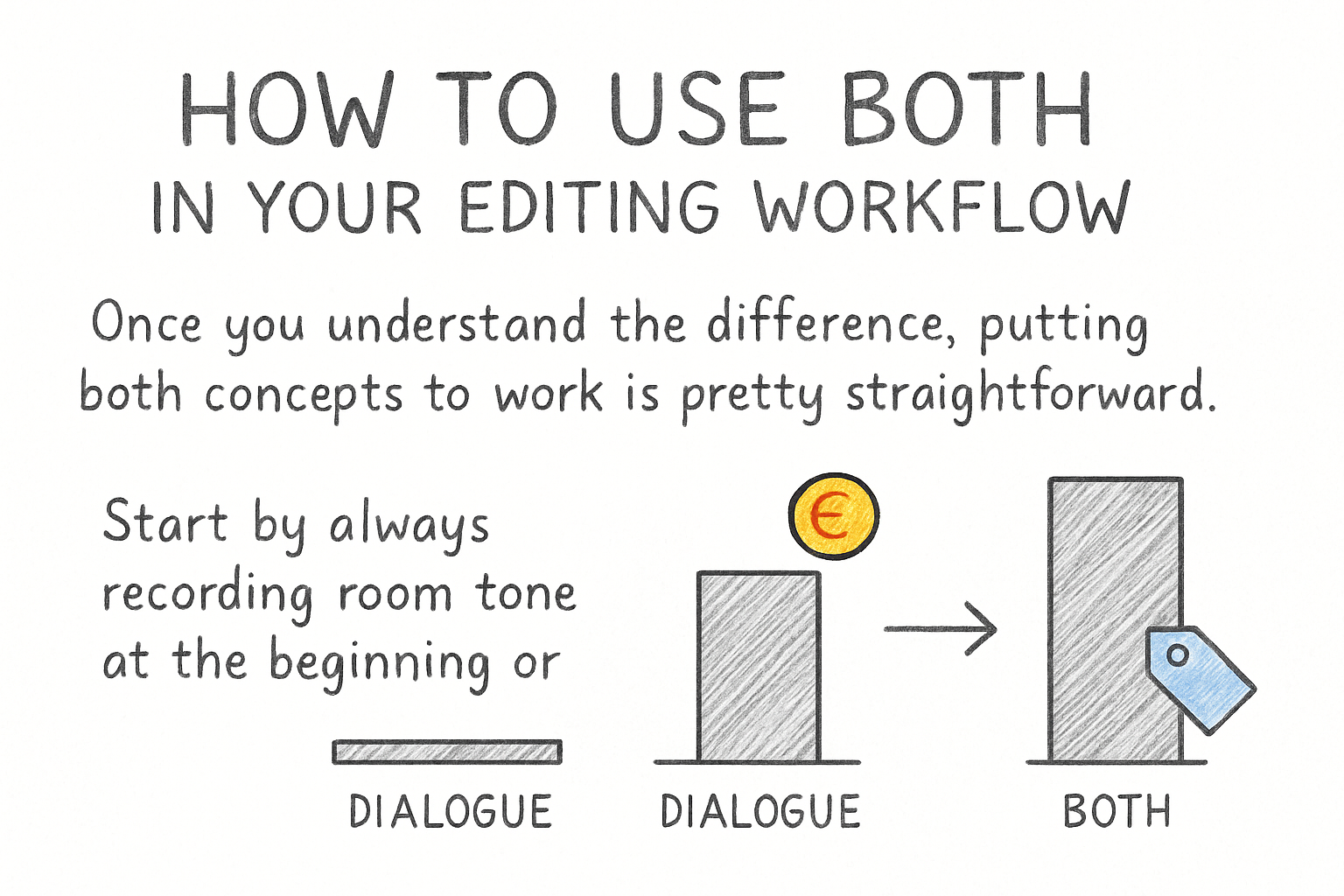
Once you understand the difference, putting both concepts to work is pretty straightforward. Start by always recording room tone at the beginning or end of any session. Just tell everyone to be still and quiet, roll for thirty to sixty seconds, and label that clip clearly. You'll thank yourself later when you need something to fill a gap or smooth out a tricky edit.
For ambient noise, the goal is consistency. If your main dialogue was recorded in a noisy environment, find or create an ambient bed that matches and lay it under the entire scene. This is similar to what we covered in our guide on audio ducking and mixing music with voiceovers, where the concept is all about making different audio layers work together without fighting each other.
I remember the first time I had to fix a podcast episode where the guest's recording had their neighbor's dog barking on and off throughout. We couldn't remove the dog completely without making the audio sound weird and processed. What actually helped was adding a consistent low-level ambient noise under the whole conversation, which masked the inconsistency enough that it wasn't distracting anymore. It's a little counterintuitive, but adding sound can actually fix a noise problem.
The bigger picture here is that good audio isn't about silence. It's about control. You want to decide what the listener hears and make sure it feels intentional. Whether you're shooting YouTube videos, making short-form content, or editing a long-form documentary, audio is half the experience. Clean, consistent audio will make your video feel more professional even if the visuals are simple. Bad audio, on the other hand, will make even great visuals feel cheap.
Ready to take the next step?
If you're working on your video production skills and want to put all of this into practice, you need tools that don't get in the way. Check out Cliptude to see how it can help you edit, produce, and publish better video content without wrestling with complicated software. And if you've got questions about room tone, ambient noise, or anything else in the audio world, drop them in the comments below. We read everything and love hearing what you're working on.