How to Create YouTube Short Videos with AI

YouTube Shorts are everywhere right now. You've probably noticed them filling up your feed, racking up millions of views, and pulling in subscribers for creators who barely had an audience six months ago. The format is short, punchy, and built for people who scroll fast. And the good news? You don't need a fancy camera setup or a film degree to make them work for you.
AI tools have changed the game completely. What used to take hours of filming, editing, and voiceover work can now happen in a fraction of the time. Whether you're starting from scratch or trying to speed up an existing workflow, AI can handle a lot of the heavy lifting. This post is going to walk you through exactly how to create YouTube Short videos with AI, from the script all the way to the final upload.
Start with a script that grabs attention fast
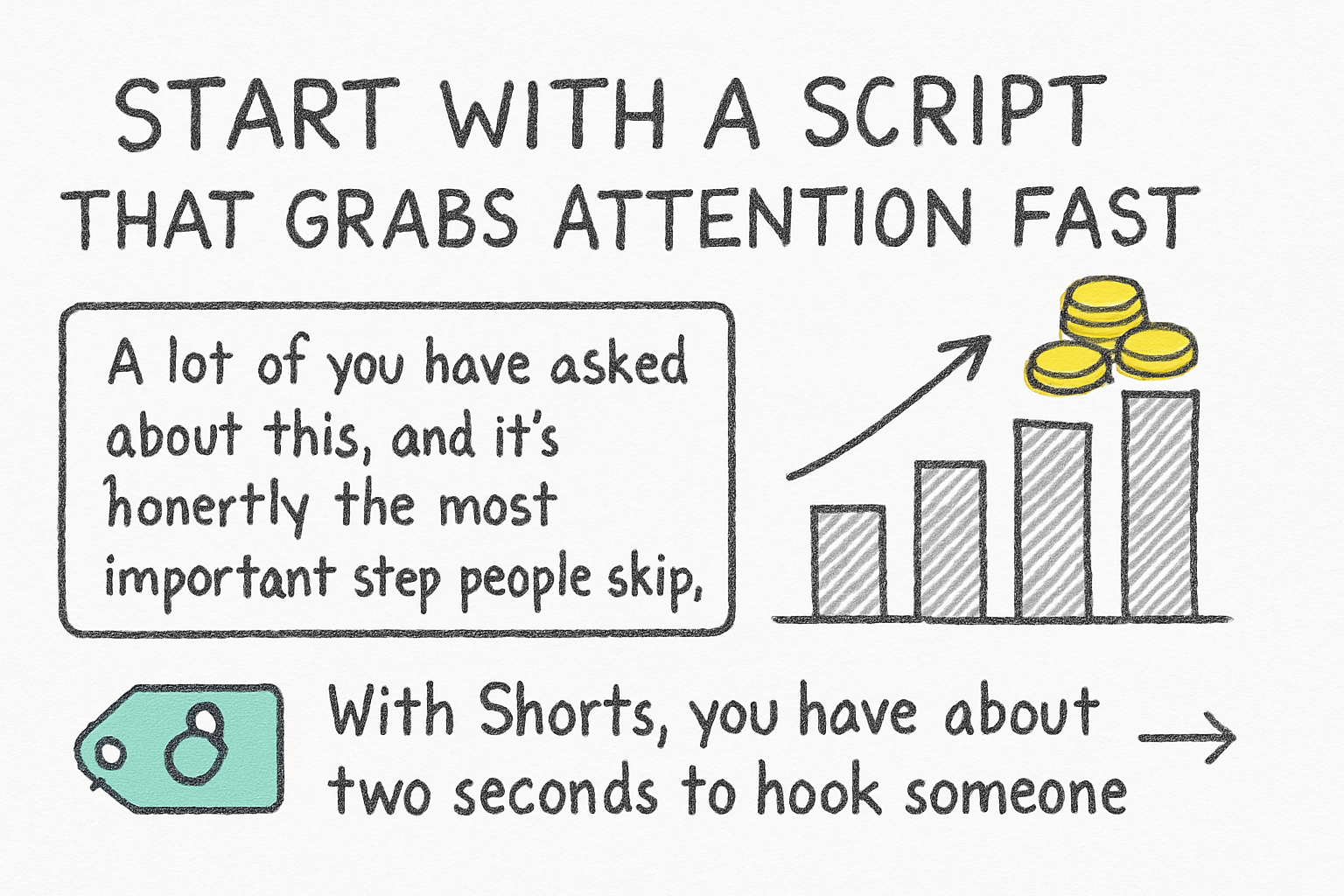
A lot of you have asked about this, and it's honestly the most important step people skip. With Shorts, you have about two seconds to hook someone before they swipe away. That means your script needs to start strong. No slow intros. No "hey guys, welcome back." Just get straight to the point.
AI writing tools make this surprisingly easy. You can feed a tool like ChatGPT or Jasper a topic and ask it to write a 45-second script that opens with a question or a bold statement. You'd be amazed how solid some of these outputs are, especially when you give clear instructions. I personally think the trick is treating the AI like a writing partner, not a vending machine. Give it context, push back on weak lines, and refine until it sounds like you.
For anyone who wants to dig deeper into this part of the process, there are some really solid AI tools to write engaging scripts for YouTube that can fit into almost any workflow. The script sets the tone for everything else, so spending a few extra minutes here pays off down the road.
Once you've got a script you like, keep it tight. Shorts perform best at 30 to 60 seconds. Edit out anything that doesn't push the story forward. Every sentence should earn its place.
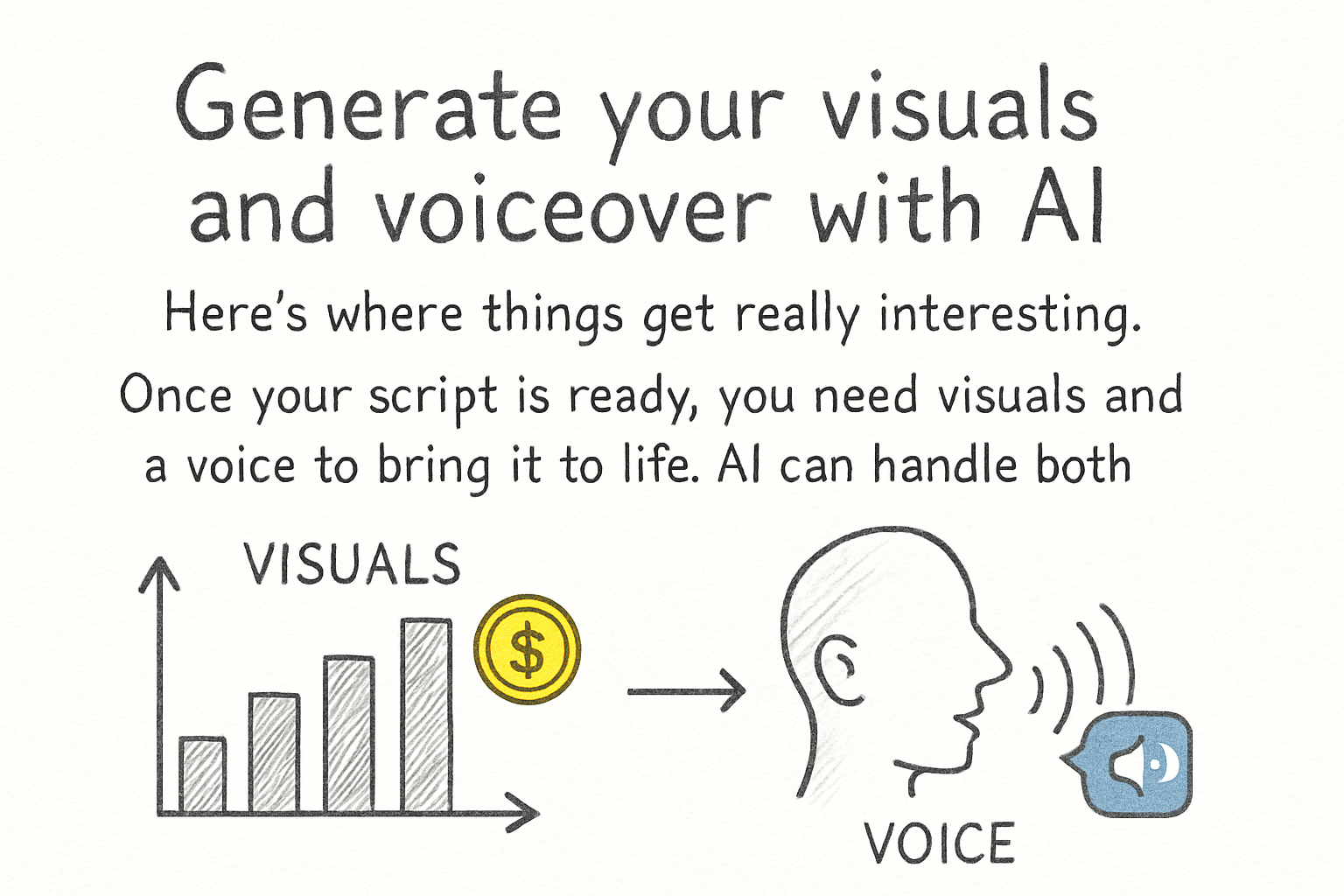
Generate your visuals and voiceover with AI
Here's where things get really interesting. Once your script is ready, you need visuals and a voice to bring it to life. AI can handle both of these without you ever turning on a camera or recording a single word.
For visuals, tools like Runway, Pika, and InVideo can generate or compile footage based on your script. Some of them work by matching stock clips to your text automatically. Others let you type a prompt and generate original video clips. Either way, you're not starting from a blank screen. I remember the first time I tried one of these tools, I expected it to be clunky and awkward. Instead, I had a rough cut ready in about twenty minutes. That was a real turning point in how I thought about content creation.
For the voiceover, AI voice generators like ElevenLabs can create natural-sounding narration that doesn't feel robotic. You can even clone your own voice if you want the content to feel personal without actually recording anything. We covered that in detail in our post on how to clone your own voice in ElevenLabs. It's a genuinely useful skill to have if you're building a channel around your brand.
If you're looking for other options beyond ElevenLabs, there are plenty of platforms for generating realistic AI voiceovers worth trying. The quality gap between AI voices and human voices has gotten really small, and for short-form content, most viewers won't notice a difference at all.
Edit, format, and optimize for the Shorts feed
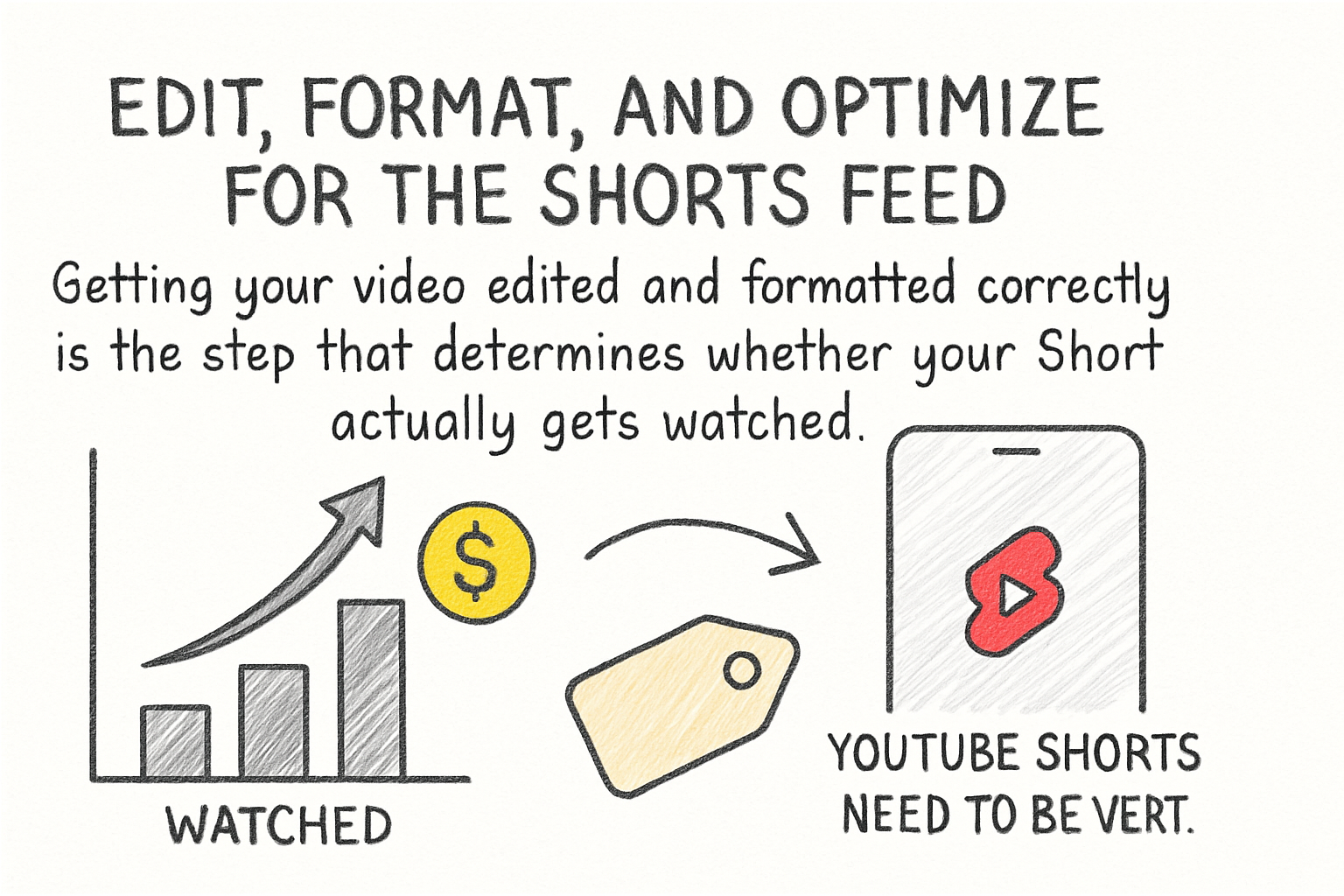
Getting your video edited and formatted correctly is the step that determines whether your Short actually gets watched. YouTube Shorts need to be vertical, so 9:16 aspect ratio is non-negotiable. Most AI video editors handle this automatically, but it's worth double-checking before you export.
AI editing tools can also add captions, adjust pacing, and layer in background music without much input from you. Tools like Opus Clip, Descript, and Cliptude are built specifically for this kind of short-form workflow. They look at your content and make smart decisions about cuts and timing. If you want a broader look at what's out there, our article on AI services that automate video editing for YouTube covers a solid range of options.
Once your video looks good, don't forget the basics of optimization. Your title, thumbnail, and description all matter, even for Shorts. We've written before about how to create viral YouTube and TikTok videos with AI, and a lot of those same principles apply here. Hook, value, call to action. It's a simple structure, but it works.
Also think about consistency. One Short isn't going to build you an audience. But ten or twenty, published regularly over a few weeks? That starts to move the needle. AI tools make it realistic to produce that volume without burning out, which is the real advantage here.
Ready to take the next step?
YouTube Shorts are one of the fastest ways to grow a channel right now, and AI has made the process more accessible than ever. You don't need expensive gear or hours of free time. You just need the right tools and a willingness to experiment. If you want to see how this all comes together in one place, check out Cliptude and see what it can do for your short-form content. Got questions about any part of this workflow? Drop them in the comments below. I read every single one.