YouTube Revenue Estimator: How Much Do Creators Really Make?

If you've ever watched a big YouTuber and thought, 'how much money are they actually making from this?', you're not alone. It's one of the most common questions people have when they start thinking about creating content. The numbers you see floating around online are all over the place, and that makes it hard to know what's real.
A YouTube revenue estimator is a tool that tries to answer that question. You plug in things like view count, niche, and audience location, and it spits out an estimated earning range. But here's the thing — these tools are estimates, not guarantees. There's a big difference between what an estimator shows you and what a creator actually deposits into their bank account.
In this post, we're going to break down how these estimators work, what factors actually drive YouTube income, and why two channels with the same number of views can earn wildly different amounts. If you've been curious about the real math behind YouTube money, keep reading.
How a YouTube revenue estimator actually works
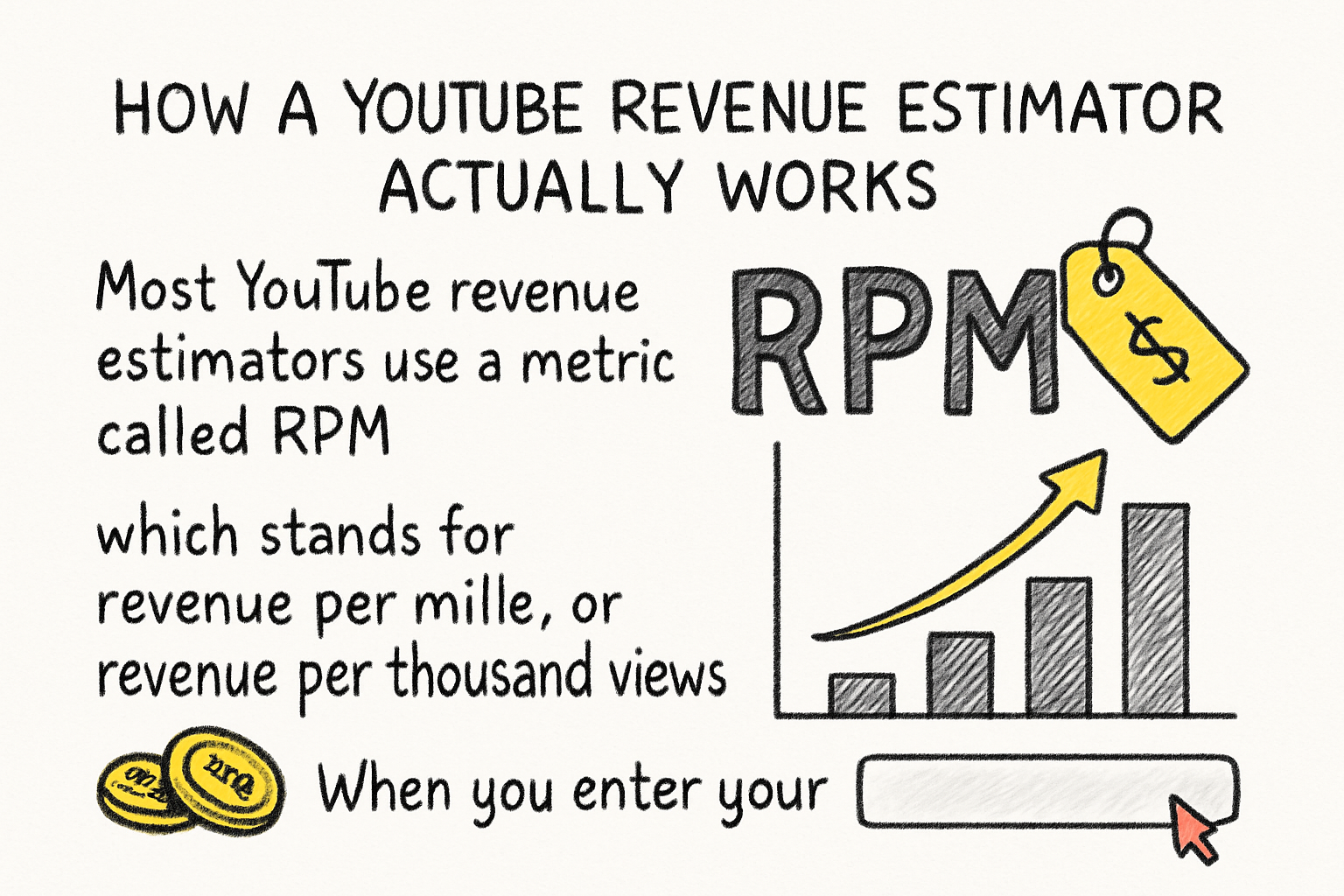
Most YouTube revenue estimators use a metric called RPM, which stands for revenue per mille, or revenue per thousand views. When you enter your estimated monthly views, the tool multiplies that number by an average RPM to give you a ballpark figure. If you want a deeper look at how that math plays out, our YouTube RPM calculator guide walks through it step by step.
The tricky part is that RPM isn't the same for every creator. It depends on your niche, your audience's country, the time of year, and even the length of your videos. A finance channel talking to viewers in the United States will have a much higher RPM than a gaming channel with a mostly international audience. So when an estimator gives you a single number, it's really just taking an average and applying it to your situation.
A lot of you have asked about this in the comments and on social media, so I want to be clear: these tools are useful for setting expectations, not for writing a business plan. They can tell you whether your channel is in the ballpark of being worth monetizing, but they won't predict your exact paycheck.
It's also worth knowing the difference between CPM and RPM, because estimators sometimes use one when they mean the other. CPM is what advertisers pay, while RPM is what creators actually take home after YouTube's cut. Our breakdown of CPM vs RPM explains why that gap matters more than most new creators realize.
What really affects how much creators make
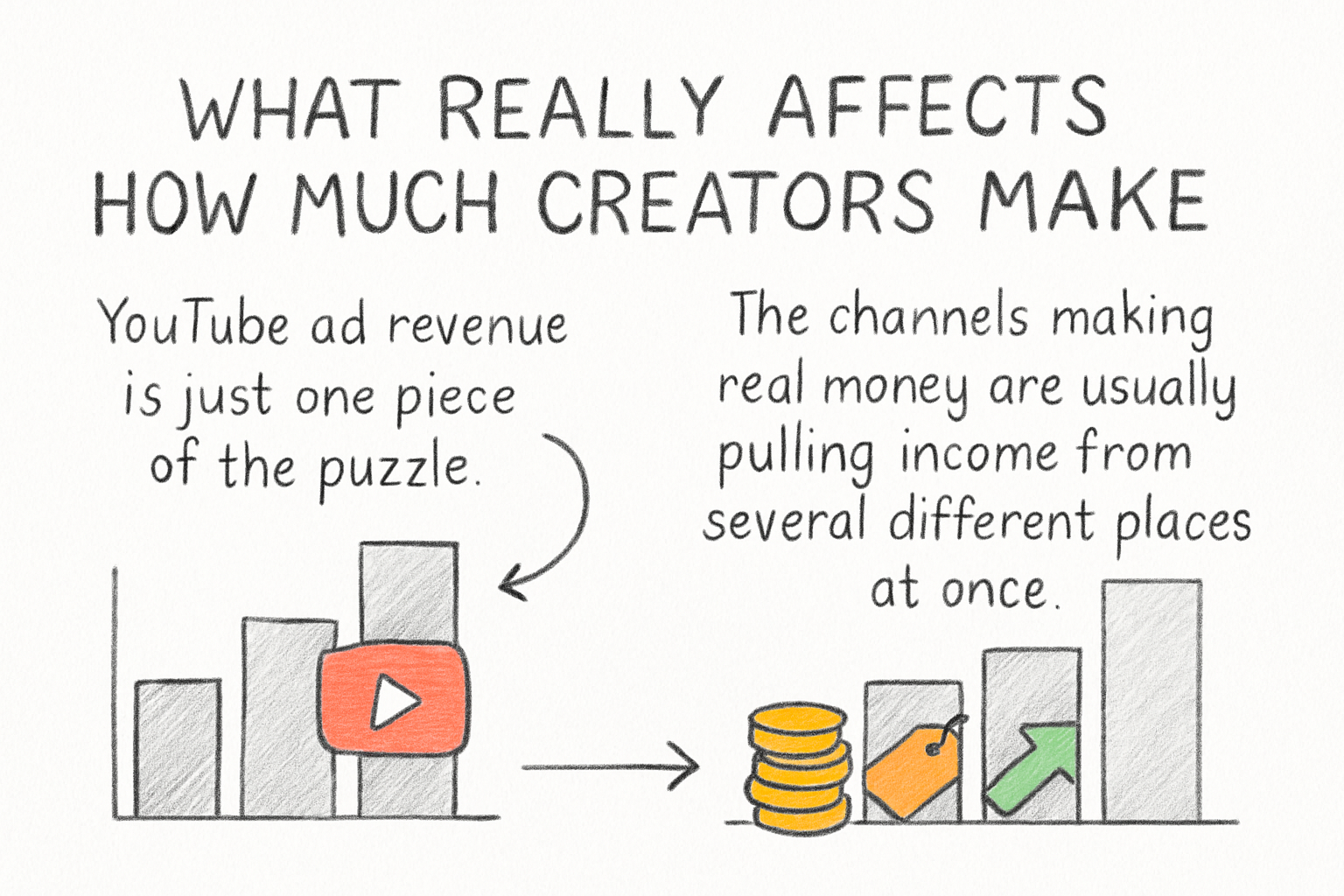
YouTube ad revenue is just one piece of the puzzle. The channels making real money are usually pulling income from several different places at once. That includes channel memberships, Super Chats during livestreams, merchandise, brand deals, and affiliate marketing. Ad revenue might only represent 30 to 50 percent of what a successful creator actually earns in a month.
Niche plays a massive role. I personally think this is the most underrated factor that beginners miss when they start estimating their income. A lawyer or financial advisor making educational videos can earn five to ten times more per thousand views than someone posting entertainment or comedy content. Advertisers pay more to reach people who are actively interested in buying high-value products or services.
I remember when a friend of mine started a channel about budgeting and personal finance. Her view counts were modest compared to bigger creators, but her RPM was so high that she started earning meaningful money before she even hit 50,000 subscribers. Meanwhile, another creator I know with ten times her audience was barely covering their hosting costs. Same platform, very different results.
Audience location matters too. Views from countries like the United States, Canada, the United Kingdom, and Australia are worth more to advertisers than views from other regions. So if your content goes viral in a country with lower ad rates, your revenue might not reflect what that view count would suggest. Understanding this helps you make smarter decisions about the topics and formats you choose.
Getting the most out of your YouTube earnings
Once you understand how the numbers work, you can start making choices that actually push your revenue higher. One of the most effective things you can do is make sure your channel is even eligible to earn in the first place. Our guide on how to monetize videos on YouTube covers the requirements and how to meet them faster than most people expect.
Beyond eligibility, the type of content you create makes a big difference. Longer videos with natural ad break points tend to earn more because YouTube can run multiple ads throughout the video. Videos under three minutes usually only qualify for one pre-roll ad, which limits your earning potential even if the view count is strong. This is one reason many creators treat YouTube Shorts as a growth tool rather than a primary revenue source.
Growth is the other side of the equation. More views mean more opportunities for ad revenue, but consistent growth usually comes from a solid content strategy. If your channel is still getting started, thinking about topics that hold attention and drive subscriptions is just as important as understanding RPM. Our post on YouTube Shorts ideas to grow your channel fast is a great place to look for content angles that bring in new viewers.
Tools like AI video creation platforms are also changing what's possible for solo creators. When one person can produce content at the rate of a small team, they can grow their channel faster and test more ideas without burning out. If you're curious about what those tools look like in practice, check out the roundup of AI video creation tools we put together for 2026.
Ready to take the next step?
YouTube income is real, but it's rarely as simple as the numbers on an estimator make it look. The creators who do well are the ones who understand the variables, diversify their revenue, and keep showing up consistently. If you've got questions about any of this, drop them in the comments below. And if you're looking for tools to help you create more content without spending all day editing, check out Cliptude and see what it can do for your channel.