YouTube Sponsorship Rate Calculator: How Much Should You Charge?

If you're a YouTube creator who's been approached by a brand, you've probably stared at that email for a solid ten minutes wondering what number to put in your reply. Too high and you scare them off. Too low and you leave money on the table. It's one of the most stressful parts of being a creator, and honestly, most people just guess. That guessing game costs creators real money every single year.
A lot of you have asked about this exact problem, and I get it. Pricing your first sponsorship feels like walking into a car dealership with no idea what the car is worth. The good news is there's a smarter way to think about it. A YouTube sponsorship rate calculator gives you a starting point based on real data, not vibes. But even with a calculator, you still need to understand the math behind it so you don't undersell yourself.
This post is going to walk you through how sponsorship rates actually work, what factors change your number up or down, and how to use a calculator without treating it like a magic answer machine. We also covered how creators make money more broadly in our YouTube Revenue Estimator article, which is worth reading alongside this one if you want the full picture.
How sponsorship rates are actually calculated
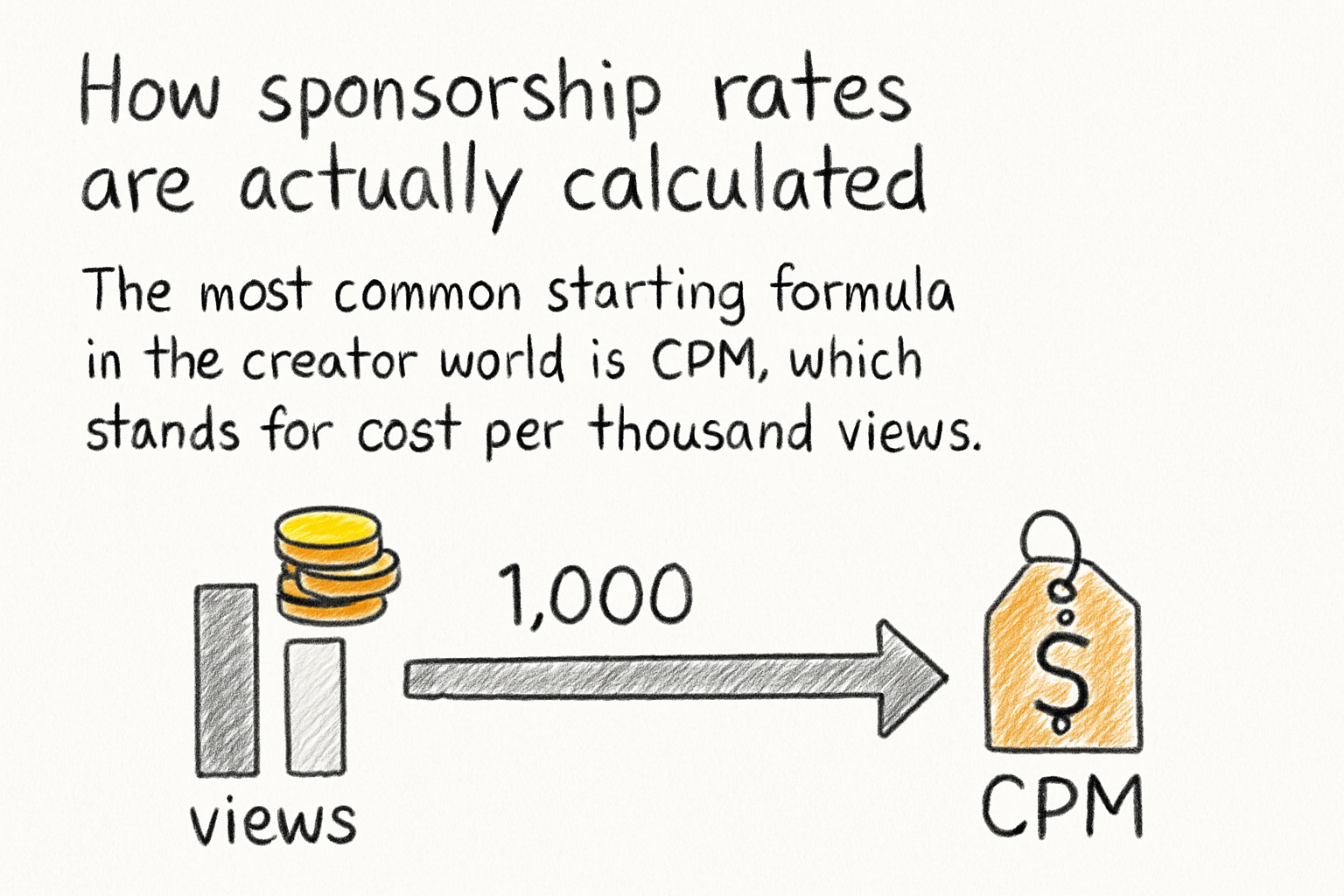
The most common starting formula in the creator world is CPM, which stands for cost per thousand views. Sponsors pay a set rate for every thousand views your video gets. For YouTube sponsorships, a rough industry baseline is somewhere between $20 and $50 per thousand views, though that range shifts a lot depending on your niche. Finance creators can charge $50 to $100 CPM. Gaming and entertainment creators often sit closer to $10 to $25. The niche matters because it signals who your audience is and how much they spend.
Here's where a sponsorship rate calculator comes in. You plug in your average views per video, your niche, your engagement rate, and sometimes your subscriber count. The tool spits out a suggested range. That range isn't a final price. It's a floor. Think of it as the minimum you should consider before you even start the conversation with a brand.
Engagement rate is one of the most overlooked pieces of the puzzle. A channel with 50,000 subscribers but a 10 percent engagement rate is more valuable to most brands than a channel with 200,000 subscribers and a 1 percent engagement rate. Brands want people who actually watch, click, and buy. They're not just paying for eyeballs. They're paying for trust and attention.
You should also think about where the sponsor placement lives in your video. A pre-roll mention at the very start before viewers skip is worth less than a mid-roll segment where you spend 60 seconds actually talking about the product. Dedicated videos, where the whole thing is about the sponsor, cost the most. Most creators charge two to three times their standard integration rate for a fully dedicated video.
What makes your rate go up or down
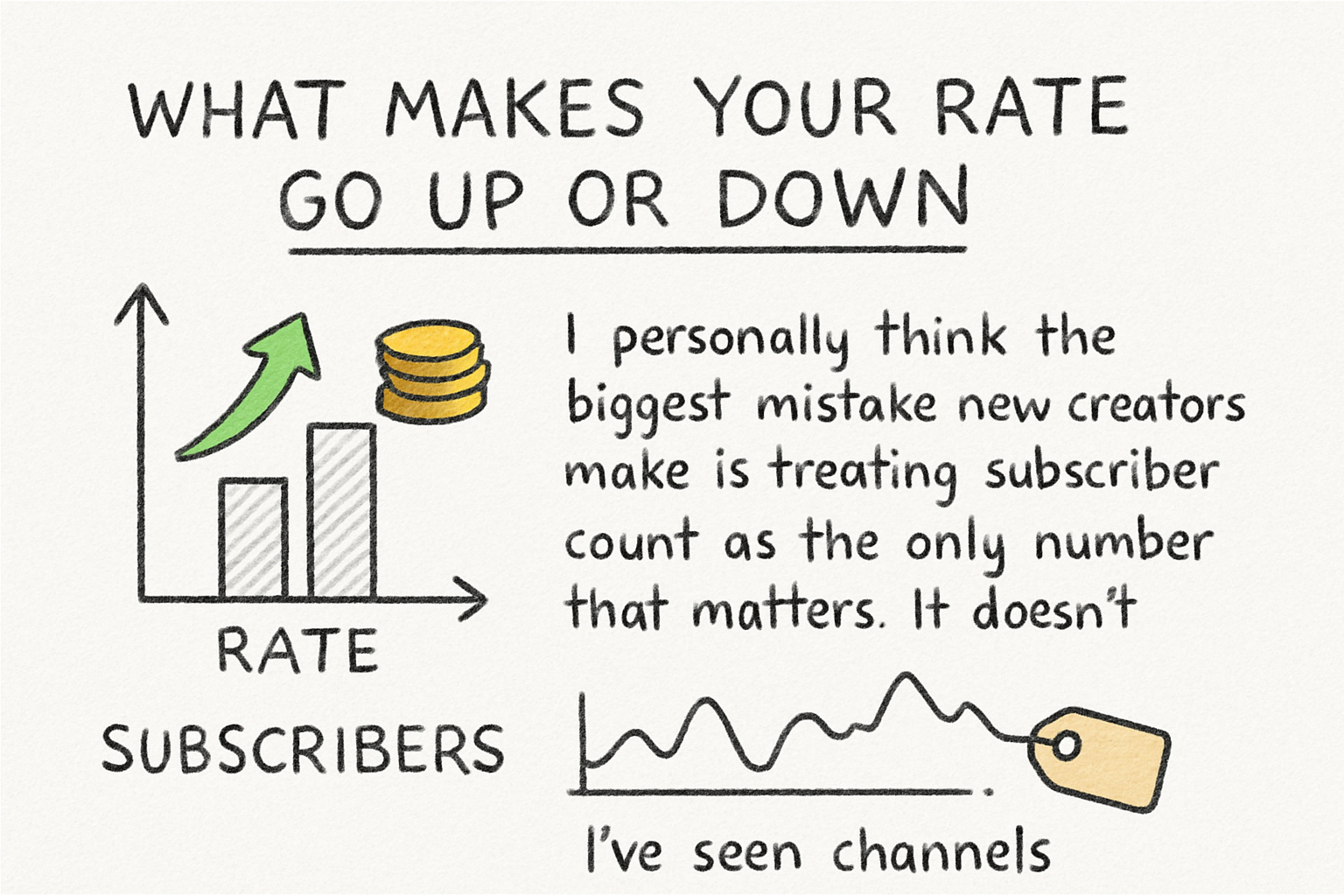
I personally think the biggest mistake new creators make is treating subscriber count as the only number that matters. It doesn't. I've seen channels with 10,000 subscribers land deals that channels with 100,000 subscribers couldn't get, simply because of the niche and how loyal their audience was. A tight community beats a passive audience every single time when it comes to sponsorships.
Your content category is one of the biggest levers on your rate. Personal finance, software, business tools, and health are high-value niches because the products sold there have high price tags and buyers who are ready to spend. If you review $5 snacks for fun, you'll charge less per thousand views than someone who teaches people how to invest. That's just the reality of how advertisers think about return on investment.
Audience demographics also shift your number. Brands will often pay more if your viewers are between 25 and 44 years old, live in the US, Canada, UK, or Australia, and have disposable income. If your analytics show a strong adult audience in tier-one countries, put that in your media kit. That information is worth money. Don't leave it out just because you didn't know it mattered.
Finally, think about your track record. Have you worked with brands before? Did those videos perform well? Do you have screenshots of results you drove? If you can show a brand that your last sponsored segment got a 3 percent click-through rate, that's a negotiating tool. New creators don't have this yet, and that's okay. Start with rates on the lower end of your calculated range, deliver great results, document everything, and raise your prices on the next deal.
Building your media kit and pitching with confidence
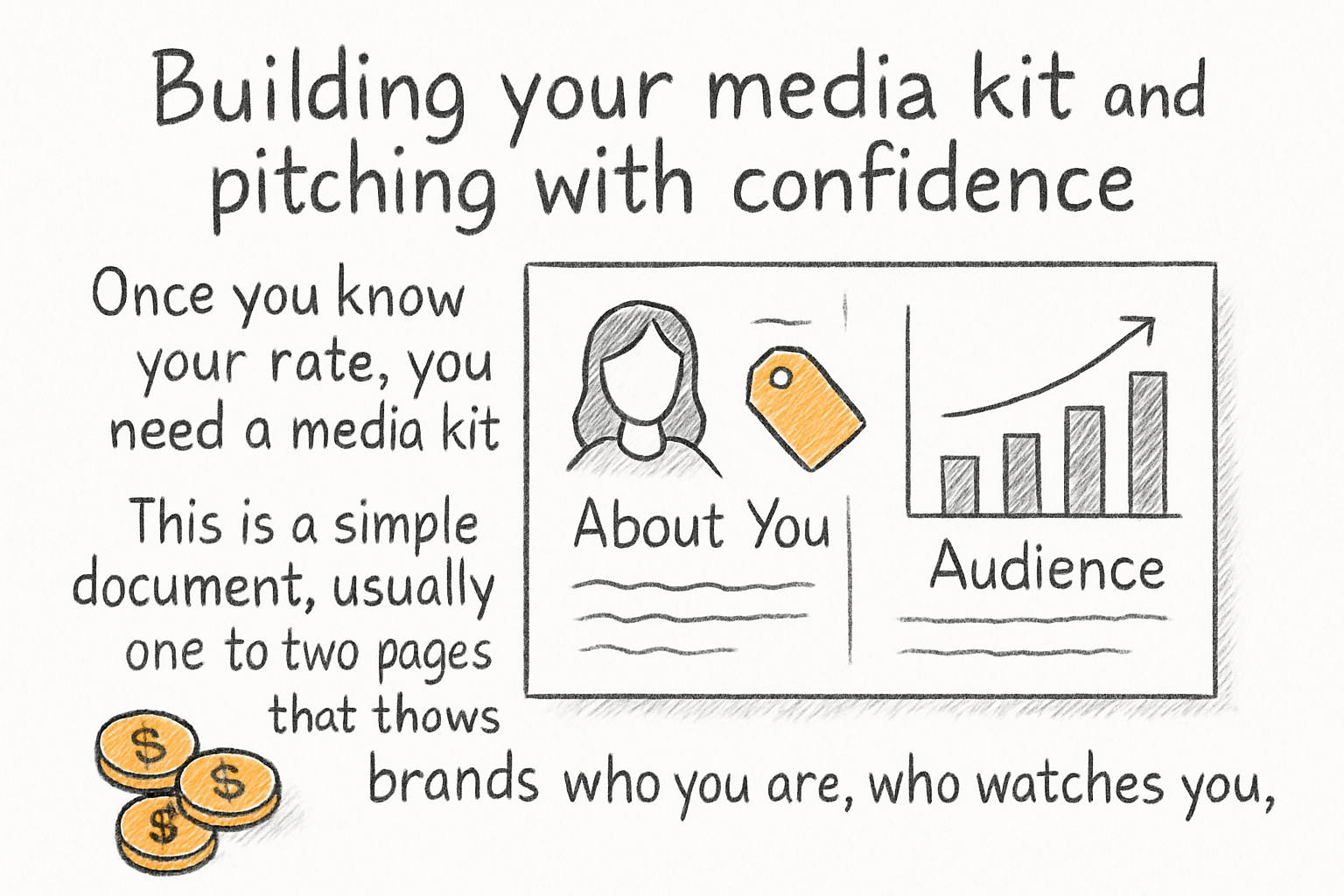
Once you know your rate, you need a media kit. This is a simple document, usually one to two pages, that shows brands who you are, who watches you, and what they get when they pay you. It should include your average views, your subscriber count, your engagement rate, your audience demographics, your niche, and a list of the types of sponsorship packages you offer. Think of it like a restaurant menu. Make it easy for the brand to say yes.
I remember putting together my first-ever rate sheet and being genuinely embarrassed by the numbers. I kept second-guessing myself and almost sent a rate that was less than half what I should have charged. Don't do that. If a calculator gives you a range and your gut says go lower because you're nervous, fight that instinct. Brands expect negotiation. They budget more than they offer first. If you come in too low, they don't negotiate up. They just take the deal and move on.
Your pitch email matters too. Keep it short. Lead with your numbers, not your story. Something like, 'My channel reaches 40,000 fitness-focused viewers per video with a 6 percent engagement rate, and I'd love to talk about a sponsored segment for your product.' That's it. You can add more detail, but get the data in front of them fast. If you need help thinking through how your calls to action are landing on your existing videos, check out this guide on CTAs that actually convert because strong CTAs in your regular content make you more attractive to sponsors too.
Once you land a deal, always get the terms in writing. Agree on the deliverables, the talking points, the posting date, the revision process, and the payment timeline before you film a single second. Brands are generally professional, but clear agreements protect everyone. A signed contract or even a detailed email thread is better than a handshake deal you might misremember months later.
Ready to take the next step?
Getting your sponsorship rate right isn't something you do once and forget. It's something you revisit as your channel grows, your niche sharpens, and your track record builds. If you want tools that help you grow faster, manage your content smarter, and show up more professionally to potential sponsors, check out Cliptude and see what it can do for your channel. And drop a comment below telling me what niche you're in and what's been the hardest part of figuring out your rates. I read every single one.