YouTube Niche Monetization Scorer: Find Your Most Profitable Path

Picking a YouTube niche feels exciting at first. You brainstorm topics you love, maybe sketch out a few video ideas, and then reality hits: will anyone actually pay for this content? That question trips up so many creators before they even record a single second of footage. The good news is there's a smarter way to figure this out before you invest months of your life into the wrong direction.
A YouTube Niche Monetization Scorer is basically a tool or framework that helps you rate how profitable a niche could be for your specific channel. It looks at things like advertiser demand, audience spending habits, competition levels, and sponsorship potential. Instead of guessing, you get a clearer picture of where your time and energy will actually pay off. Think of it like a GPS for your creator career, one that tells you whether the road ahead leads somewhere worth going.
A lot of you have asked about this exact topic in the comments, especially after we published our guide on how much creators really make. People want to know not just what others earn, but how to pick a lane that gives them a real shot at those numbers. So let's dig into what actually makes a niche score high, and how you can use that knowledge to build something profitable from day one.
What makes a niche actually profitable
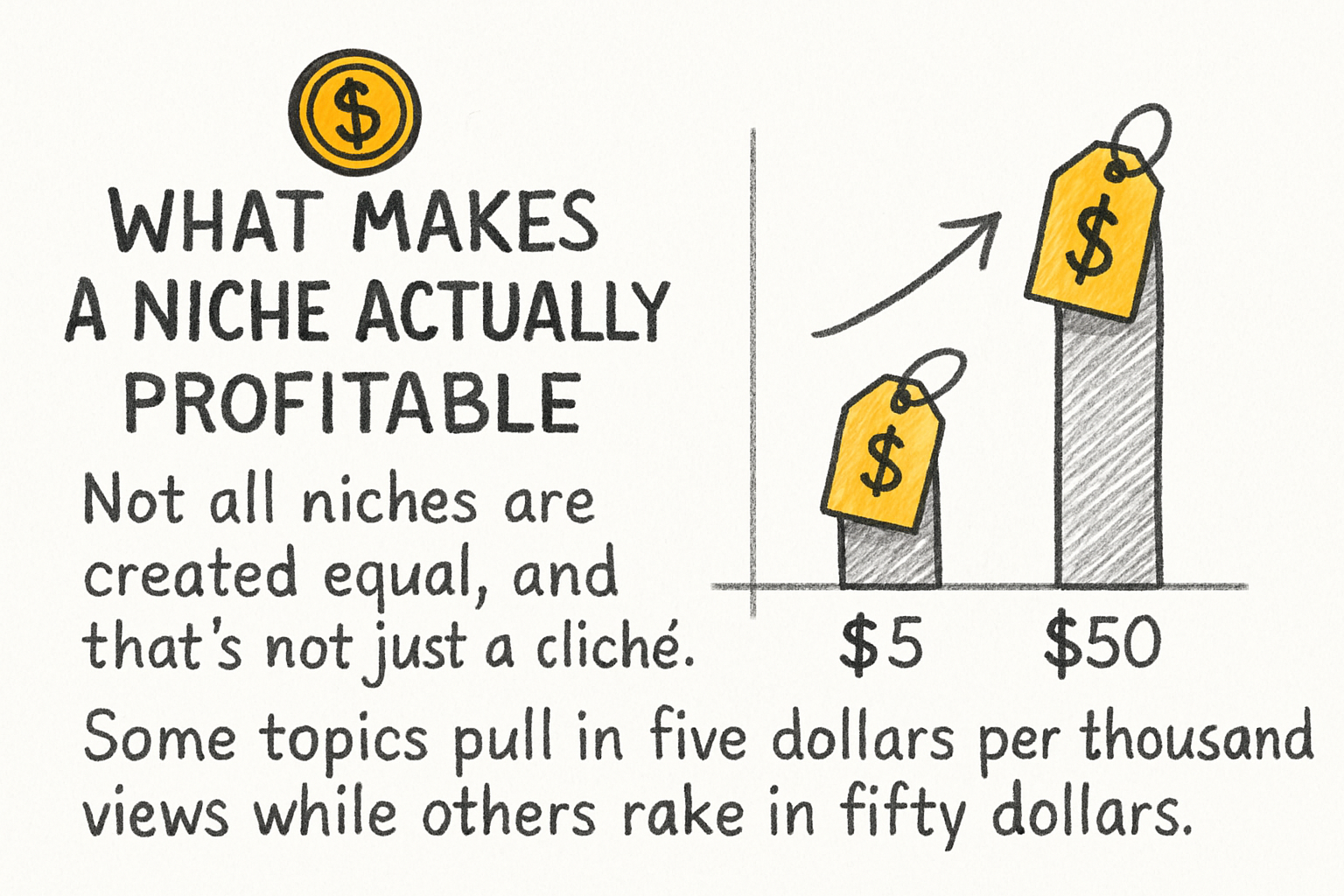
Not all niches are created equal, and that's not just a cliche. Some topics pull in five dollars per thousand views while others rake in fifty dollars for the same number of eyeballs. The difference usually comes down to who's watching and what they're willing to spend money on. Advertisers in finance, software, legal services, and real estate pay way more per click than advertisers selling candy or cheap fashion items.
Audience intent matters just as much as the topic itself. A viewer searching for 'how to file taxes as a freelancer' is in a very different mindset than someone watching a cat compilation. One of them is actively looking to solve a problem, probably one that costs or saves real money. Advertisers know this, and they bid accordingly. High-intent audiences almost always mean higher CPMs, which is the amount YouTube pays you per thousand ad views.
Competition plays a role too, but not in the way most people think. A crowded niche can still be profitable if you carve out a specific angle. Personal finance for teachers is less competitive than personal finance in general, but the audience still has strong buying intent. That kind of niche-within-a-niche thinking is where a lot of smart creators find their sweet spot.
Sponsorships are another layer entirely. Some niches are gold for brand deals even when their YouTube ad rates are just average. Tech, fitness, and productivity channels, for example, attract sponsors who pay generously because their audience actually buys things. If you want to understand how to price those deals once you land them, our YouTube sponsorship rate calculator breaks down exactly how to set your rates.
How to score your niche before committing
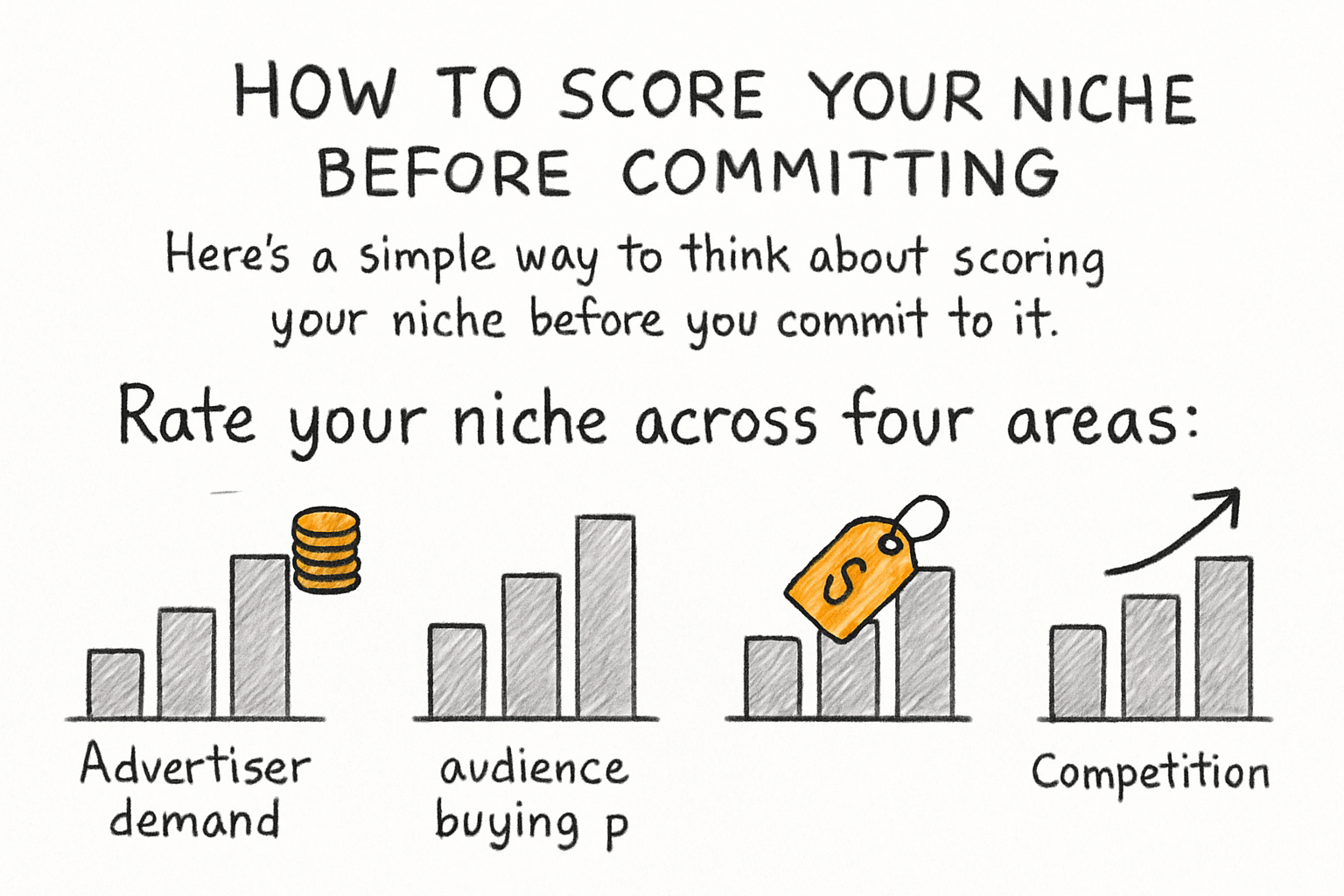
Here's a simple way to think about scoring your niche before you commit to it. Rate your niche across four areas: advertiser demand, audience buying power, your passion and consistency, and long-term content potential. Give each one a score from one to ten and add them up. That total gives you a rough idea of how well-rounded your niche is from a money-making standpoint.
Advertiser demand is easy to research. Open Google's Keyword Planner or even just search your topic on YouTube and look at the pre-roll ads that appear. Are big brands showing up? Are financial services, insurance, or software companies running ads before those videos? If yes, that's a strong signal the niche pays well. If you're only seeing ads for discount apps or generic products, temper your expectations.
Audience buying power is trickier to measure but just as important. Ask yourself who watches these videos and whether they have money to spend. A channel about luxury travel attracts high earners. A channel aimed at broke college students might still do well with the right product sponsors, but the average CPM will likely be lower. I personally think this is the factor creators underestimate the most, because it's less obvious than just looking at view counts.
Long-term content potential is about whether you can keep making videos in this niche for years without running out of material. Evergreen niches like personal finance, health, or home improvement always have fresh angles to explore. Trend-chasing niches burn out fast. If you're not sure how to think about consistency, it helps to map out at least fifty video ideas before you launch. If you can't get to fifty, the niche might be too narrow.
Niches that consistently score high and why
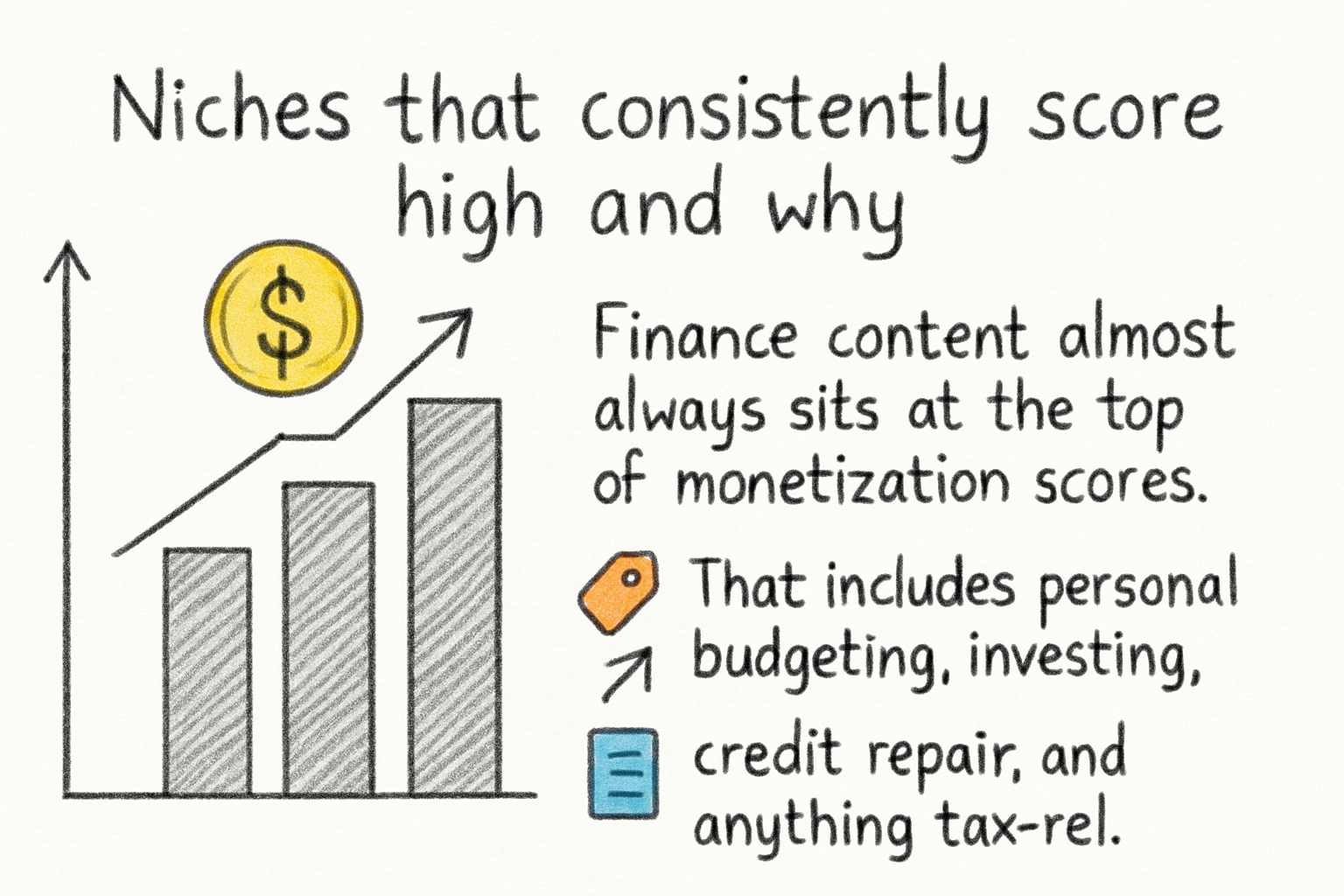
Finance content almost always sits at the top of monetization scores. That includes personal budgeting, investing, credit repair, and anything tax-related. The CPMs in this space regularly hit thirty to fifty dollars or more, and the audience is actively searching for answers to expensive problems. The downside is competition, but even a sub-niche like 'budgeting for single parents' can build a loyal, monetizable audience quickly.
Health and wellness is another strong performer, especially anything tied to specific outcomes like weight loss, chronic illness management, or mental health coping strategies. I remember watching a tiny channel about managing autoimmune conditions blow past one hundred thousand subscribers in under a year because the audience was deeply passionate and the content filled a real gap. Sponsors in this space, like supplement brands or therapy apps, pay well because purchase decisions are emotionally driven.
Software and tech tutorials also score consistently high. Think 'how to use Excel for small business owners' or 'best tools for remote teams.' These videos attract both high CPMs and software company sponsorships. The content tends to be evergreen too, meaning a video you record today might still pull views and revenue two years from now.
On the other end of the spectrum, pure entertainment niches like reaction videos, random vlogs, and meme compilations tend to score low unless the creator has already built a massive following. That doesn't mean you can't make money there, but it's a harder climb. If you're starting fresh, picking a niche that serves a specific audience with specific needs will almost always outperform a general entertainment approach. Once your channel starts gaining traction, tools like our YouTube video upload scheduler can help you post at the right times to maximize early momentum.
Ready to take the next step?
Choosing the right niche is one of the most important decisions you'll make as a YouTube creator, and now you have a real framework for thinking it through instead of just going with your gut. If you want to run the numbers on your own niche ideas, explore the tools built to help creators like you grow smarter and earn more by visiting Cliptude. Drop your niche in the comments below and let's talk about how it scores. Seriously, share it. It's always more useful to think through this stuff together than to sit on a spreadsheet alone.