YouTube Video Upload Scheduler: When Is the Best Time to Post?

Timing matters more than most creators want to admit. You could spend a week editing the perfect video, nail the thumbnail, write a great title, and still watch it fall flat because you dropped it at the wrong hour on the wrong day. It's frustrating, and it happens all the time.
A lot of you have asked about this exact topic, and honestly it makes sense. Upload timing isn't talked about nearly enough compared to things like SEO or click-through rates. But getting your schedule right can be the difference between a video that catches fire in its first few hours and one that just sits there collecting dust.
The good news is that you don't have to guess. There's real data behind when audiences are most active on YouTube, and once you understand the logic, you can build a posting schedule that actually works for your channel and your viewers.
Why upload timing affects your video's performance
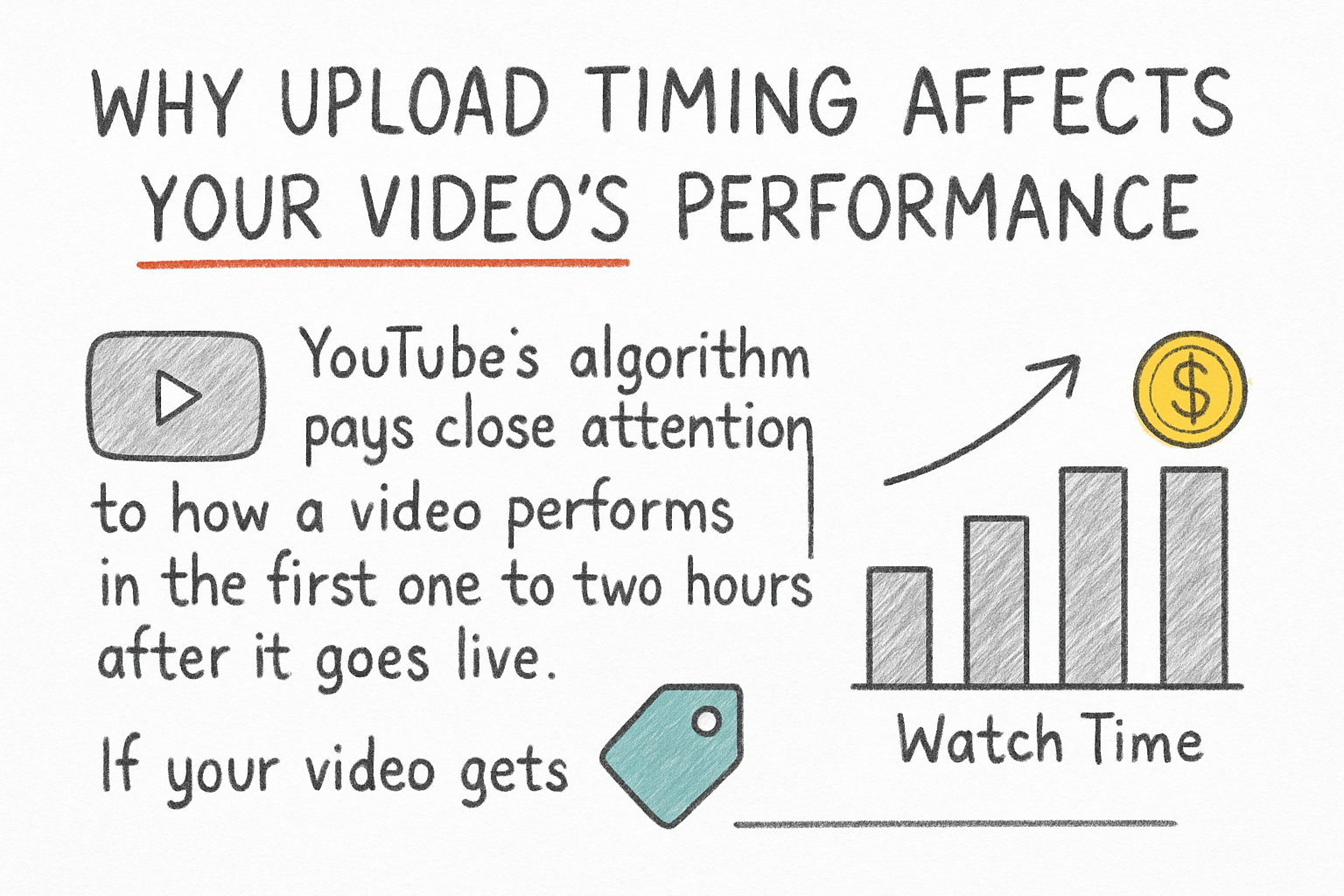
YouTube's algorithm pays close attention to how a video performs in the first one to two hours after it goes live. If your video gets strong watch time, comments, and clicks right away, the algorithm reads that as a signal that people want to see it. Then it pushes it to more feeds. If nobody's around to watch when you post, that early window goes to waste.
This is why dropping a video at 3 AM when your audience is asleep is a real problem. Even a great video can get buried if it doesn't pick up early traction. The algorithm doesn't give your video a second chance just because it was posted at a bad time.
Think of it like a restaurant opening for lunch. If you unlock the doors when everyone is already at work and nobody walks by, you're not going to get a rush. But if you open right when the lunch crowd is hungry and nearby, the momentum builds naturally.
Your video's first two hours are basically that lunch rush. You want as many of your subscribers as possible to be awake, online, and ready to click when your video goes live. That's the whole game with upload timing.
The best days and times to post on YouTube
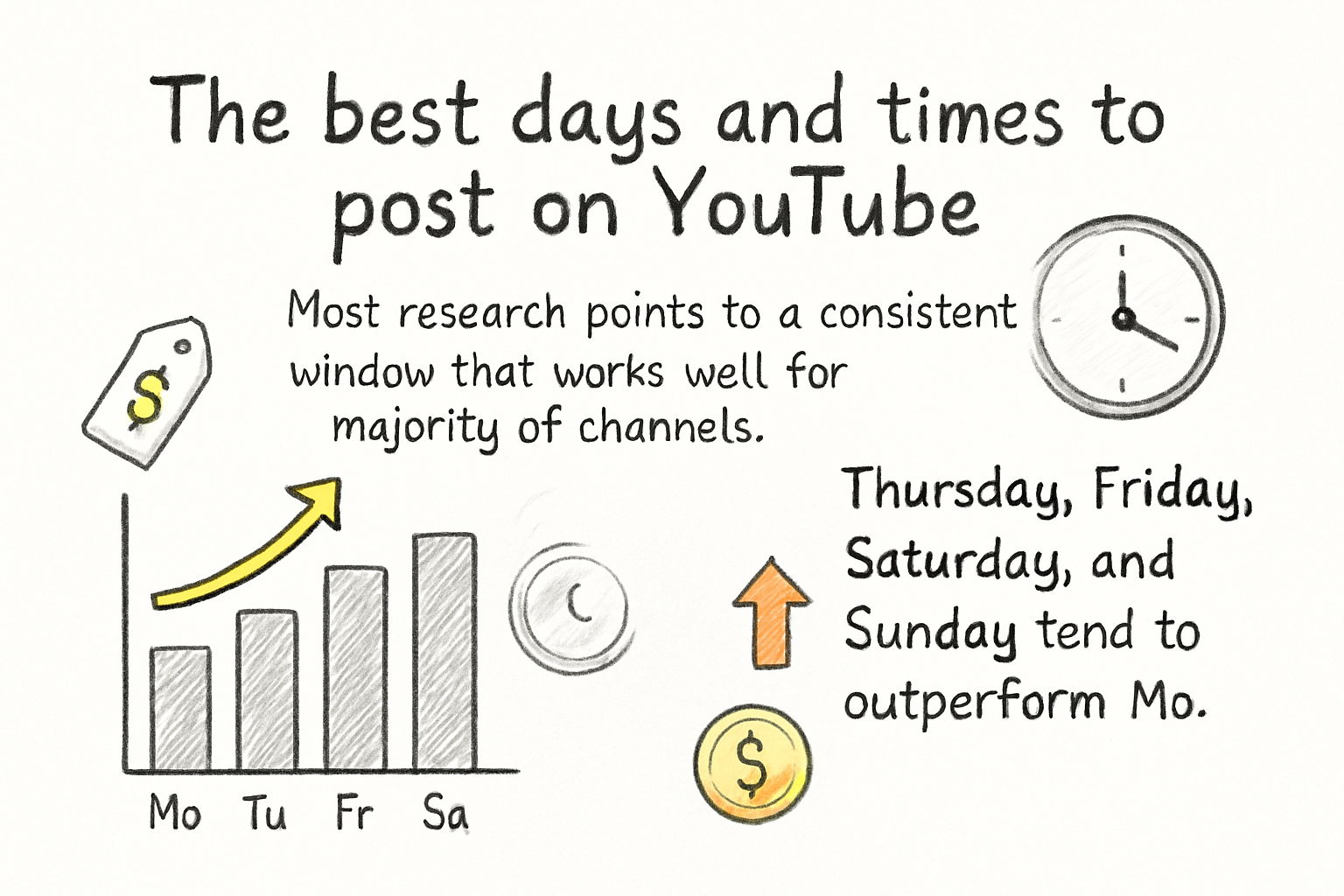
Most research points to a consistent window that works well for the majority of channels. Thursday, Friday, Saturday, and Sunday tend to outperform Monday through Wednesday for views and engagement. People are winding down from the work week, they have more free time, and they're more likely to sit through a full video.
As for time of day, the sweet spot is usually between 2 PM and 4 PM in your target audience's time zone. This gives your video a couple of hours to warm up before the peak viewing hours hit around 7 PM to 10 PM. By the time your audience is scrolling after dinner, your video already has some watch time and engagement behind it.
I personally think Saturday afternoon is the single best time to post for most general-interest channels. I tested this on a small cooking channel a while back and the Saturday uploads consistently pulled in two to three times the views compared to Monday posts with similar topics and thumbnails. The difference was stark.
Of course, none of this is one-size-fits-all. If your channel is about stock trading or morning news, your audience might be most active early on weekday mornings. That's why checking your own YouTube Analytics is non-negotiable. It shows you exactly when your subscribers are online, broken down by day and hour.
How to use a YouTube upload scheduler the right way
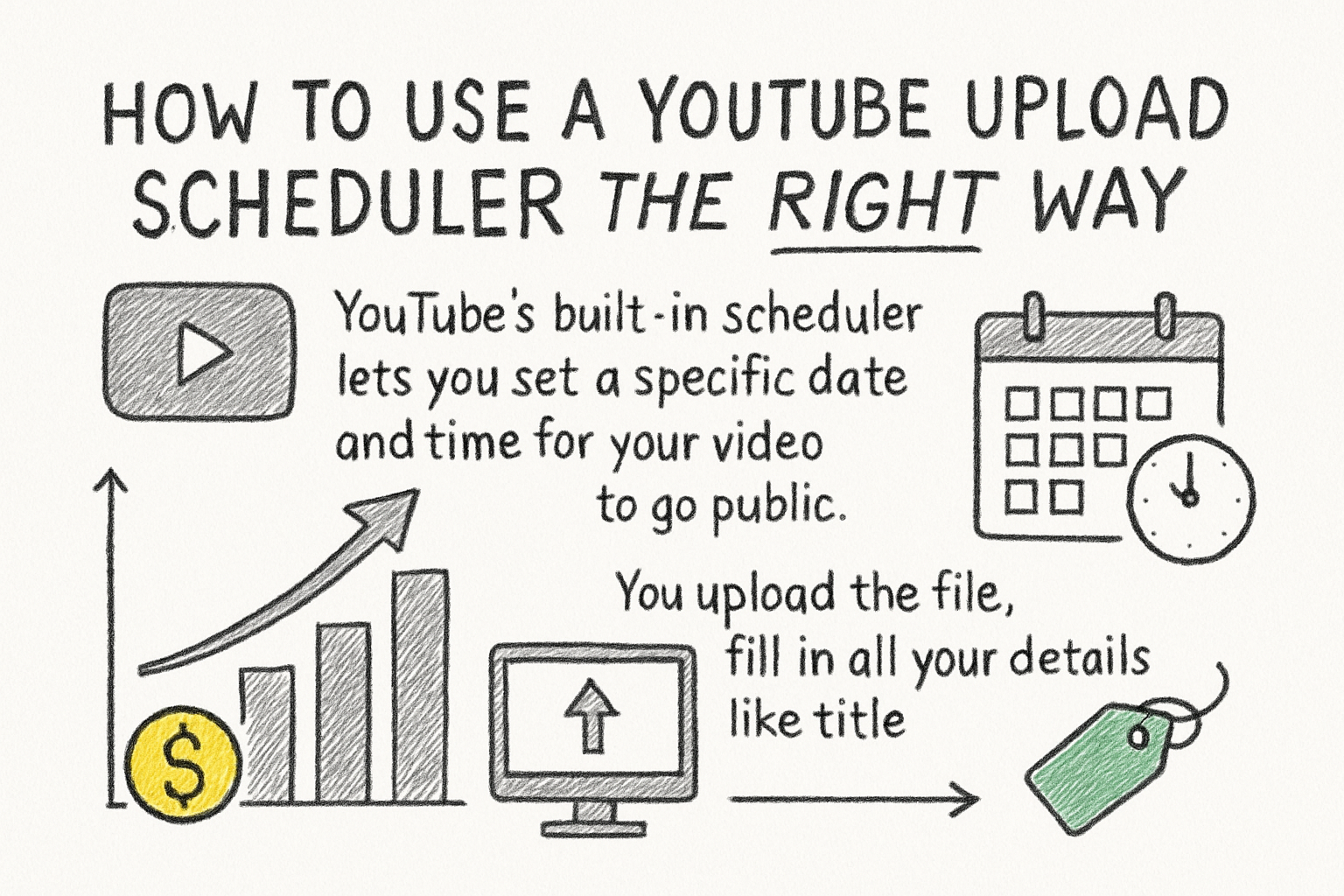
YouTube's built-in scheduler lets you set a specific date and time for your video to go public. You upload the file, fill in all your details like title, description, and tags, and then choose 'schedule' instead of publishing it immediately. This way your video goes live at exactly the right moment even if you're asleep or busy.
The key is to schedule at least 24 to 48 hours in advance when possible. This gives you time to double-check everything, fix any issues, and even promote the upcoming video on your other social channels. A quick post on Instagram or X saying 'new video drops Saturday at 3 PM' builds anticipation and sends your subscribers straight to your channel the moment it goes live.
If you're using AI tools to help you produce content faster, pairing them with a solid upload schedule is a smart move. Check out our breakdown of AI video creation tools to see what can speed up your production without sacrificing quality. The faster you can create, the more consistent your posting schedule becomes, and consistency is what the algorithm rewards over the long run.
One thing people often overlook is consistency itself. Posting every Saturday at 3 PM trains your audience to expect you at that time. They start showing up like clockwork. That kind of habit-building from your subscribers is one of the most underrated growth tools on the platform. Your channel's overall health also depends on regular, predictable activity, so don't underestimate what a stable schedule does for your standing with the algorithm.
Ready to take the next step?
Ready to stop guessing and start growing? Drop a comment below and tell us what posting schedule has worked best for your channel. And if you're looking for tools to help you create and publish content faster, check out Cliptude to see how creators are building smarter YouTube workflows without burning out. Your next upload might be closer than you think.