YouTube Shadow Ban: What It Is and How to Fix It

You post a video. You wait. The views barely move, comments stop showing up, and your channel feels like it's stuck behind an invisible wall. Sound familiar? A lot of you have asked about this exact situation, and the short answer is: you might be dealing with a YouTube shadow ban.
A shadow ban is when YouTube quietly limits how your content gets seen, without ever sending you a warning or a strike. Your videos don't get removed. Your channel stays up. But your reach takes a serious hit, and most creators don't even know it's happening until they start digging into the numbers.
This post breaks down what a YouTube shadow ban actually is, how to spot one, and what you can do to fix it. It's not as complicated as it sounds, but you do need to know what to look for.
What a YouTube shadow ban actually is
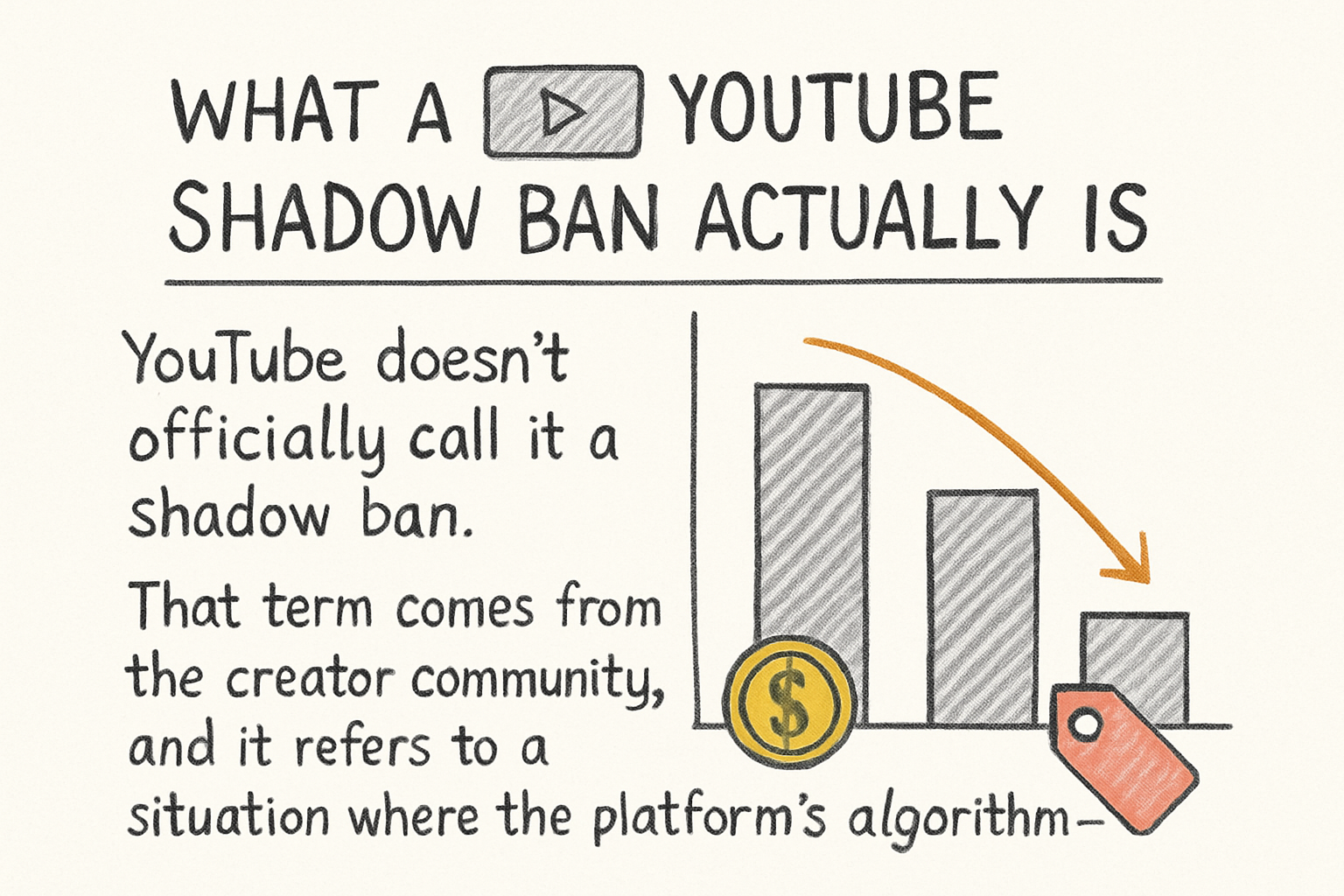
YouTube doesn't officially call it a shadow ban. That term comes from the creator community, and it refers to a situation where the platform's algorithm stops pushing your content to new viewers. Your videos might still exist on your channel page, but they won't show up in search results, on the homepage, or in the suggested video feed like they should.
Think of it like shouting in a room where the walls slowly start absorbing your voice. You're still talking, but fewer and fewer people can hear you. The tricky part is that YouTube won't tell you this is happening. There's no notification, no email, no strike on your account. The algorithm just quietly turns down the volume on your channel.
This usually happens when YouTube's system flags your content as borderline or problematic in some way. It doesn't mean your content is illegal or even that bad. Sometimes it's just a matter of keywords, thumbnails, or patterns that the system doesn't like. I personally think the lack of transparency here is one of the most frustrating parts of being a YouTube creator, because you're left guessing what you did wrong.
It's worth noting that shadow bans aren't the same as demonetization or a community guidelines strike. You can have a shadow ban and still technically be monetized. The issue is visibility, not just revenue. If you've ever wondered why your views dropped off a cliff with no clear explanation, this could be why.
How to tell if your channel is shadow banned
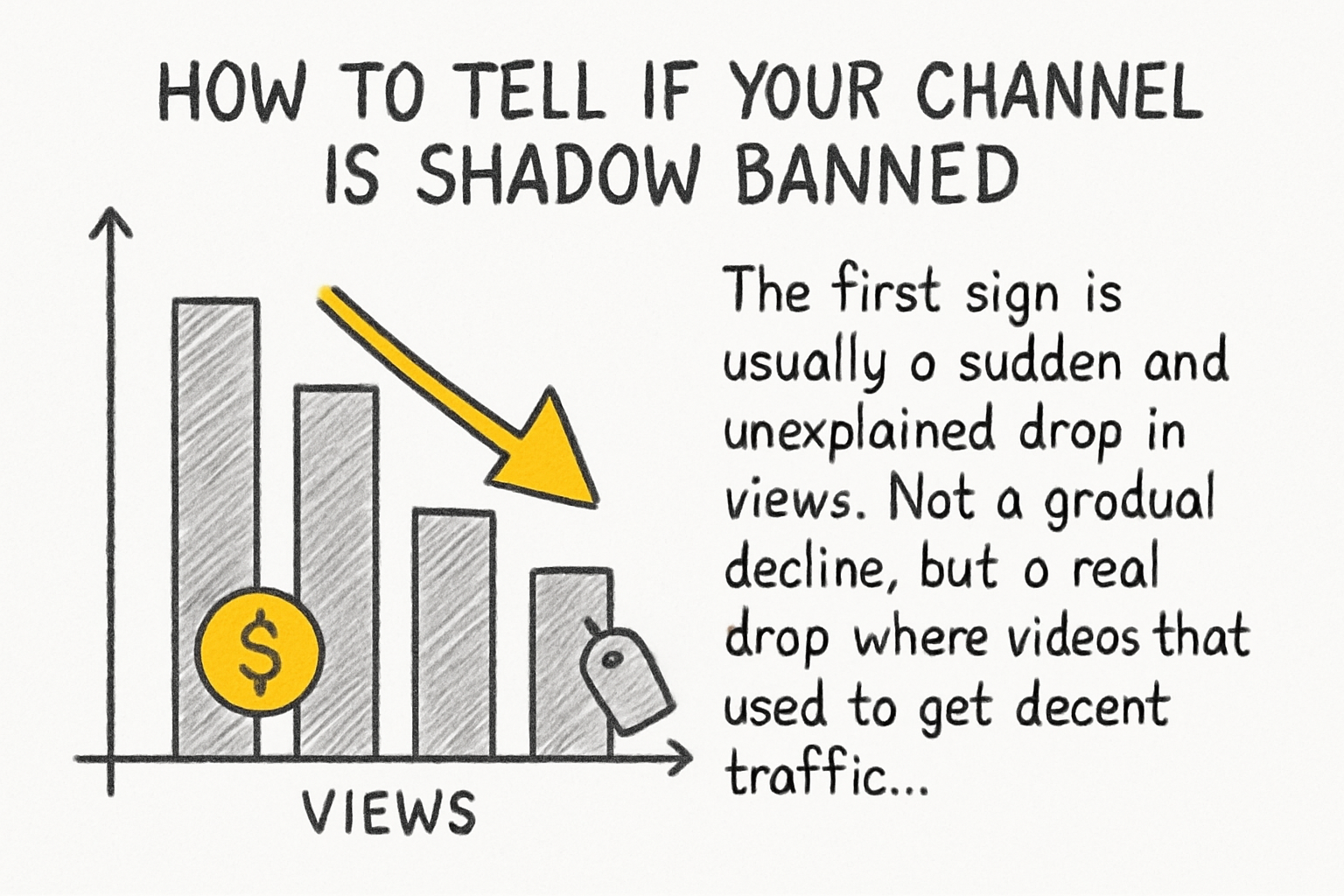
The first sign is usually a sudden and unexplained drop in views. Not a gradual decline, but a real drop where videos that used to get decent traffic are now barely registering. If you check your YouTube Studio analytics and notice your impressions fell sharply, that's a signal worth paying attention to.
Another way to check is to search for your own video on YouTube while logged out of your account. If your video doesn't show up in the search results, even when you type the exact title, that's a red flag. You can also ask a friend to search for your channel name or video title and see what comes up for them. If they can't find you easily, the algorithm may be suppressing your content.
I remember doing this check on an old side channel I ran a few years back. I searched for a video by its exact title and it was buried so far down the results that I had to scroll for a while before I found it. That was the moment I realized something was off, and it pushed me to actually fix the problem instead of just blaming the algorithm.
You should also look at your click-through rate and watch time trends. A shadow ban often shows up as a situation where impressions dry up before clicks even have a chance to happen. Your existing subscribers might still see your content, but new viewers stop finding you entirely. If your channel growth has flatlined, that pattern is worth investigating. For more context on growing your channel the right way, the YouTube channel growth strategy guide is a solid starting point.
How to fix a YouTube shadow ban
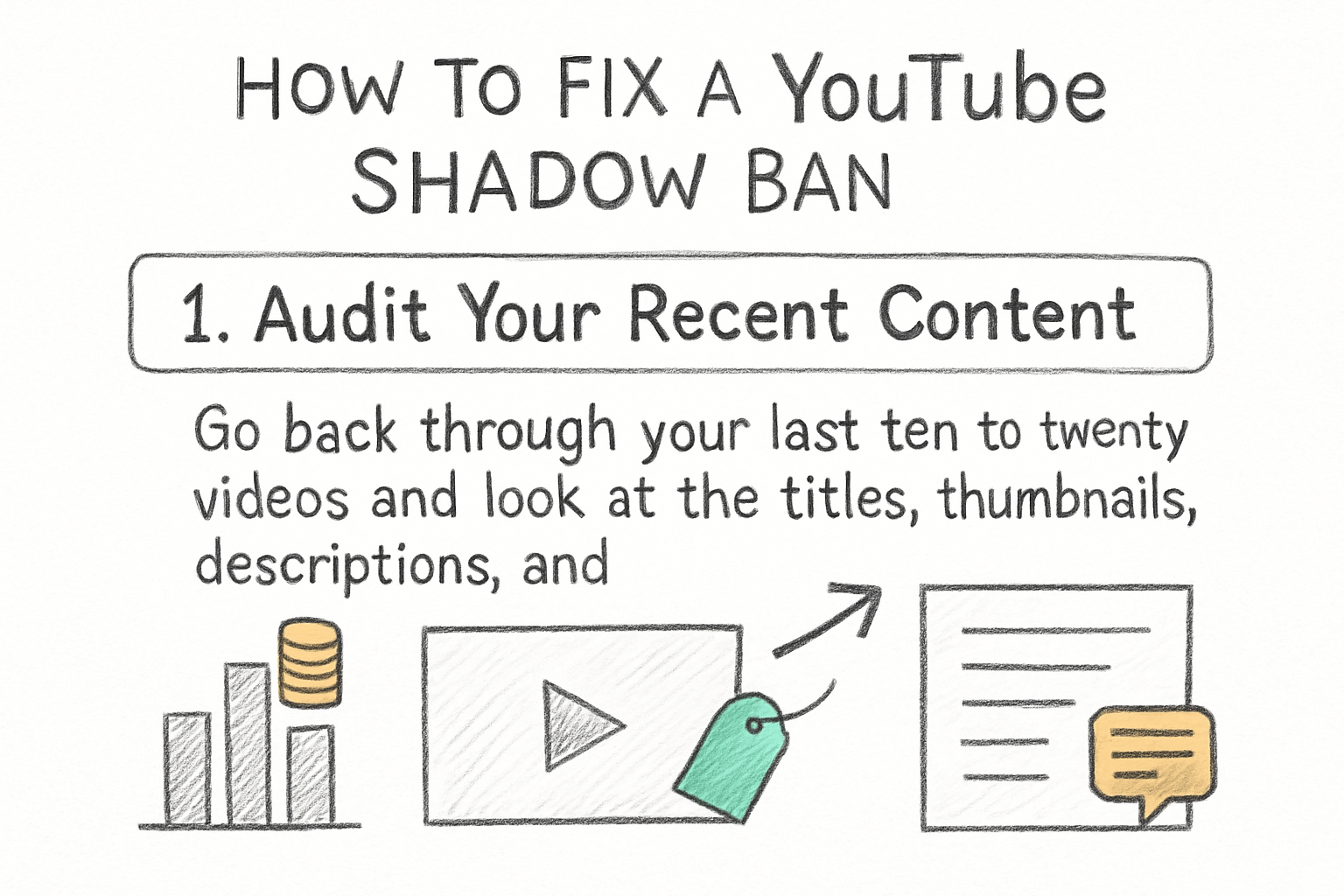
The first step is to audit your recent content. Go back through your last ten to twenty videos and look at the titles, thumbnails, descriptions, and tags with fresh eyes. Are you using any words or phrases that could be flagged as clickbait, misleading, or sensitive? YouTube's system is aggressive about filtering content that looks spammy, so even small things in your metadata can cause problems.
Next, review your posting habits. Did you suddenly upload a ton of videos in a short period? Did you change your content style drastically? The algorithm doesn't love sudden changes or behavior that looks like spam. Spacing out your uploads and keeping your niche consistent can help signal to YouTube that your channel is legitimate and trustworthy.
Make sure your channel is following all of YouTube's community guidelines. Even if you haven't received a formal strike, borderline content can quietly hurt your visibility. This includes things like aggressive language in titles, misleading thumbnails, or topics that sit in gray areas. Go through your channel settings and make sure everything looks clean, including your channel description and any linked accounts.
Finally, focus hard on engagement quality. YouTube pays attention to how viewers interact with your content. If people click your videos and leave within the first few seconds, that sends a bad signal. Work on stronger hooks, better pacing, and content that keeps people watching. We covered a lot of this in our post on what makes a YouTube video go viral, and those same principles apply here. You can also look at tools that help you produce better content faster, like the ones covered in this guide to AI video creation tools, which can help you keep your quality consistent without burning out.
Ready to take the next step?
Dealing with a shadow ban is frustrating, but it's not the end of your channel. Most creators who get hit by one can recover if they take a clear look at their content and make real changes. If you've gone through this yourself or have questions about what we covered today, drop a comment below and let us know what you're seeing on your channel. And if you're looking for tools to help you create better videos more efficiently, check out Cliptude and see how it can help you get back on track.