AI music video generator: create professional videos from a prompt

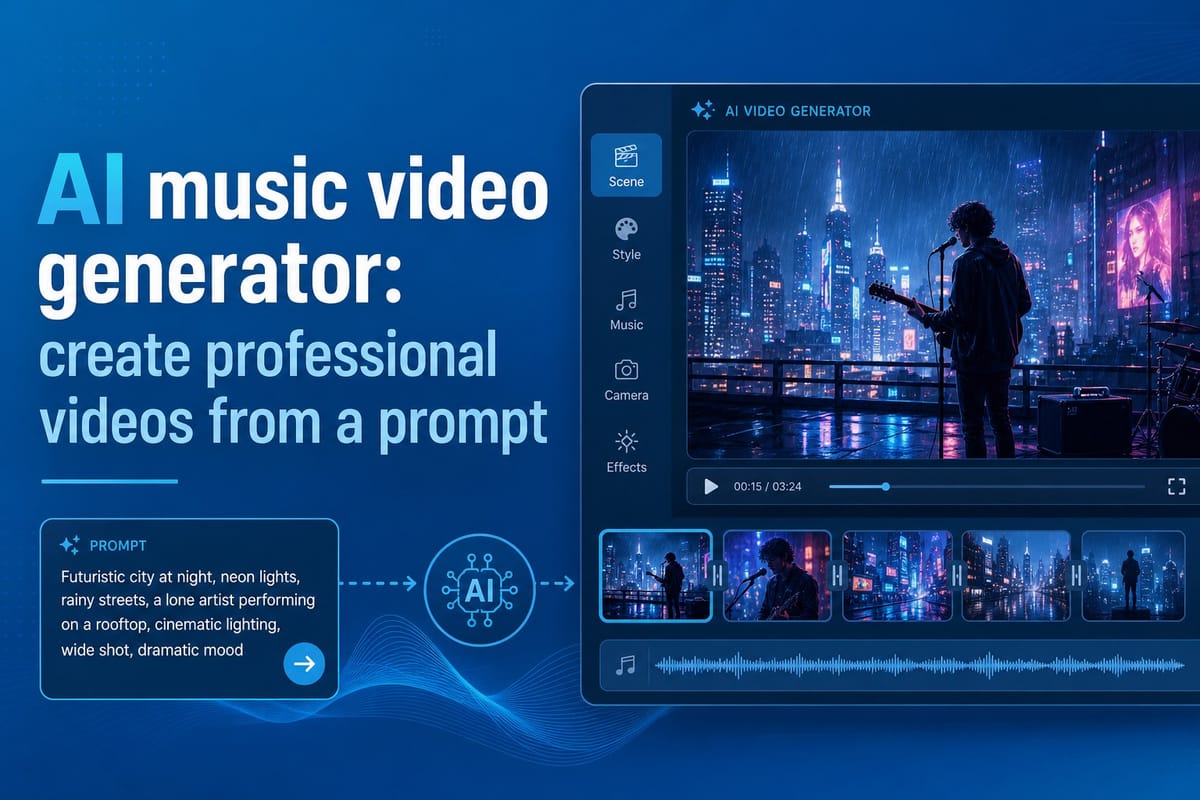
Table of contents
1. What an AI music video generator actually does
2. How to create a music video from a prompt, step by step
3. Using AI music videos to build a content business
Creating a music video used to mean booking a director, renting equipment, hiring actors, and spending thousands of dollars before a single frame was edited. For independent artists, small labels, and content creators, that cost was often the reason great songs never got a visual home. An AI music video generator changes that equation completely. You type a prompt, describe the mood and visuals you want, and the system handles the rest. In this article, I'll walk through how AI music video generation actually works, what you can realistically produce with it, and how a platform like Cliptude makes the whole process fast enough to use at scale.
What an AI music video generator actually does
Let's start with the basics, because there is a lot of confusion about what these tools can and cannot do.
A traditional music video workflow involves a concept meeting, a storyboard, a shoot day, and weeks of post-production editing. That process requires skill in every phase. An AI music video generator collapses those phases into a single input: your prompt.
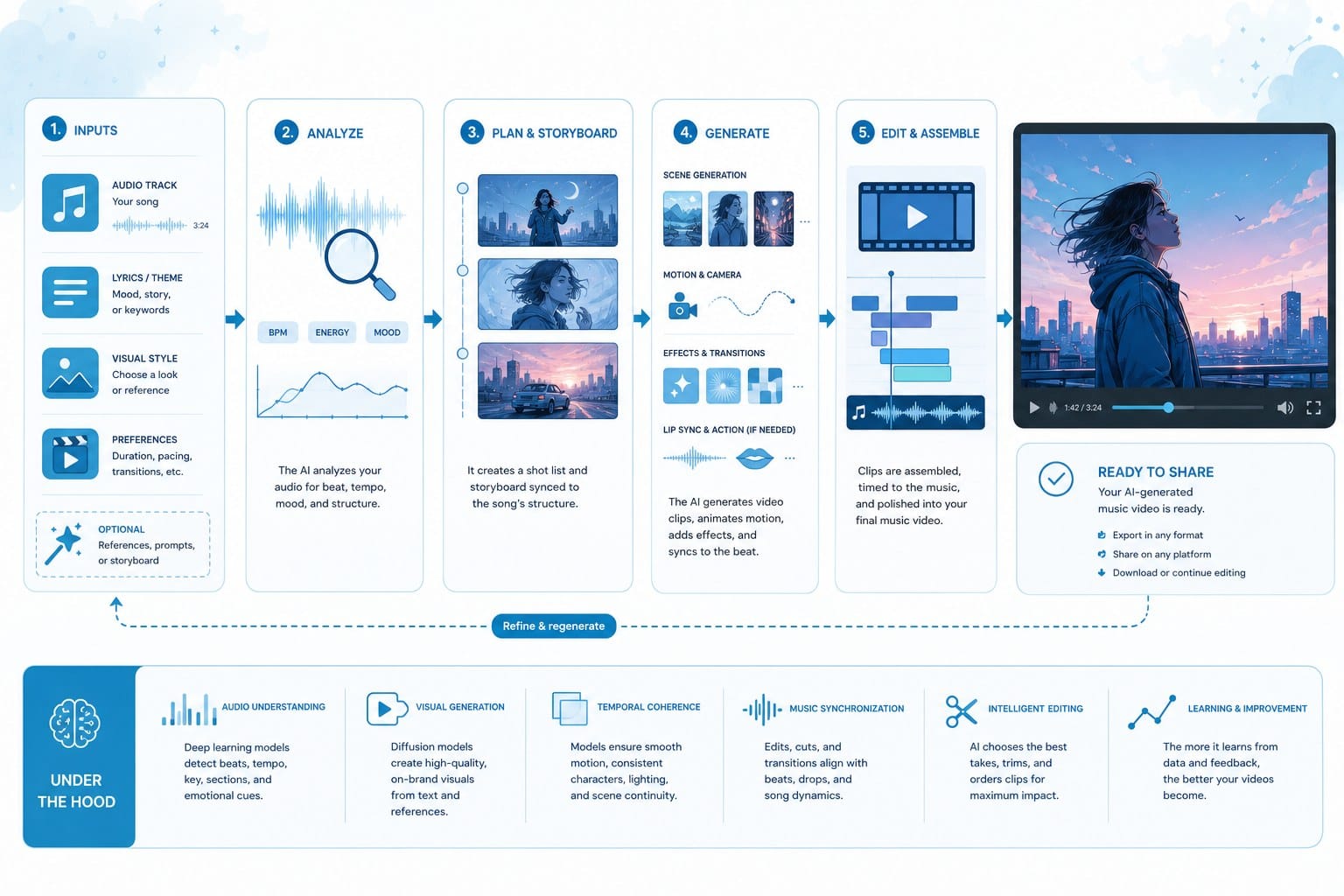
When you describe what you want, a good AI system interprets the mood, the visual style, the pacing, and the subject matter. It then sources or generates footage that matches, builds a sequence that fits the rhythm of the content, adds motion graphics or text overlays where needed, and exports a finished video ready for upload.
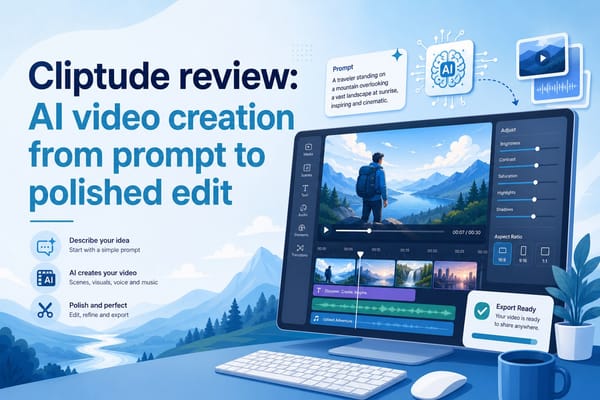
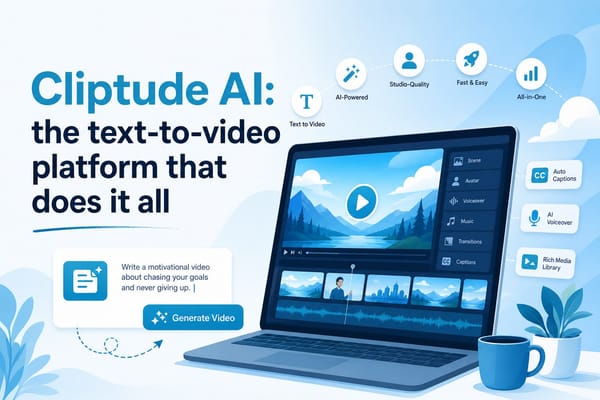
Cliptude works exactly this way. You bring a prompt or a script, and the platform automatically researches the topic, scripts a visual narrative, sources footage, generates motion graphics, and edits everything into a polished final product. It handles music videos the same way it handles documentaries and YouTube shorts, which means the output quality is consistent and the process is repeatable.
The key difference between a basic AI video tool and a full production platform is what happens in the middle. Basic tools often just slap stock footage over audio. A real AI music video generator thinks about the structure of the video. It considers what visual elements reinforce the emotion of the song or the theme of the content. It chooses transitions that feel intentional, not random. It generates motion graphics that add energy without cluttering the frame.
For creators who run faceless YouTube channels, this is especially useful. You never have to appear on camera. You describe the concept, and the platform builds the video around that concept using AI-sourced visuals and motion design.
I also want to be clear about what the AI is not doing. It is not reading your mind. The more specific and detailed your prompt, the better the output. If you describe a dark, cinematic visual style with close-up nature shots and slow pacing, you will get something very different from a prompt that just says 'make a music video.' Specificity is your main creative tool here.
For example, if you are creating content around an atmospheric instrumental track with themes of nostalgia and small-town life, your prompt might describe golden-hour lighting, rural landscapes, empty roads, and a slow cross-fade editing style. The AI takes that input and builds a visual story from it. You can review the output, adjust the prompt, and regenerate sections if needed.
This process works for a wide range of music video formats. Lyric videos with animated text are one of the most popular use cases. Documentary-style music videos that follow a narrative are another. Animation-based videos, including styles like whiteboard or motion graphics sequences, are fully achievable as well. Cliptude supports all of these formats within the same platform, so you are not switching between five different tools to produce different styles.
For content creators who are scaling video output across TikTok, Instagram Reels, and YouTube Shorts, this kind of flexibility matters a lot. You might need a vertical short-form version and a horizontal long-form version of the same content. A platform that handles both without requiring you to rebuild from scratch saves significant time.
The credit-based pricing model that Cliptude uses also helps here. You pay based on what you actually produce, not a flat monthly subscription that charges you the same amount whether you make one video or fifty. For solo creators and small media teams, that usage-based approach keeps costs tied directly to output.
How to create a music video from a prompt, step by step
I want to give you a practical picture of what the creation process looks like, because the concept of 'type a prompt and get a video' can feel abstract until you see the actual steps.
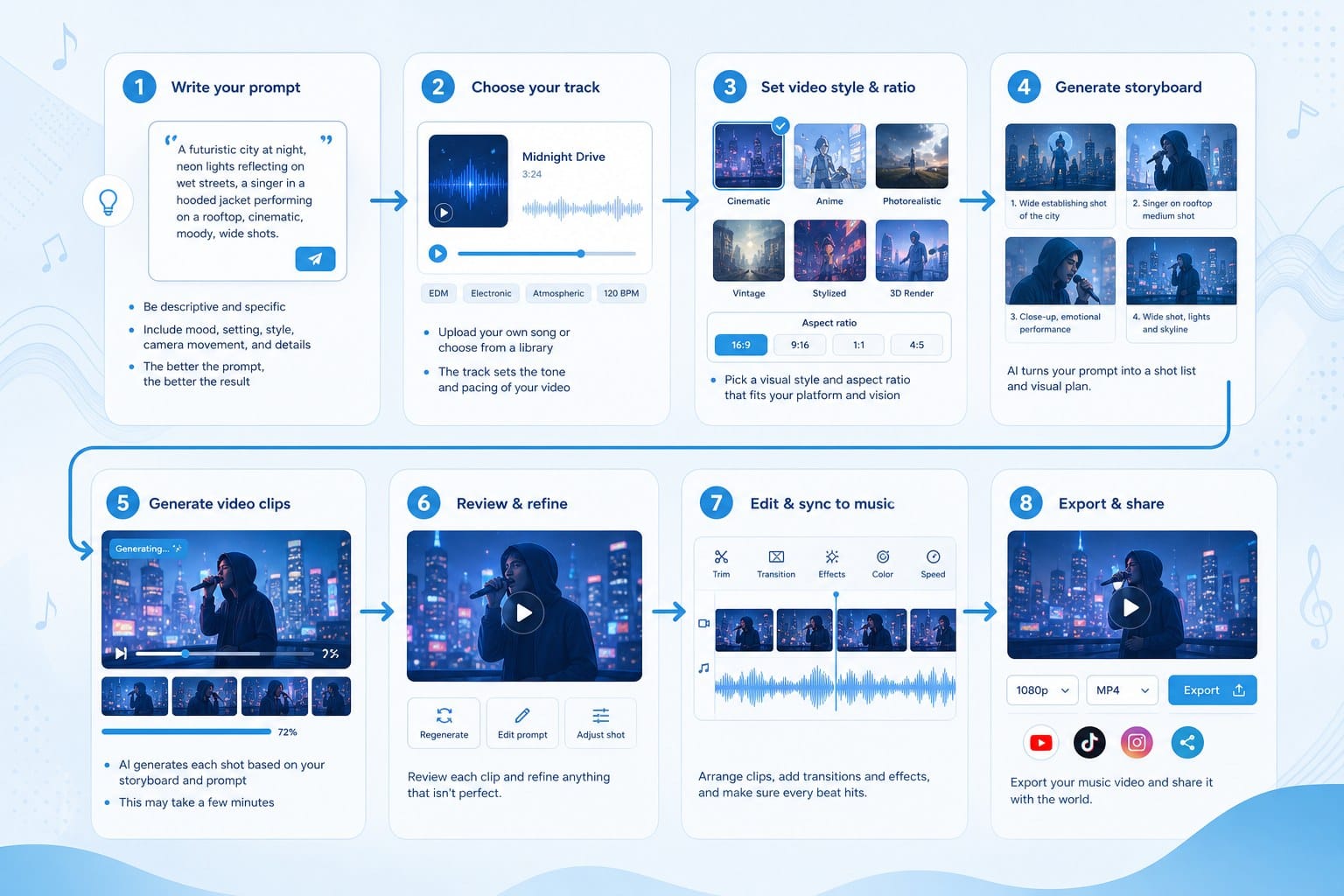
Step one is the prompt itself. This is where your creative direction lives. Think about the following elements before you write your prompt:
The visual mood. Is this dark and cinematic, bright and energetic, soft and dreamy, raw and documentary-style? Describe the emotional tone you want the visuals to carry.
The subject matter. What does the video show? Urban environments, natural landscapes, people in motion, abstract animations, historical footage, illustrated sequences? Be specific about what you want to appear on screen.
The pacing. Fast-cut editing with lots of transitions reads very differently from slow, deliberate shots with minimal cutting. Tell the AI how the energy should flow through the video.
The style format. Do you want a lyric video with animated text? A cinematic footage-driven piece? A whiteboard animation or stickman-style sequence? A motion graphics production with a clean, modern aesthetic?
A strong prompt might look like this: 'Create a music video with a moody, cinematic look. Show rain-soaked city streets at night, reflections in puddles, neon signs, and occasional close-up shots of hands and faces. Use slow zoom transitions and a desaturated color grade with deep blues and orange highlights. Include subtle animated text overlays for key phrases. The overall feeling should be melancholic and introspective.'
That level of detail gives the AI a clear creative framework. The output will reflect the specificity of the input.
Step two is letting the platform do its work. Cliptude automatically researches and sources footage that matches your description, generates motion graphics and text overlays, and assembles an edited sequence. This is not a tool that gives you raw clips to edit yourself. It delivers a finished product.
Step three is review and iteration. Watch the output and note what works and what does not. If the pacing feels too slow, you can adjust the prompt to emphasize energy and quicker cuts. If the color palette is not quite right, describe the change you want. The system is built for iteration, not for single-shot perfection, so do not expect your first prompt to produce exactly what you imagined. Treat it like a conversation.
Step four is export and distribution. Once you are happy with the result, you export the video and upload it to whatever platform you are targeting. Cliptude produces content with full commercial rights, which means you can monetize the video on YouTube, use it in paid advertising, sell it to clients, or license it as part of a content package. If you are thinking about building a revenue stream from AI-generated content, the article on can you monetize AI-generated YouTube videos is worth reading before you start publishing at scale.
For creators who are building faceless YouTube channels, this workflow is especially efficient. You can produce multiple videos per week without being on camera, without hiring an editor, and without managing a production crew. The platform handles the heavy lifting, and you focus on the creative direction and the distribution strategy.
I want to address a common question here: can you use an AI music video generator for short-form content? Yes, and in many cases short-form is where the format performs best. A 60-second vertical video for Instagram Reels or TikTok built around a mood, a visual theme, and a few key text elements is something an AI system can produce quickly and repeatedly. For creators who need to maintain a high posting frequency across multiple platforms, that speed advantage is significant.
Cliptude handles short-form content the same way it handles long-form. You adjust your prompt to reflect the shorter format and the vertical orientation if needed, and the platform builds accordingly. This makes it possible to produce both a full-length music video for YouTube and a short teaser clip for TikTok from the same creative starting point.
For animation-focused creators, the platform also supports formats like stickman and whiteboard videos. If you are producing educational content that works alongside musical elements, or if you want a music video with an illustrated, animated aesthetic, those styles are available. The article on AI stickman animation video maker for YouTube creators explains how that format works in more detail.
One more practical note on prompts: do not underestimate the value of referencing real visual references in your description. Describing a color palette as 'warm and golden like late afternoon sunlight through a window' is more useful to an AI than 'warm.' Describing editing pacing as 'slow and deliberate, one cut every four to six seconds' is more actionable than 'slow.' The AI responds to concrete visual language, so the more grounded and specific your descriptions are, the better the results will be.
Using AI music videos to build a content business
Producing a great music video is one thing. Turning that capability into a sustainable content business is another. I want to spend some time on the strategy side, because the tool only matters if you have a plan for how to use it.
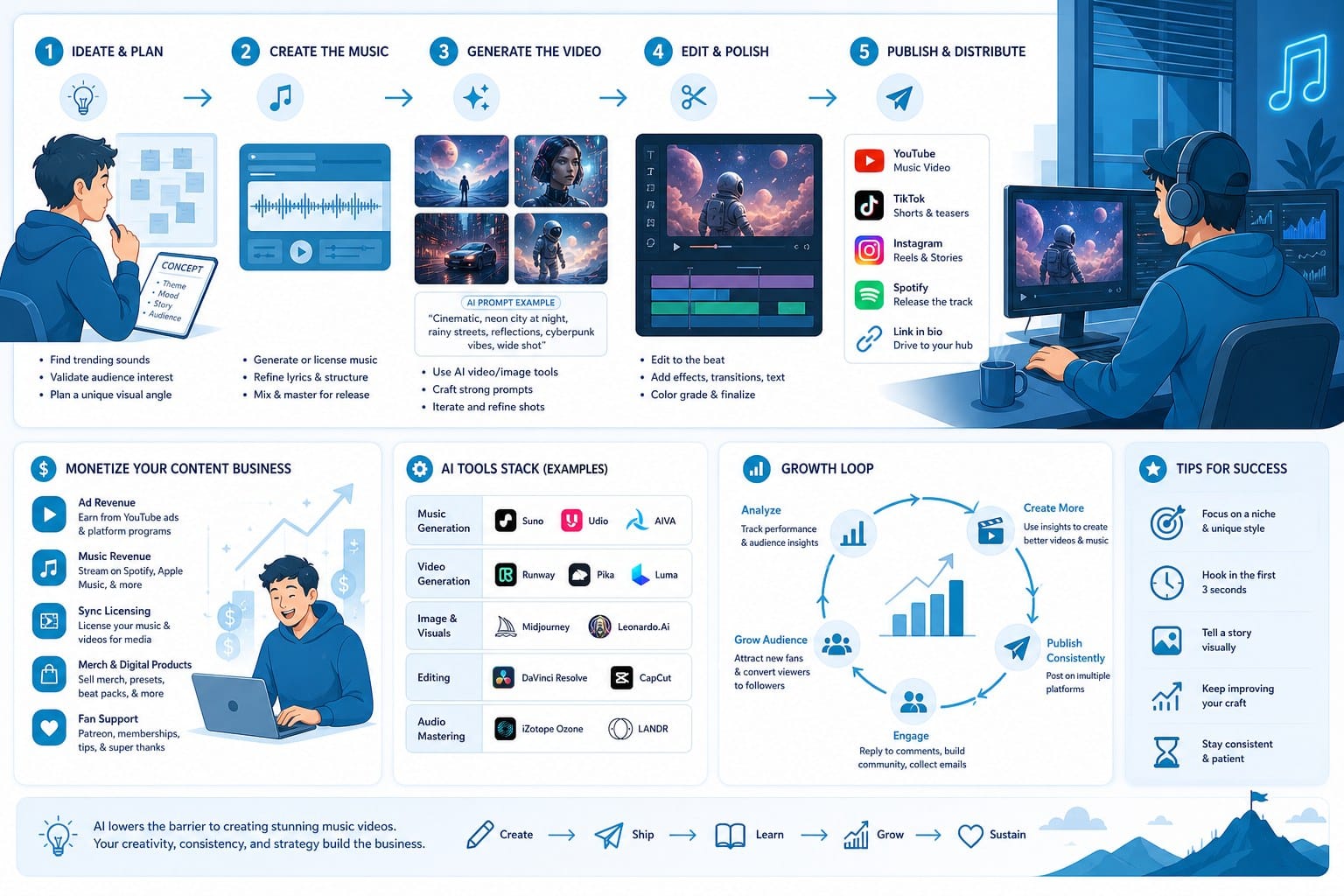
The most straightforward use case is for independent musicians and artists who want to give their releases a visual presence without a production budget. A new single without a music video is a missed opportunity on YouTube, where visual content drives discoverability and watch time. An AI-generated music video closes that gap for a fraction of what traditional production costs.
But the business applications go further than personal music releases.
Content creators who produce AI-generated channel content can use music videos as a format to diversify their output. A channel that typically posts documentary-style listicles can add music video compilations, mood-based visual content, or animated sequences as a new content category. This broadens audience appeal and creates opportunities for additional monetization streams.
Freelancers and small media teams can offer AI-generated music video production as a service. The ability to produce professional-quality videos at low cost and high speed means you can take on more clients, offer faster turnaround times, and maintain healthier profit margins than a traditional production setup would allow. If you are thinking about building a service business around this, the article on how to make money on YouTube without making videos using AI covers the income model in detail.
Marketers and brand teams can use AI music video production to create promotional content for product launches, seasonal campaigns, or social media series. A brand that wants a cohesive visual identity across its short-form content can use a consistent prompt style and color palette to produce a batch of videos that all feel related without requiring a full production budget for each one.
For all of these use cases, scale is where AI video tools create the most leverage. A human editor can produce a limited number of videos per week. An AI platform like Cliptude can produce many more in the same timeframe, which means your output potential is no longer limited by editing hours. That shift in capacity changes what a small team or solo creator can realistically accomplish.
I want to talk about monetization specifically, because it is one of the most common questions people have when they start producing AI-generated content.
On YouTube, you can monetize AI-generated videos through the YouTube Partner Program, provided your content meets the platform's originality and quality standards. The key is that the content needs to offer genuine value to viewers. A music video that is visually engaging, emotionally coherent, and well-produced can absolutely qualify. A generic, low-effort clip with no clear concept will struggle regardless of whether it was made by a human or an AI.
Cliptude's credit-based pricing means you can manage production costs precisely as you scale. You are not locked into a fixed monthly fee that does not reflect your actual output. If you produce ten videos in a month, you pay for ten videos. If you produce fifty, you pay for fifty. That structure makes it easier to calculate your revenue potential against your production costs, which is essential for running a content business rather than just a hobby channel.
Beyond direct YouTube monetization, there are other revenue paths worth considering. Licensing your music videos to artists who need visual content for their releases is one option. Creating and selling visual content packages to small labels or independent musicians is another. Building a library of themed visual content and licensing it to brands or playlist curators is a longer-term play that can generate recurring income.
For creators who are newer to all of this and still figuring out the landscape, the most important thing is to start with a clear creative direction and a specific audience in mind. An AI music video generator is a production tool, not a strategy tool. It will produce whatever you ask it to produce, but you still need to know who you are making the video for and why they will care about it.
Think about the type of content your target viewer already watches. If you are building a channel around lo-fi beats and study music, your music videos should match the aesthetic expectations of that audience: muted colors, slow pacing, simple but evocative imagery. If you are creating content for fans of high-energy electronic music, the visual language is completely different: fast cuts, bright colors, kinetic motion graphics.
Matching your visual output to your audience's expectations is how you build a channel that people return to. The AI handles the production. You handle the creative judgment.
I also want to note that the quality of AI-generated music videos has improved significantly over a short period of time. What was possible a few years ago was limited in ways that made professional-quality output difficult to achieve without a lot of manual intervention. Current platforms like Cliptude produce output that holds up well against human-edited videos in the same genre, especially for the formats that are most popular on streaming platforms: lyric videos, animated sequences, and cinematic footage-based productions.
The gap between AI-generated video and traditional production is narrowing quickly. Creators who start building skills and workflows with these tools now will be positioned well as the tools continue to improve and as the volume of content on major platforms continues to grow.
If you are managing a faceless YouTube channel, running a music-focused content brand, or offering video production as a service, an AI music video generator is one of the most practical additions you can make to your production toolkit right now. The barrier to entry is a good prompt and a clear creative vision. Everything else is handled by the platform.
Ready to take the next step?
Ready to create your first AI-generated music video? Head to Cliptude and start with a prompt. Describe the mood, the visual style, and the format you want, and let the platform build a polished video from the ground up. Whether you are producing content for YouTube, building a music brand, or scaling a video service, Cliptude gives you the production capability to do it without a full production team.