Cliptude: the AI platform that turns prompts into polished videos

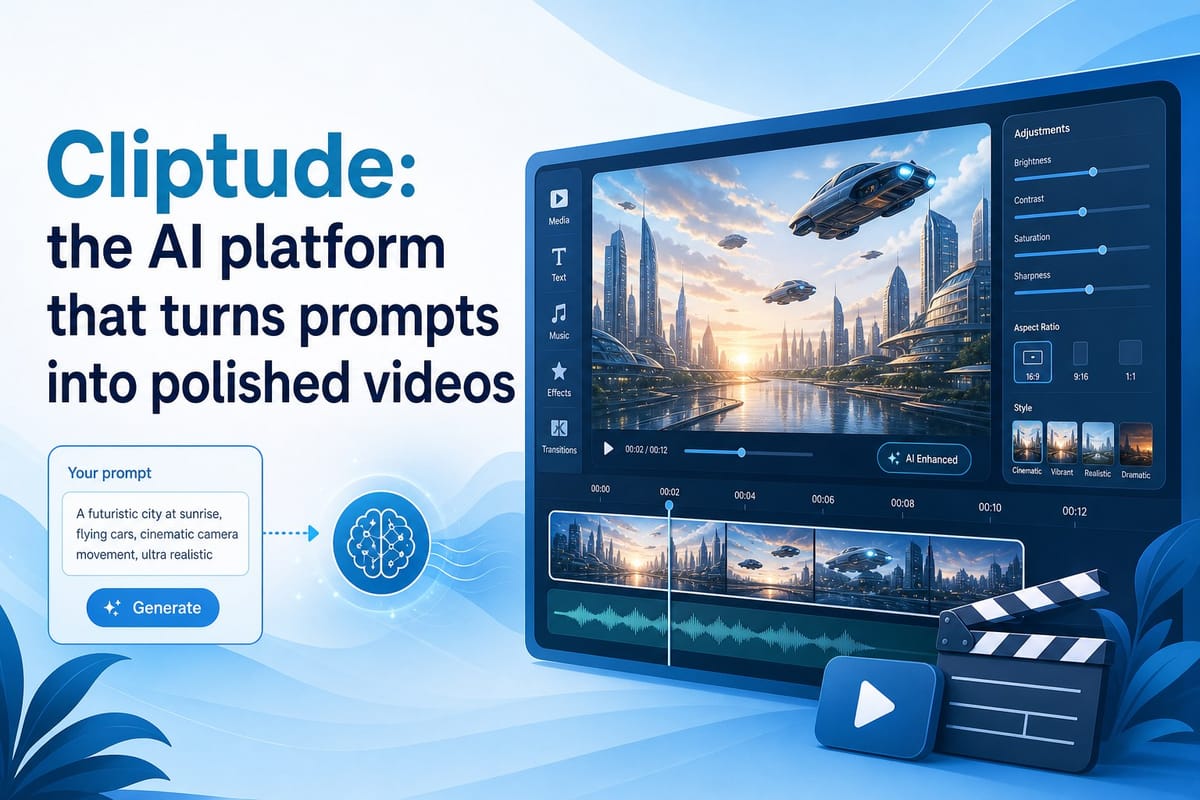
Table of contents
1. What Cliptude does and how the whole process works
2. Who gets the most value from using Cliptude
3. Real reasons to take Cliptude seriously as a production tool
I want to tell you about a tool that changed how I think about video production. If you have ever sat down to make a YouTube video and felt overwhelmed before you even opened a timeline, you are not alone. Scripting, sourcing footage, adding graphics, editing, exporting — it is a lot of work for one person or a small team. Cliptude is an AI-powered platform that takes a simple text prompt or script and turns it into a finished, polished video. No camera. No editing software. No team of five people. Just a prompt and a published video. In this article, I will walk you through what Cliptude actually does, who it works best for, and why it is becoming a serious option for creators who want to scale their output without scaling their workload.
What Cliptude does and how the whole process works
Cliptude sits in a category called text-to-video AI, but that label undersells what it actually does. Most text-to-video tools take your words and generate some kind of video clip from them. Cliptude goes much further than that. It handles the entire production pipeline from a single starting point.
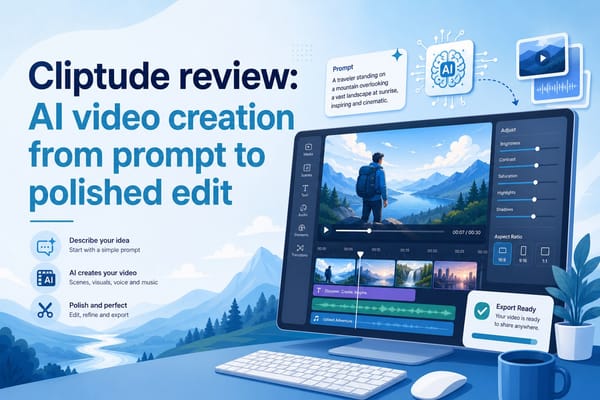
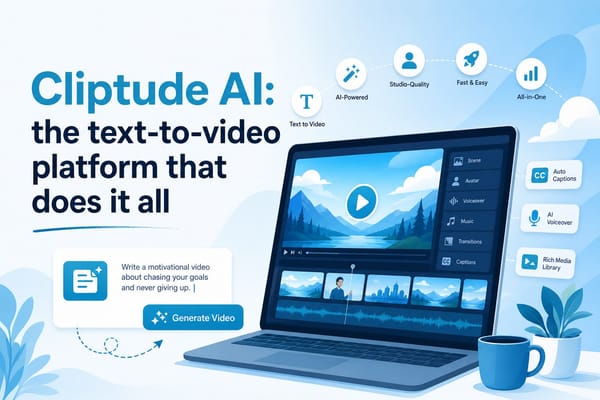
Here is the basic flow. You type in a topic or paste in a script. Cliptude then researches that topic automatically, writes or refines the script, sources relevant footage, generates motion graphics, and edits everything together into a finished video. You end up with something that looks like a real production, not a rough AI-generated draft.
The platform supports several different video formats. You can create long-form YouTube documentaries, listicle videos, educational explainers, animated whiteboard videos, stickman animations, short-form clips for TikTok or Instagram Reels, and even music videos. That range matters because different audiences need different content formats, and Cliptude handles all of them from the same prompt-based workflow.
The research step is one of the parts I find most impressive. When you give Cliptude a topic, it does not just take your words at face value. It actually investigates the subject, pulls in relevant information, and uses that research to shape the script. This means your finished video has substance behind it, not just surface-level filler content. For faceless YouTube channels focused on documentary or educational content, this matters a lot. The depth of information in a video is one of the main things that keeps viewers watching.
After the script is ready, the platform sources footage to match the content. This is the step where many creators normally spend hours searching stock libraries, downloading clips, and hoping they have the rights to use them. Cliptude handles that automatically. The footage it pulls is matched to the topic and the pacing of the script, so you are not getting random B-roll that has nothing to do with what is being said on screen.
Motion graphics come next. These are the text overlays, transitions, lower thirds, and animated elements that make a video feel finished and professional. Adding these by hand in editing software takes real skill and a lot of time. Cliptude generates them as part of the production process, so you get a video that looks like it came out of a proper media studio without you having to touch a timeline.
The whole thing runs on a usage-based credit system. You pay for what you use rather than committing to a flat monthly subscription that charges you whether you produce content or not. For solo creators and small teams, that kind of flexibility is genuinely useful. You can ramp up production during a busy content push and scale back when you need a break, and your costs move with you.
If you want to understand how Cliptude fits into the broader landscape of AI video tools, the blog post on Vidrush referral code alternatives and how Cliptude compares gives a useful breakdown of what sets it apart from other platforms in this space.
Who gets the most value from using Cliptude
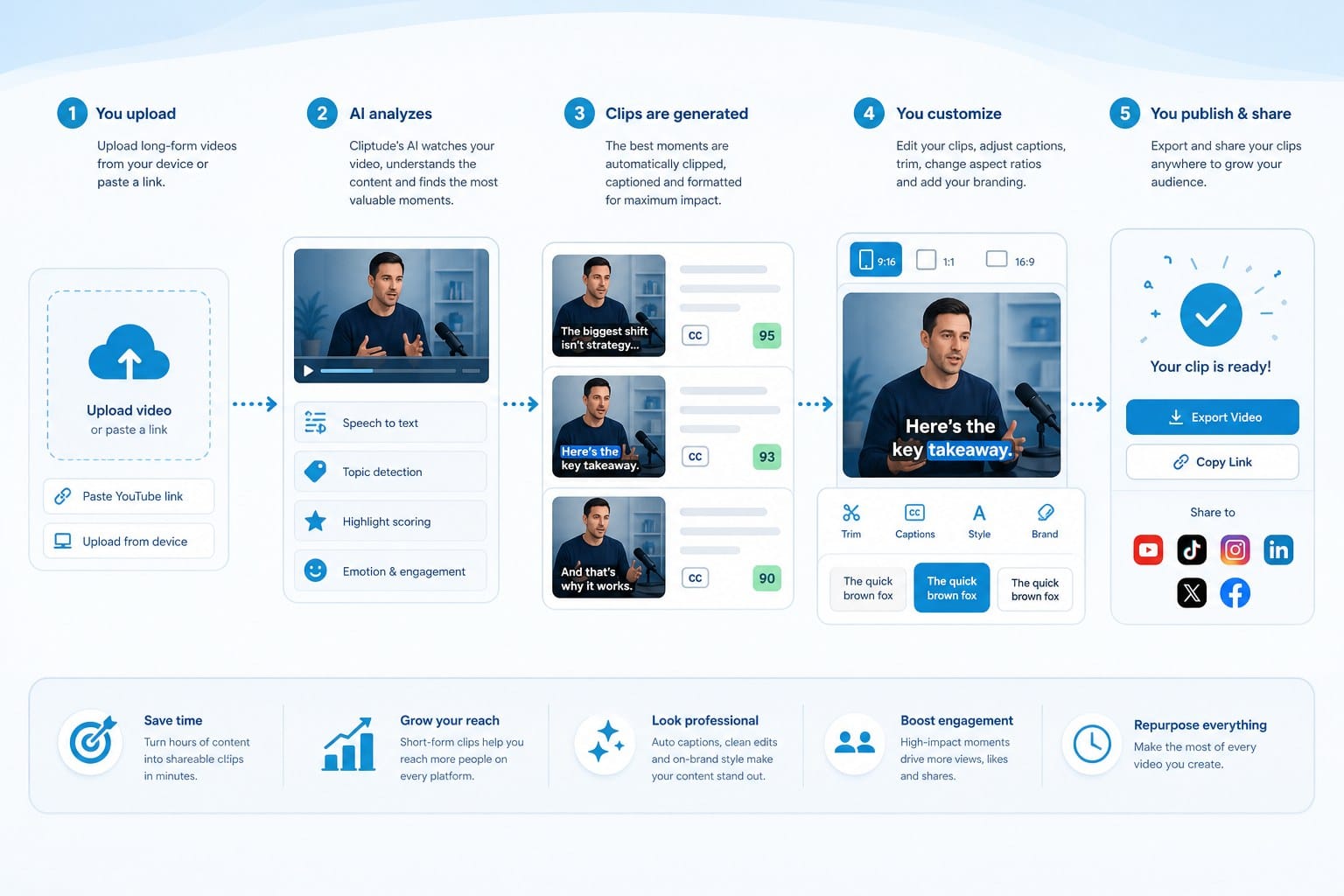
Not every tool is right for every creator, so let me be specific about the kinds of people who get the most out of Cliptude.
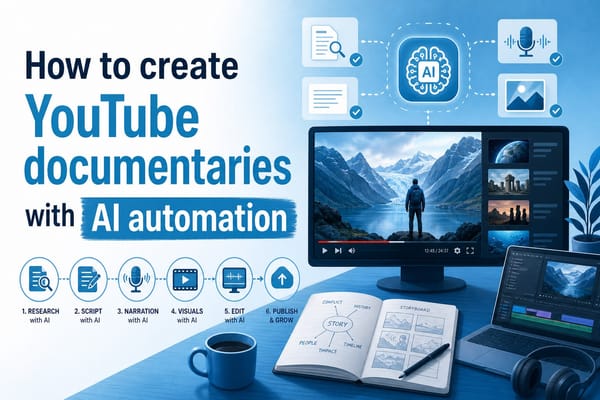
Faceless YouTube channel creators are probably the most obvious fit. If you run a channel built around documentaries, top-ten lists, history videos, or crime content, you are producing a lot of information-heavy long-form video. You need a script that is well-researched, footage that matches the narration, and editing that keeps the pacing tight. Doing all of that manually takes anywhere from ten to thirty hours per video depending on the topic. Cliptude compresses that timeline dramatically. You describe the video you want, and the platform builds it for you. You still review and refine the output, but you are starting from something finished rather than starting from nothing.
Content creators who are trying to scale their output across multiple platforms are another strong match. Publishing consistently on YouTube, TikTok, and Instagram Reels at the same time is genuinely hard to sustain. Each platform wants a slightly different format. YouTube favors longer videos with strong retention. TikTok and Reels reward short, punchy content. Cliptude supports both ends of that spectrum, so you can produce a long-form YouTube video and a short-form clip version of the same topic without building each one from scratch separately.
Solo entrepreneurs and small media teams who do not have video editing skills will find Cliptude especially useful. Video editing has a steep learning curve. Professional editors spend years getting good at it. If you are running a business or a media project and video editing is not your skill set, your options used to be hiring someone or skipping video entirely. Cliptude gives you a third option. You bring the ideas and the creative direction, and the platform handles the technical production work.
Educational content creators who use animation formats have a specific use case here too. Whiteboard videos and stickman animations are popular in educational YouTube because they keep the focus on information rather than visuals. Making them traditionally requires animation software and a lot of patience. Cliptude generates these formats as part of its output options, which means educators can produce animated explainer content without learning animation.
Marketers and creators looking to monetize AI-generated video will care about one thing specifically: commercial rights. Cliptude gives you full commercial rights to the videos you produce. That means you can publish them on ad-supported YouTube channels, license them, or use them in client work without worrying about rights conflicts. For anyone trying to build a revenue stream around video content, that clarity matters.
If you are specifically interested in what Cliptude can do for regional or non-English language content, the post on Nepali AI video generator for YouTube: create videos automatically is worth reading. It covers how the platform supports creators working in languages outside of English, which opens up a whole set of possibilities for regional YouTube channels.
For creators who have looked at other platforms and are still weighing their options, the comparison in Vidrush referral code: Is Cliptude a better alternative walks through the practical differences in a way that is easy to follow.
One thing I want to be direct about is what Cliptude is not. It is not a magic button that produces perfect content with zero input. You still need to think about your topic, your audience, and your creative angle. The platform does the production work, but the strategy and the ideas come from you. If you go in with a clear concept, Cliptude can execute it at a high level. If you go in with a vague idea and no real direction, the output will reflect that. The tool is powerful, but it works best when you give it something specific to work with.
For creators who are already experimenting with AI tools in their workflow, Cliptude fits naturally into how modern content production is evolving. The question is not whether AI will play a role in video production. It already does. The question is which tools are worth investing your time and money in. Cliptude is one of the ones I think creators should be paying attention to right now.
Real reasons to take Cliptude seriously as a production tool
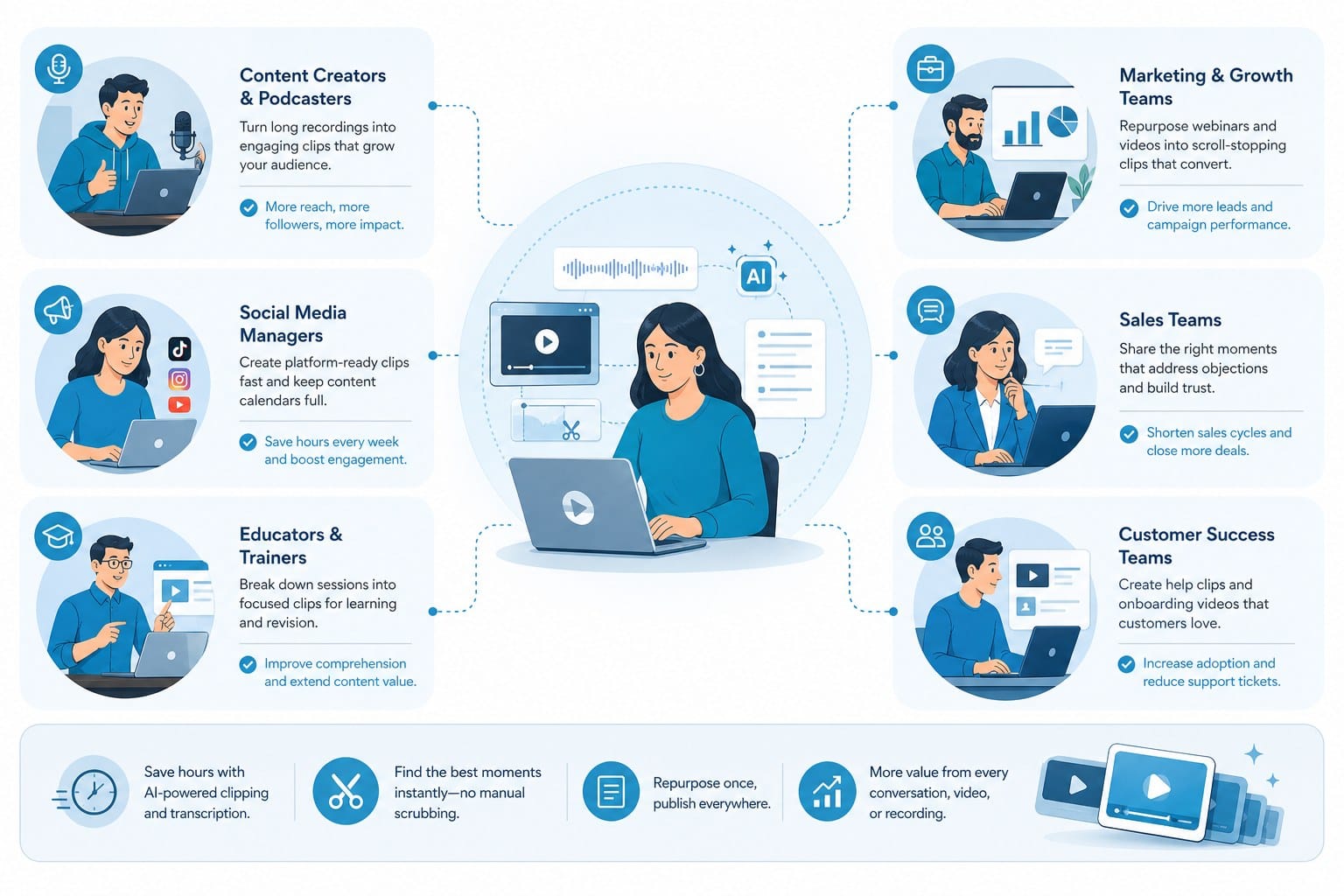
There is a lot of skepticism around AI video tools, and honestly some of it is fair. A lot of platforms make big promises and deliver mediocre output. So let me talk about the specific things that make Cliptude worth taking seriously rather than just making general claims about it being good.
The first thing is the depth of automation. Most AI tools that call themselves text-to-video do one or two steps of the production process automatically. They might generate a script, or they might generate some visuals, but you are still doing the majority of the work to stitch everything together. Cliptude handles research, scripting, footage sourcing, motion graphics, and editing in a single workflow. That level of end-to-end automation is genuinely rare. It means you are not bouncing between five different tools to finish a single video. Everything happens inside one platform.
The second thing is the quality of the output formats. Cliptude does not produce one kind of video. It produces polished YouTube documentaries with voiceover and sourced footage. It produces short-form vertical clips ready for TikTok or Reels. It produces whiteboard animations and stickman explainers. It produces music videos. Each of these formats has different structural requirements, different pacing, and different visual styles. The fact that one platform handles all of them well is a meaningful advantage for creators who work across multiple content types.
The third thing is the pricing model. Usage-based credit pricing sounds simple, but the implications are significant for how creators manage their costs. A flat monthly subscription means you pay the same amount whether you produce twenty videos or two. Usage-based pricing means your costs match your actual output. For a creator who has a high-volume month followed by a slow month, that flexibility can make a real difference in what the tool costs them over time. You are not locked into paying for capacity you are not using.
The fourth thing is commercial rights. I mentioned this earlier, but it deserves more attention. If you are building a YouTube channel with the goal of earning ad revenue, brand deals, or sponsorships, you need to own the content you publish. Cliptude gives you full commercial rights to everything you produce on the platform. That is not a given with every AI video tool. Some platforms retain licensing rights or restrict commercial use. Cliptude does not. For creators who are serious about monetization, this is a non-negotiable requirement, and Cliptude meets it.
The fifth thing is the audience it was clearly built for. Cliptude is not trying to be a tool for professional video production studios. It is designed for individual creators and small teams who want professional-quality output without professional-level resources. The faceless YouTube channel creator who wants to publish three documentaries a month. The solo entrepreneur who needs explainer videos for their product. The educator who wants animated content without hiring an animator. These are specific, real use cases, and Cliptude is built around them.
Let me talk about the faceless YouTube channel use case in more detail because it is one of the most compelling. Faceless channels have become a significant part of YouTube's ecosystem. They focus entirely on content quality and information depth rather than personal branding or on-camera presence. The channels that do well in this space typically cover topics like history, true crime, science, finance, or pop culture. They publish consistently, they do deep research, and they produce well-edited videos with strong voiceovers and relevant footage.
Doing all of that without a team is exhausting. Researching a topic properly can take four to six hours. Writing a script takes another two to three hours. Finding and downloading footage takes more time on top of that. Editing is often the longest step, especially if you are not experienced with editing software. A single fifteen-minute documentary can easily represent twenty or more hours of work for a solo creator.
Cliptude compresses that timeline significantly. The research and scripting happen automatically. The footage is sourced and matched to the content. The editing is done by the platform. You still spend time reviewing the output and making adjustments, but you are working in hours rather than days. For a creator who wants to build a serious faceless YouTube channel and publish consistently, that compression is the difference between a sustainable operation and a burnout-inducing one.
Short-form content has its own set of pressures. TikTok and Instagram Reels reward high posting frequency. The channels and accounts that grow the fastest on those platforms are often publishing every single day or even multiple times per day. That pace is impossible to maintain if you are producing each video manually from scratch. Cliptude makes it possible to batch-produce short-form content efficiently. You can take a topic, generate a long-form YouTube version and a short-form clip version at the same time, and publish across platforms without doubling your production workload.
For educational creators specifically, the animation formats that Cliptude supports open up a style of content that is very hard to produce any other way without significant investment. Whiteboard animations are popular in educational YouTube because they feel clear and accessible. Viewers can follow along with what is being explained because the visuals are simple and direct. Producing whiteboard animation traditionally involves specialized software, a stylus, and a lot of practice. Cliptude generates it as an output option, which means an educator with a good idea can produce animated explainer content on a timeline that would not be possible through any other means.
I also want to note something about the music video format, which is less obvious but genuinely interesting. Music video production is one of the most expensive categories of video content to create. Even a simple low-budget music video can cost thousands of dollars in production costs. Cliptude offers music video generation as part of its output options, which could be useful for independent musicians or content creators who want to pair audio content with compelling visuals without a large production budget.
The platform is built around the idea that the creative vision belongs to you and the production work belongs to the AI. That division of labor makes sense for where content creation is heading. The creators who are going to thrive over the next several years are the ones who figure out how to use AI as a genuine production partner rather than just a novelty. Cliptude is one of the tools that makes that kind of partnership practical right now.
If you are building a video-based content operation and you have not tried Cliptude yet, I think it is worth testing on a real project. Give it a topic you actually want to cover. See how the research holds up. Look at the footage it sources. Evaluate the motion graphics. Compare the final output to what you would have produced manually in the same amount of time. That comparison is where the real value of the platform becomes clear.
Ready to take the next step?
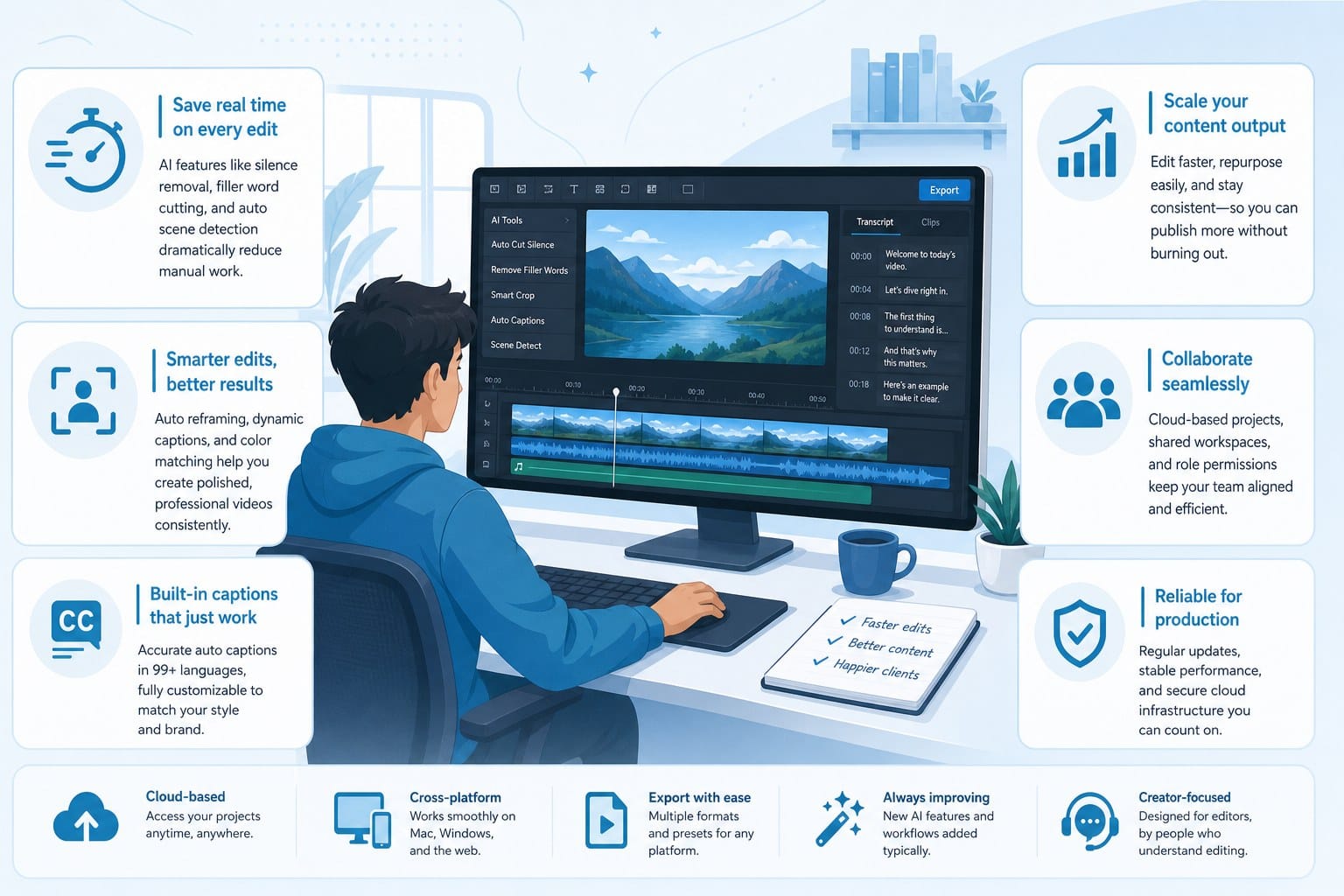
If you are ready to see what Cliptude can do for your content operation, head over to cliptude.com and start with a prompt. The credit-based pricing means you can test the platform on a real project without a large upfront commitment. Pick a topic, describe the video you want to make, and let the platform show you what end-to-end AI video production actually looks like. For creators who are serious about building a sustainable video channel without building a full production team, Cliptude is one of the most practical tools available right now.