How to make top 10 YouTube videos with AI and no editing skills

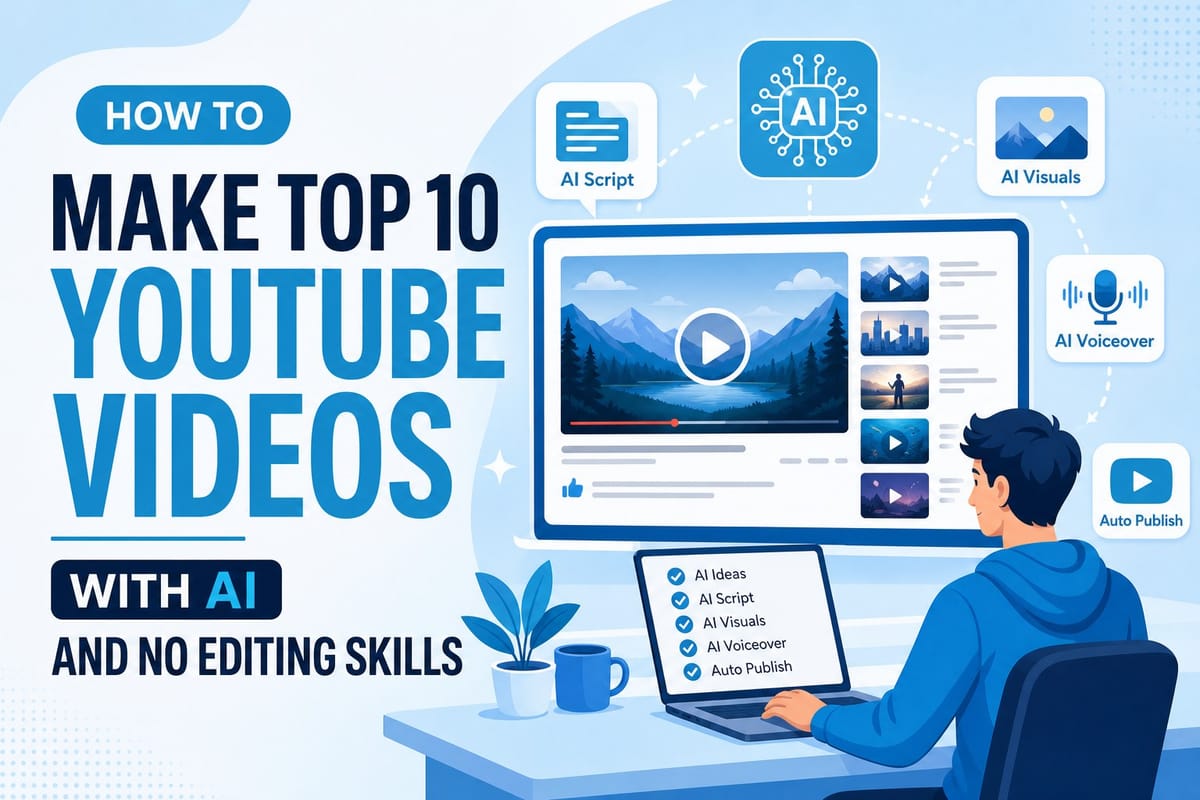
Table of contents
1. Why top 10 videos keep performing year after year
2. How to build a top 10 video from scratch using AI
3. Choosing a niche, scaling your output, and monetizing the channel
Top 10 videos are one of the most reliable formats on YouTube. Viewers click on them because the structure feels familiar and the payoff feels guaranteed. You know exactly what you are getting: a ranked list, some commentary, and a satisfying countdown. For creators, that predictability is a huge advantage because the format is easy to script, easy to pace, and easy to scale. The problem most people run into is production. You need footage, graphics, narration, music, and a finished edit before you can publish anything. That wall stops a lot of people before they even start. This guide walks through how to make top 10 YouTube videos with AI so you can go from idea to finished video without ever opening an editing timeline.
Why top 10 videos keep performing year after year
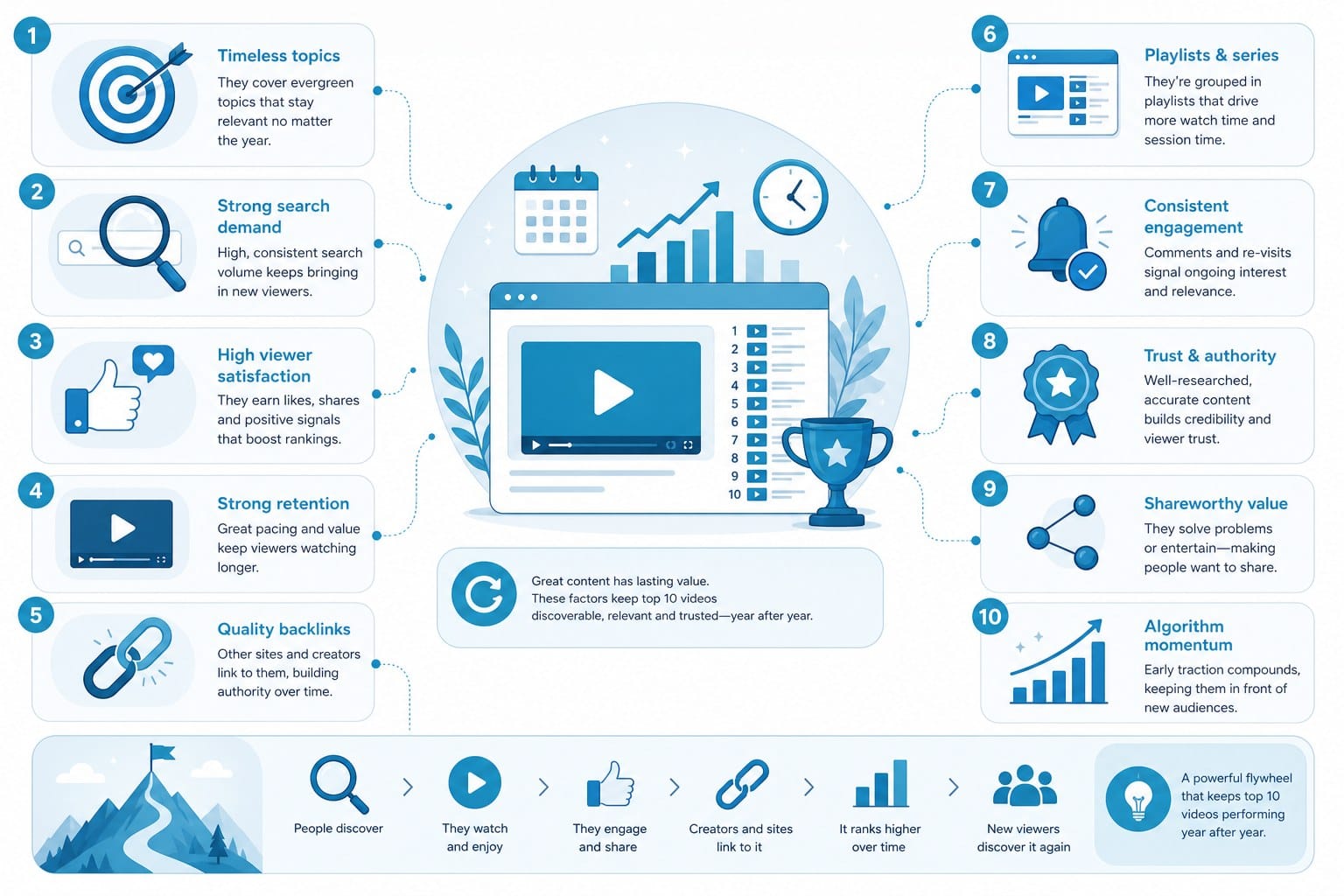
Before getting into tools and workflows, it helps to understand why the top 10 format keeps delivering results. YouTube rewards watch time, and list videos are built to hold attention. Each new entry gives viewers a reason to keep watching. They want to know what comes next, and they especially want to know what lands at number one. That psychological pull is baked directly into the format.
Think about how you watch a countdown video yourself. You might disagree with number seven. You are curious whether number three matches your own guess. You stay through the whole thing just to see if the creator agrees with you. That engagement loop is not accidental. It is the reason top 10 videos have outlasted dozens of other YouTube trends that came and went.
Top 10 videos also tend to rank well in search. When someone types "top 10 scariest deep sea creatures" or "top 10 richest athletes of all time," they want a video that delivers exactly that. The title signals to the algorithm what the content is about, and if your video actually matches that search intent, YouTube has a clear reason to surface it. That alignment between title, content, and search behavior makes the format SEO-friendly in a way that more open-ended video styles are not.
Another major advantage is that these videos do not require you to be on camera. Most successful top 10 channels are completely faceless. The creator never appears. The video is driven by narration, visuals, and music. That approach is also easier to produce consistently because you are not dealing with lighting setups, background choices, or the kind of performance anxiety that keeps a lot of people from ever hitting record.
Faceless channels built around ranked list content have grown into serious businesses on YouTube. Channels covering history, animals, crime, geography, and sports have reached millions of subscribers and generate real ad revenue without the creator showing their face once. The content does the work. If you are curious about how that model is structured from the ground up, the guide on how to start a faceless YouTube channel with AI covers the full setup in detail.
The challenge has always been production volume. To grow a YouTube channel, you need to publish regularly. A top 10 video that takes three days to research, write, record, and edit is genuinely hard to scale. Most creators either burn out trying to keep up or pay editors to help, which cuts into any revenue they are making. AI changes that equation in a meaningful way.
When AI handles the research, scripting, footage sourcing, and editing, you can move from prompt to publishable video in a fraction of the time a traditional workflow demands. That speed makes it possible to build a content calendar that actually holds up without needing a full production team. It also means you can test topics quickly, double down on what works, and build a library of content faster than almost any manual process allows.
There is also a quality consistency benefit worth mentioning. When you produce videos manually, quality tends to vary depending on how much time you had, how tired you were, or whether a particular topic was harder to research than expected. An AI workflow sets a baseline that stays roughly the same from video to video. That consistency matters to YouTube's recommendation system and to viewers who come back expecting a certain standard.
One more thing the format has going for it: it ages well. A video titled "top 10 most powerful ancient civilizations" will attract search traffic years from now just as it does on upload day. Evergreen topics in history, science, geography, and nature keep pulling views long after a trend-chasing video has been forgotten. Building a catalog of evergreen top 10 content is one of the more reliable long-term strategies available to YouTube creators right now.
How to build a top 10 video from scratch using AI
The most common reason people do not start a top 10 channel is that they do not know how to edit video. They have ideas. They can write. But the technical side of video production feels like a wall they do not have time to climb. That is exactly the gap AI video platforms are designed to close.
Here is how the process works when you use a platform like Cliptude.
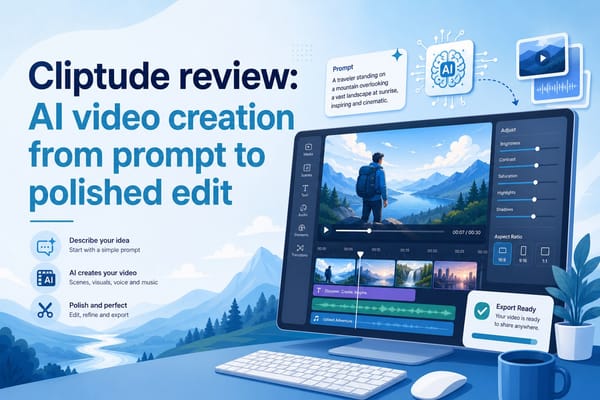
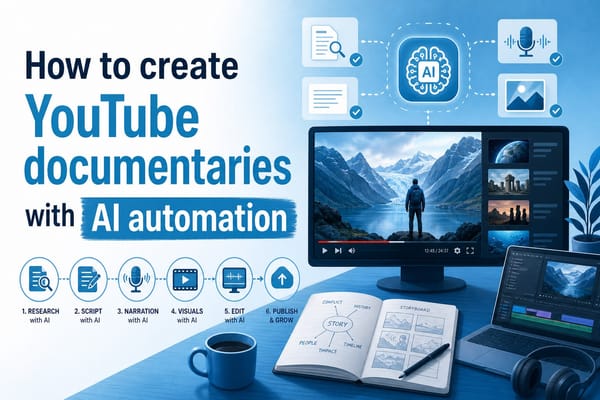
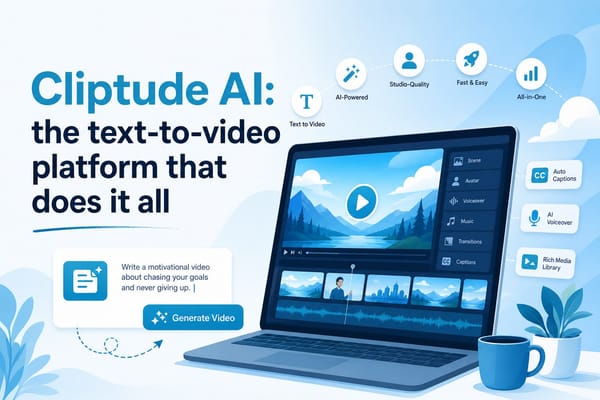
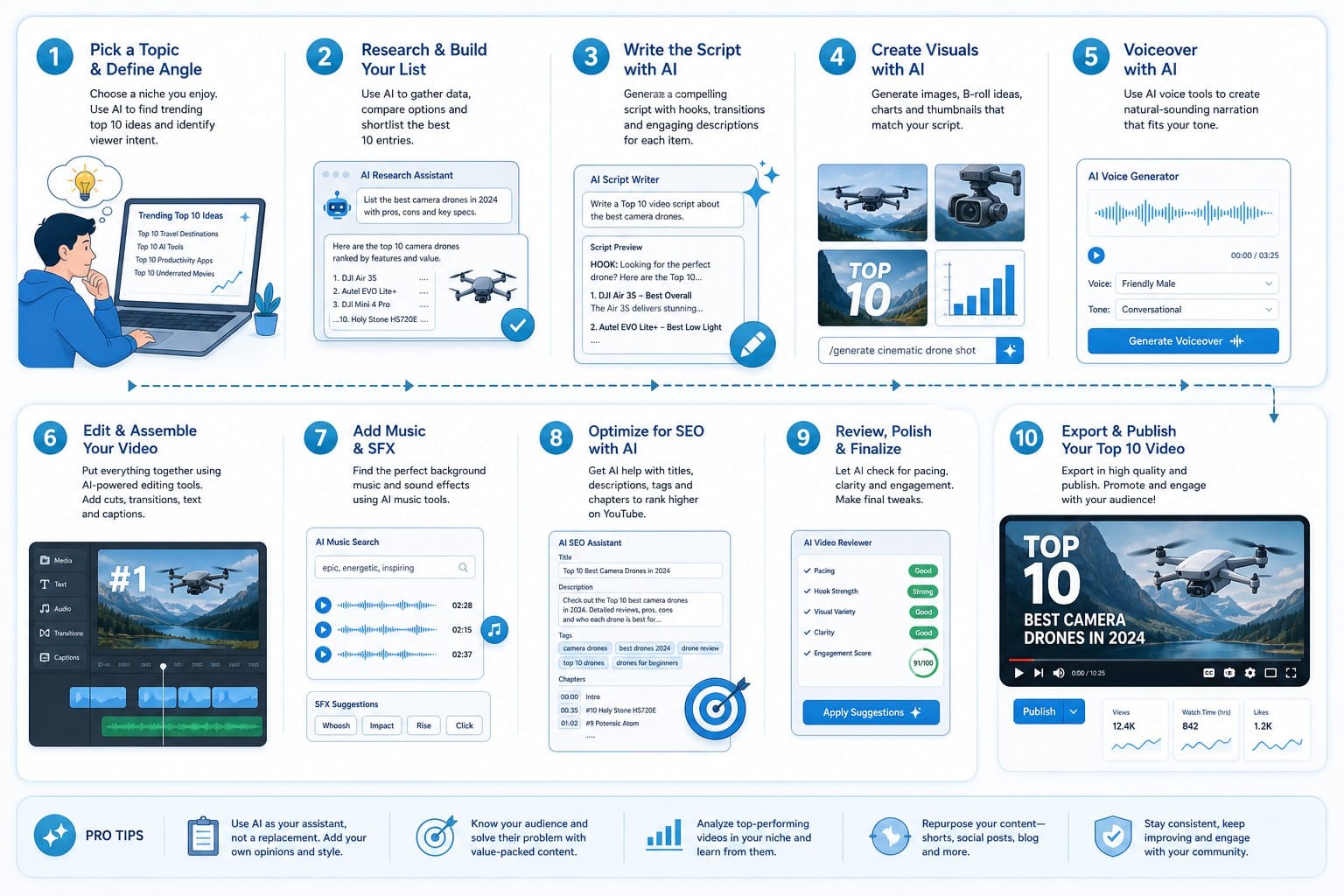
You start with a prompt or a rough script. For a top 10 video, that might be something like "top 10 most dangerous volcanoes in the world" or "top 10 fastest animals on land." You describe the topic, the tone you want, and the format. The AI takes that input and builds out the full video structure from there. That single prompt replaces what used to be a multi-hour research and outlining session.
The first thing the AI handles is research. Instead of spending an hour or two pulling facts and organizing a list by hand, the AI compiles the content for each entry. This is not thin filler text. It pulls relevant details, interesting facts, and supporting information that make each item on the list feel substantive enough to hold attention. A viewer watching your video on the top 10 deepest ocean trenches should come away feeling like they actually learned something. That depth is what separates watchable videos from forgettable ones.
Next, the AI writes the script. A strong top 10 script has a hook at the start that earns the viewer's attention in the first fifteen seconds, clean transitions between entries so the video flows without feeling choppy, and a number one reveal that feels earned rather than arbitrary. AI can generate that structure automatically and adapt the tone depending on whether you want something educational and documentary-style, dramatic and suspense-driven, or more casual and conversational.
The hook matters more than most new creators realize. YouTube analytics show that a significant percentage of viewers drop off in the first thirty seconds if the video does not immediately promise something worth staying for. A good AI-generated script should open with a specific claim, a surprising fact, or a question that makes the viewer curious enough to stay. Something like "the volcano at number three has erupted more times in recorded history than any other on Earth" does more work than a generic introduction that restates the title.
Then comes the part that used to require a professional editor: sourcing footage and building the visual layer. Cliptude automatically finds and matches relevant footage to each section of the script. It also generates motion graphics, which is especially useful for top 10 videos where you want an animated countdown graphic or a number banner for each entry. That kind of visual polish used to require someone who knew After Effects or a comparable tool. Now it is generated automatically as part of the same workflow.
Voiceover narration is handled by AI as well. You can choose a voice style that fits your channel's tone. An authoritative, documentary-style voice works well for history and science content. A slightly more energetic delivery fits entertainment and sports lists. The narration syncs to the video automatically, which means you do not have to manually drag audio clips into alignment with visuals or figure out how to handle a line that ran a few seconds too long.
Music and sound design round out the production. Background music sets the mood for each segment and helps the video feel polished even if you have never touched an audio mixer. The right track under a dramatic segment about a natural disaster hits differently than silence or a mismatched upbeat loop. AI handles those choices based on the tone of the content.
The result is a finished, edited video ready to upload. No timeline scrubbing. No keyframe animation. No color grading sessions. If you have wondered how to make top 10 YouTube videos with AI at a pace that can actually sustain a channel, this is the workflow that makes it realistic.
For a broader look at how text-to-video works across different content formats, the AI text to video for YouTube creators: a complete guide is worth reading before you dive into your first project.
One thing worth being clear about: AI-generated videos still benefit from a human review step before you publish. Spend a few minutes watching the finished video straight through. Check that the facts are accurate. Confirm that the tone matches your channel. Make sure the visuals feel appropriate for what is being described. AI handles the heavy lifting, but your editorial judgment is still part of the equation. Think of that review step as quality control rather than production work. It should take minutes, not hours.
Also think carefully about your opening ten items before you commit to a topic. The quality of a top 10 video depends a lot on whether the list itself is interesting. "Top 10 most populated cities" is fine. "Top 10 cities that should not exist but do" is more compelling. The angle matters. AI can help you generate list ideas, but pushing yourself to find a slightly unexpected framing for a familiar topic is the kind of creative decision that separates channels that grow from channels that stagnate.
Transitions between entries are another detail worth thinking about. A jarring cut from one item to the next makes a video feel cheap even if everything else is well produced. Good transitions can be as simple as a consistent graphic wipe, a sound effect that punctuates the end of one entry, or a brief two-sentence tease of what is coming next. AI platforms can handle these automatically, but knowing what to look for during your review step helps you catch anything that feels off before you publish.
Choosing a niche, scaling your output, and monetizing the channel
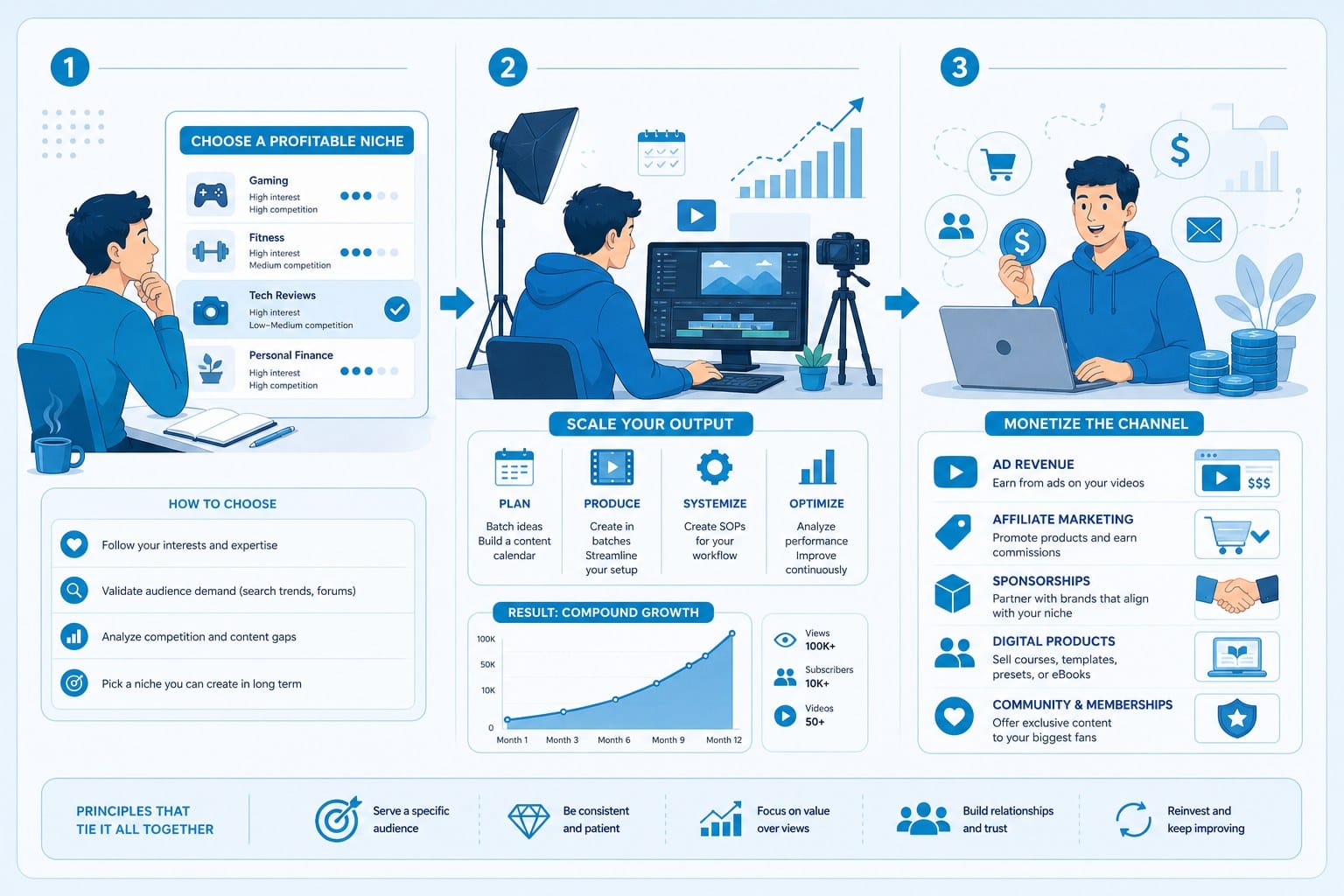
Once you understand the production side, the next question is what kind of top 10 channel you want to build. Niche selection matters more than most people expect, especially at the start. A channel that covers every topic tends to grow more slowly than one that owns a specific subject area. YouTube's recommendation system looks for signals about who your audience is. A channel with a clear identity is easier for the algorithm to match with the right viewers.
Some of the most consistent niches for top 10 content include history, science, geography, true crime, sports, animals, military history, technology, and pop culture. These categories have large search audiences and strong evergreen appeal. A video about the top 10 most powerful empires in history will attract searches five years from now just as it does the day you publish it. That long-tail traffic is one of the best things about building a top 10 channel around timeless subject matter.
When you use AI to produce content, you can test niches much more quickly than you could with a traditional workflow. Instead of committing six months to a single topic and hoping it connects, you can publish a handful of videos across two or three niches and watch where early traction appears. Views per hour in the first 48 hours after publishing, click-through rate on the thumbnail, and average view duration all tell you whether a topic is resonating. The low production cost of AI video means a test that does not pan out costs you very little.
Scaling is where AI-powered production separates itself most clearly from conventional video creation. A creator working with traditional tools might publish two or three videos a month if they are working hard. With AI handling research, scripting, footage sourcing, and editing, publishing two or three videos a week becomes realistic without burnout. That pace of output accelerates channel growth significantly because YouTube consistently rewards channels that publish on a regular schedule over time.
Consistency compounds. A channel that publishes three videos a week for six months has a catalog of roughly 75 videos. Each of those videos has the potential to surface in search, appear in suggested feeds, and bring in new subscribers. A channel that publishes once a month has 12 videos and a much smaller surface area for discovery. AI makes the higher output pace achievable without requiring you to hire a team.
Channels that reach the YouTube Partner Program thresholds, which currently means 1,000 subscribers and 4,000 watch hours, can start earning ad revenue. Top 10 videos in high-CPM niches like personal finance, technology, investing, and business can earn meaningful money even at modest view counts because advertisers pay significantly more to reach those audiences than they do for general entertainment content. A channel that covers the top 10 most successful investors of all time or the top 10 most disruptive tech companies of the last decade is reaching an audience advertisers want.
Beyond ad revenue, there are other ways to monetize a faceless top 10 channel. Sponsored segments, where a brand pays you to mention their product or service during the video, are a common revenue stream for list-format channels. Because your channel is built around a specific subject, sponsors in adjacent industries are easier to identify and approach. A channel about financial history is a natural fit for fintech or investment platforms. A channel about science and technology might attract software companies or online course providers.
Merch, digital products, and affiliate partnerships are also options depending on your niche. A channel about geography or natural history could sell print-on-demand items tied to the content. A channel about entrepreneurship or productivity could promote tools and software through affiliate links. The key is that the monetization method fits the audience rather than feeling like an interruption.
Full commercial rights to your AI-generated content are important if you are building a business around this. Cliptude's videos come with commercial rights, which means you can publish them, monetize them, and distribute them across platforms without licensing complications. That matters when you are treating this as a real revenue stream rather than a hobby project.
YouTube Shorts are worth thinking about as a separate distribution channel. Shorts now has its own ad revenue pool, and a lot of top 10 content translates naturally into short-form clips. A ten-item list can become five or six Shorts that each highlight one entry and drive traffic back to the full video. You can produce those clips using the same AI workflow, often adapting the existing script rather than starting from scratch. That multiplies the reach of each piece of content without multiplying the work.
If you want to understand how AI video generation fits into the broader strategy for faceless channels, the guide on AI video generator for faceless YouTube channels goes deeper on format and growth strategy.
One practical tip for anyone starting a new channel: build a content backlog before you publish your first video. Use the AI workflow to produce ten or fifteen videos before you go live. That buffer lets you maintain a consistent publishing schedule without scrambling to produce something every week. It also gives you the option to release a few videos in quick succession at launch, which can help the algorithm start understanding what your channel is about faster than a single video would.
Thumbnails are worth separate attention. AI handles the video itself, but your thumbnail is what determines whether someone clicks in the first place. A strong thumbnail typically has a bold visual, limited text, and clear contrast. Simple designs tend to outperform busy or cluttered ones. You do not need to be a designer to create effective thumbnails. There are straightforward tools built for exactly this purpose that let you work from templates and customize them for each video.
Keyword research still matters even when AI is doing the production work. Before you commit to a topic, check whether people are actually searching for it. Look at search volume, competing videos, and how those videos are performing. A top 10 video about a topic with no search demand will not grow your channel regardless of how polished the production is. On the other hand, a well-produced video on a topic with genuine search interest has a real chance of ranking and compounding views over time.
Think about your channel's identity from the beginning. A consistent name, visual style, and tone make your channel recognizable as it grows. Even if you are never on camera, viewers develop loyalty to channels that feel cohesive and intentional. They come back because they know what they are getting. AI takes care of production, but the vision behind the channel is yours. That vision is what turns a collection of videos into a channel people actually subscribe to and return to.
Finally, pay attention to your titles even more than your thumbnails. A thumbnail gets the look. A title closes the click. "Top 10 animals that scientists still cannot explain" does more work than "top 10 mysterious animals." Specific language, unexpected angles, and clear payoffs in the title tend to outperform generic phrasing. Spend time on your titles. They are one of the highest-leverage decisions you make for each video.
Ready to take the next step?
If you are ready to start building a top 10 YouTube channel without learning video editing, Cliptude gives you everything you need in one place. Write the prompt, and the platform handles research, scripting, footage sourcing, motion graphics, narration, and the final edit. Start producing videos today and see how fast a consistent publishing pace changes what is possible for your channel.