How to use a clickbait text generator to boost video clicks

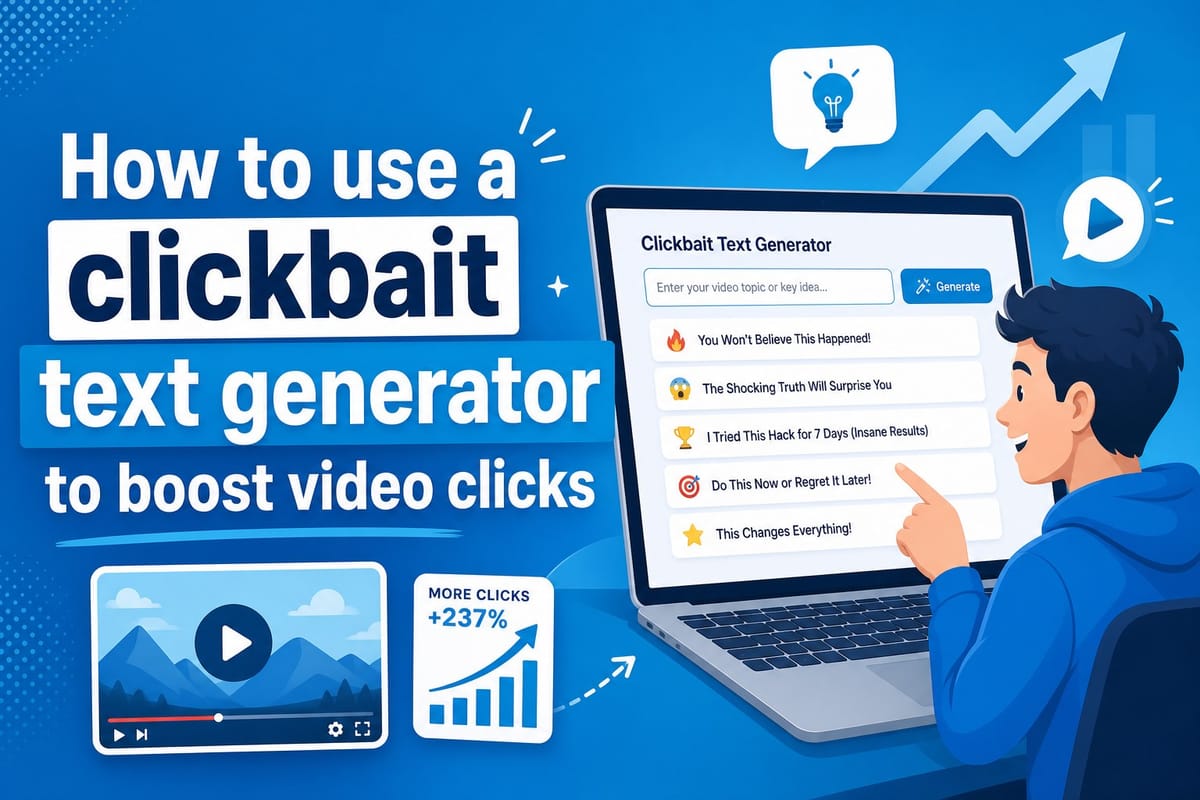
Table of contents
1. What a clickbait text generator actually does
2. How to use a clickbait text generator without hurting your channel
3. Combining title strategy with a full AI video workflow
Getting people to click on your video is half the battle. You can spend hours filming, editing, and polishing a video, but if the title does not grab attention, most people will scroll right past it. That is where a clickbait text generator comes in. It helps you write titles that stop the scroll, spark curiosity, and pull viewers in before they even press play. In this article, I will walk you through how these tools work, how to use them without damaging your channel's reputation, and how platforms like Cliptude can take your entire video workflow to the next level.
What a clickbait text generator actually does
A clickbait text generator is a tool, usually powered by AI, that takes your video topic and spits out a set of attention-grabbing titles. These titles are designed using proven psychological patterns that make people want to click. Things like curiosity gaps, numbers, strong emotional words, and open-ended questions.
For example, if your video is about saving money on groceries, a plain title might be "Tips for saving money at the grocery store." A clickbait generator might suggest something like "I spent $50 a week on groceries for a month. Here is what happened." That second version creates a story, teases an outcome, and makes you want to know the result.
The word "clickbait" gets a bad reputation, and honestly, some of that reputation is earned. Titles that promise something and deliver nothing will tank your watch time and trust. But smart clickbait is different. It uses compelling language to accurately tease real value inside the video. That is the version you want to create.
Most AI-powered clickbait text generators work by analyzing what kinds of titles perform well on platforms like YouTube and TikTok. They learn from millions of high-performing videos and use that data to suggest titles that fit similar patterns. Some tools let you choose the tone, the platform, or the style of title you want, whether that is a listicle, a question, a how-to, or a bold statement.
Here is what these tools are actually doing behind the scenes:
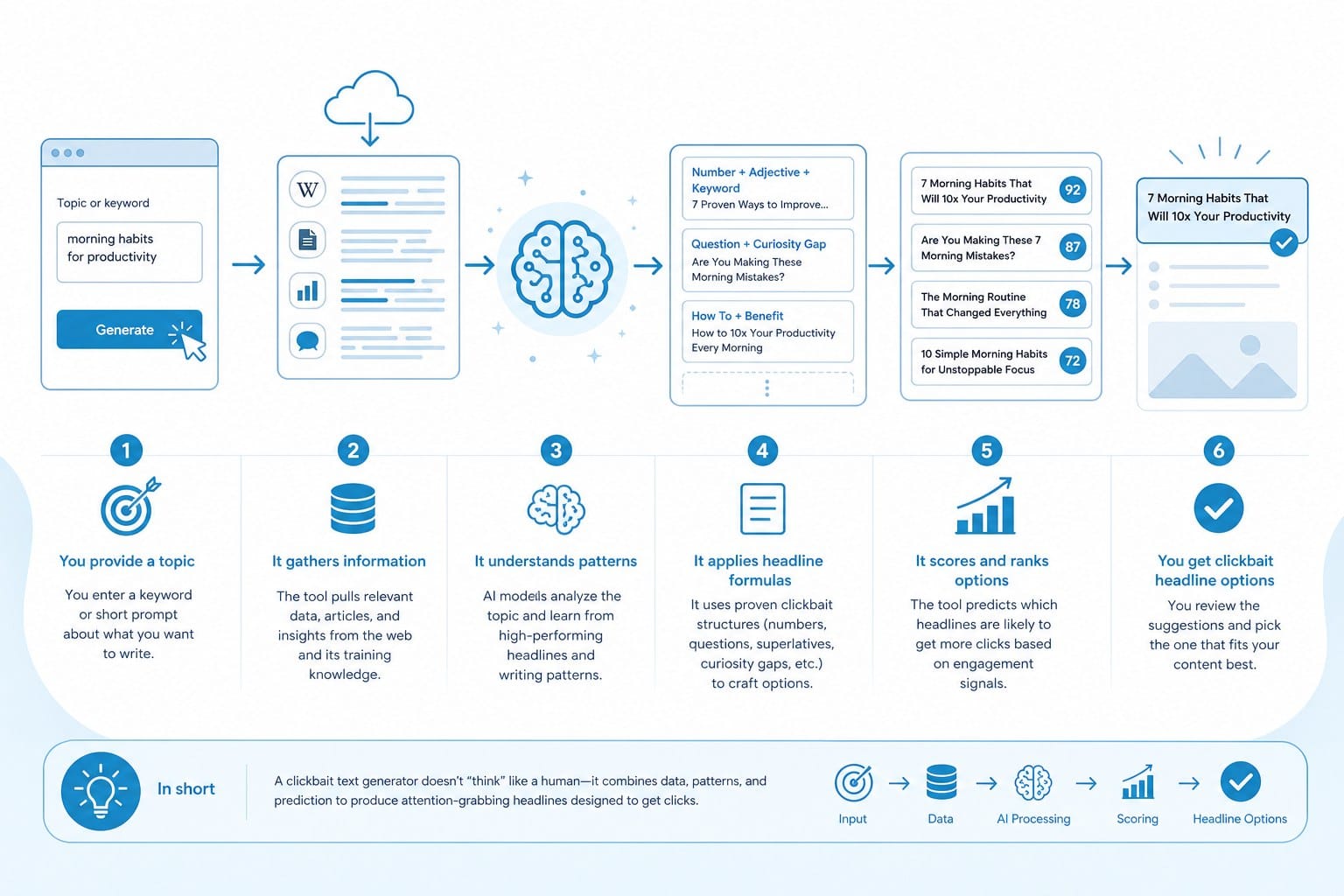
First, they identify the core topic or hook in your input. If you tell the tool your video is about "how to get better sleep," it pulls out the main idea and looks for angles that create tension or curiosity around that topic.
Second, they apply proven headline formulas. You have probably seen these before. "X things you did not know about..." or "Why you are doing X wrong" or "The truth about X." These formulas work because they trigger a specific emotional response in the reader.
Third, they generate multiple variations so you can compare and pick the one that fits best. A good generator will give you anywhere from five to twenty options, each with a slightly different angle or tone.
For faceless YouTube channel creators or solo content makers who are producing a high volume of videos, this kind of tool saves serious time. Instead of staring at a blank page trying to figure out how to frame your title, you get a starting point in seconds. You still need to refine the output and make sure it actually matches your content, but the heavy lifting is done for you.
One thing I want to be clear about: a clickbait text generator is a starting point, not a final answer. The best titles come from combining what the AI suggests with your own knowledge of your audience. You know your viewers better than any algorithm. Use the tool to spark ideas, then shape those ideas to fit your channel.
It is also worth understanding what makes a title genuinely effective versus just flashy. Strong titles tend to do a few things well. They are specific rather than vague. "How I gained 10,000 subscribers in 60 days" is stronger than "How I grew my YouTube channel." They create a curiosity gap, meaning they hint at information without giving everything away. And they often speak directly to the viewer, using words like "you" or "your" to make the title feel personal.
When you use a clickbait text generator, look for these qualities in the suggestions it gives you. If a title is vague or does not actually hint at anything interesting, skip it. You want titles that feel irresistible but honest.
How to use a clickbait text generator without hurting your channel
Using a clickbait text generator the right way means balancing two things: making people click and making sure they stay. That second part is where a lot of creators go wrong. They write a wild title, get the click, and then deliver a video that does not live up to the promise. Viewers leave in the first thirty seconds, watch time drops, and the algorithm stops recommending the video. That is a painful cycle to be stuck in.
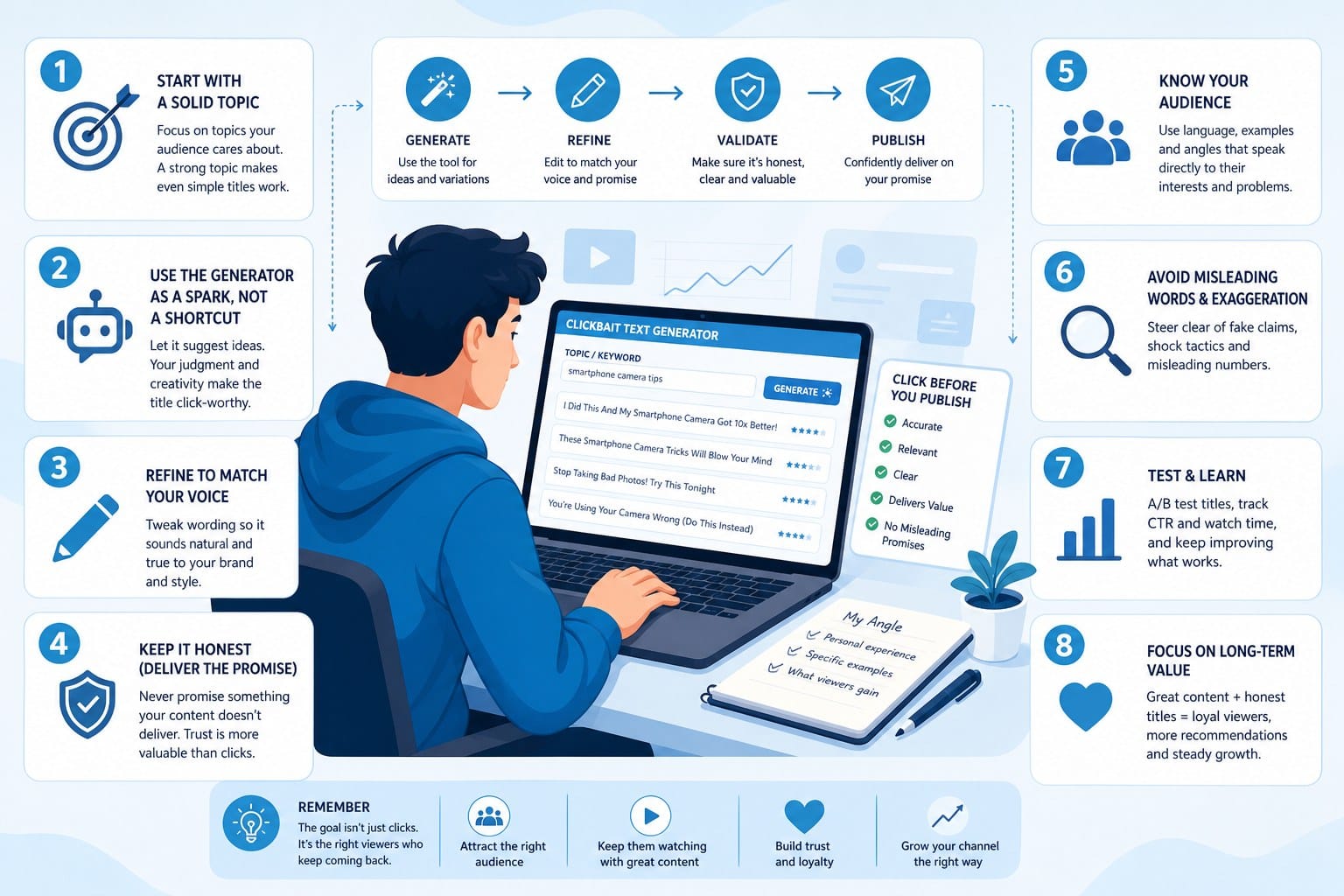
Here is the approach I think works best. Start by being honest about what your video actually delivers. Before you even open a clickbait generator, write down in one sentence what the viewer will get from watching your video. What do they learn? What problem does it solve? What story does it tell? That sentence becomes your anchor. Any title you pick needs to stay true to that anchor.
Once you have your anchor sentence, plug your topic into the clickbait text generator. Most tools will ask for a few details, like the platform you are posting on, the tone you want, and the main subject. Fill these in carefully. The more specific you are, the better the output.
Let us say you run a faceless YouTube channel about personal finance. Your video covers five budgeting mistakes that keep people broke. You would enter something like: "budgeting mistakes, personal finance, listicle, YouTube, informative tone." The tool might come back with suggestions like:
"5 budgeting mistakes that are making you poor (and how to fix them)" "Why your budget keeps failing: 5 things no one tells you" "Stop doing this with your money: 5 common budgeting errors" "I made all 5 of these budgeting mistakes before I figured this out"
Now you review each one against your anchor sentence. The first option is solid because it is specific, lists a number, and promises a solution. The last one adds a personal story angle, which can work well if your video includes any first-person narrative. Pick the one that best matches what your video actually delivers.
Another smart move is to test your titles before you commit. Some platforms let you run A/B tests on thumbnails and titles. If your channel is on YouTube and you have access to analytics, you can try two different titles and see which one gets a better click-through rate over the first few days. This is how you learn what your specific audience responds to over time.
I also want to talk about thumbnails because titles and thumbnails work together. A clickbait text generator handles the words, but the image needs to match the energy of the title. If your title promises something dramatic or surprising, the thumbnail should reflect that. A face with a shocked expression, a bold number, or a before-and-after image all communicate something quickly. Even for faceless channels, you can use text overlays, graphics, and contrasting colors to make thumbnails that feel click-worthy without showing anyone on camera.
One practical tip: keep a swipe file. Every time you see a video title that makes you want to click, even if it has nothing to do with your niche, write it down. Note what formula it uses. Is it a question? A bold claim? A numbered list? A personal story? Over time you build a reference library of patterns that work, and you can bring those patterns to your clickbait text generator sessions to guide the output.
Let me also address what to do when the AI gives you outputs that feel too extreme or misleading. Sometimes generators will suggest titles that are technically attention-grabbing but would set unrealistic expectations. "This video made me a millionaire overnight" is the kind of thing that sounds clickable but will destroy trust the moment the viewer realizes the content does not support it. When you see suggestions like that, use them as a jumping-off point rather than a literal option. Ask yourself: what is the real, honest version of this title? Often you can keep the energy and structure while making it accurate.
For creators building a long-term channel, trust is your most valuable asset. Viewers who feel tricked once rarely come back. But viewers who consistently get what a title promises will subscribe, share, and watch more. That is the audience you want to build, and a well-used clickbait text generator helps you attract that audience by writing titles that are both compelling and truthful.
For creators making content in different languages, the same principles apply across platforms. Whether you are writing titles in English, Urdu, or Nepali, the goal is always to hook attention while delivering real value. If you create content in regional languages, tools that support multilingual generation become especially useful. Cliptude, for instance, supports creators working in a range of languages, and you can read more about how creators are approaching that workflow in posts like how to make an AI video in Nepali language or the free Urdu AI video generator for creators.
Finally, remember that titles are not permanent. On YouTube, you can update a title after you publish. If a video is not getting the clicks you expected, try a different angle. Go back to your clickbait text generator, enter a slightly different description of the topic, and see if any of the new suggestions perform better. Video optimization is an ongoing process, not a one-time task.
Combining title strategy with a full AI video workflow
A strong title gets people to click. But what happens next is equally important. If the video itself is low quality, poorly paced, or hard to follow, the click does not turn into a completed view, a subscription, or any real channel growth. That is why the best content strategy treats title creation and video production as parts of the same system rather than separate steps.
For a lot of creators, especially those running faceless YouTube channels or producing content solo, video production is the bottleneck. Coming up with a great title is one thing. Actually scripting, sourcing footage, editing, adding graphics, and publishing a polished video is a whole other challenge. It takes hours, sometimes days, for a single piece of content.
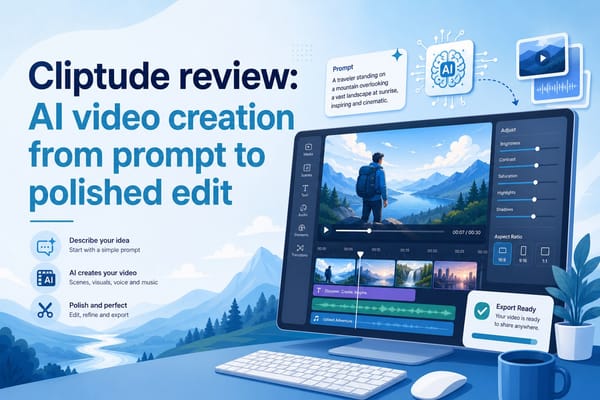
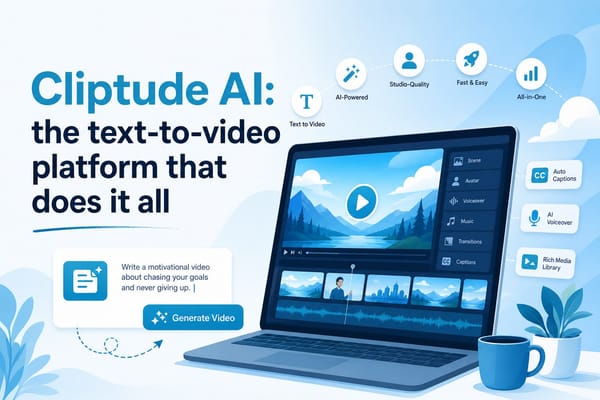
This is exactly the problem that platforms like Cliptude are built to solve. Cliptude is an AI-powered text-to-video platform that takes a prompt or script and handles the entire production process automatically. It researches the topic, writes the script, sources relevant footage, generates motion graphics, and edits everything into a finished video ready for publishing. The formats it supports include long-form documentaries, listicles, YouTube Shorts, TikTok videos, Instagram Reels, animations, and music videos.
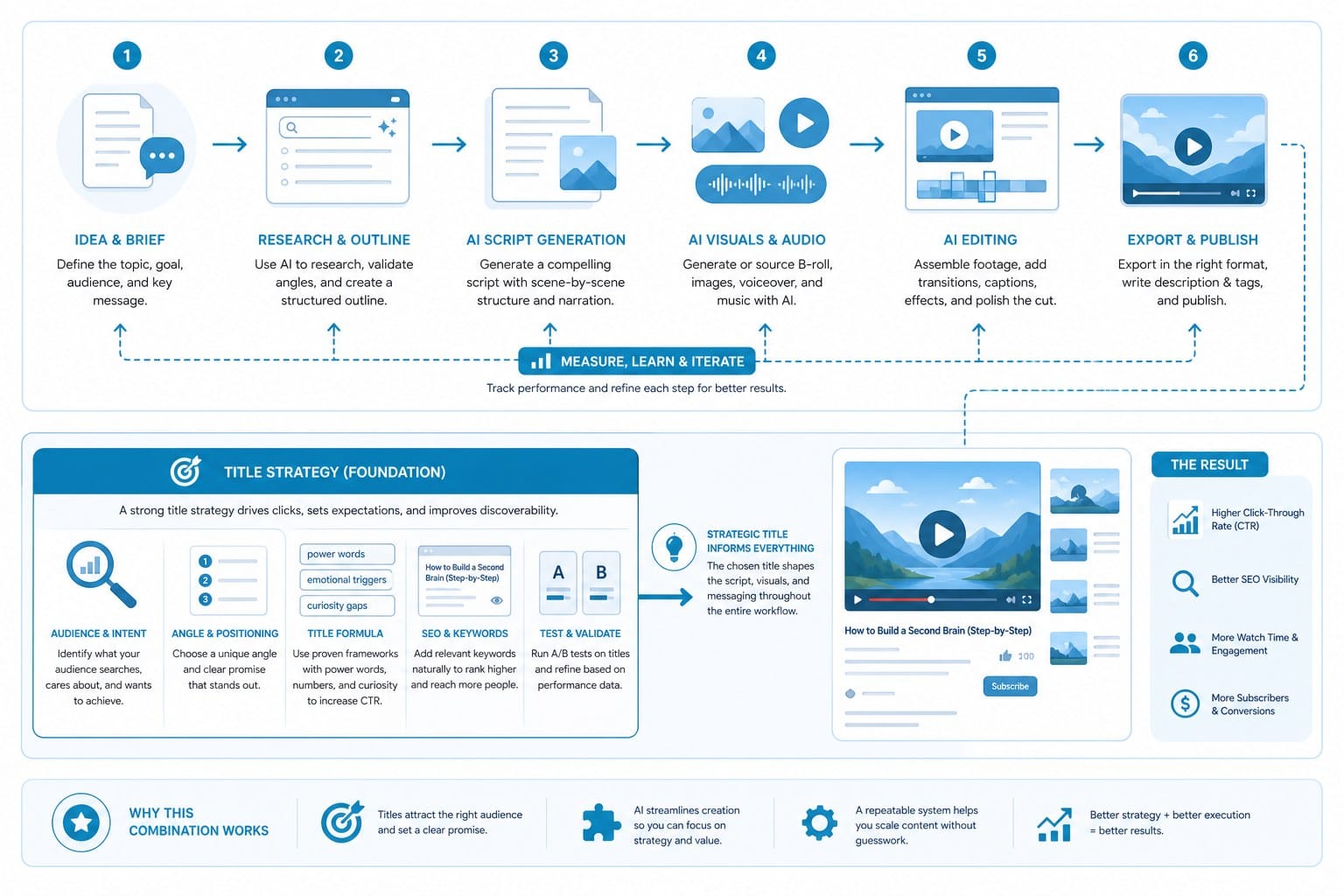
Here is how this connects to your clickbait title strategy. Instead of generating a title after you finish a video, you can actually flip the workflow. Start with your title. Use a clickbait text generator to land on a title that has strong click potential. Then use that title as the foundation for your video prompt. Enter the title or the core idea into Cliptude, and it builds a video around that concept.
For example, imagine your title is: "Why 90% of people quit their diet in the first week (and what to do instead)." That title has a strong hook, a specific statistic angle, and a promise of a solution. You take that concept into Cliptude, enter it as your prompt, and the platform builds out a script that supports the premise of the title, sources footage that fits the narrative, adds graphics that reinforce key points, and delivers a polished video.
The result is a workflow where your title and your content are aligned from the very beginning. There is no risk of the video failing to deliver on the title's promise because the whole production was built around the title's core idea.
This workflow also makes it much easier to scale. If you are trying to publish multiple videos per week, the combination of a clickbait text generator for titles and an AI video platform for production means you can move from idea to published video much faster than a traditional production process would allow. You are not waiting on a video editor, hunting for stock footage, or spending hours in post-production. You are focused on the strategy, the ideas, and the channel growth.
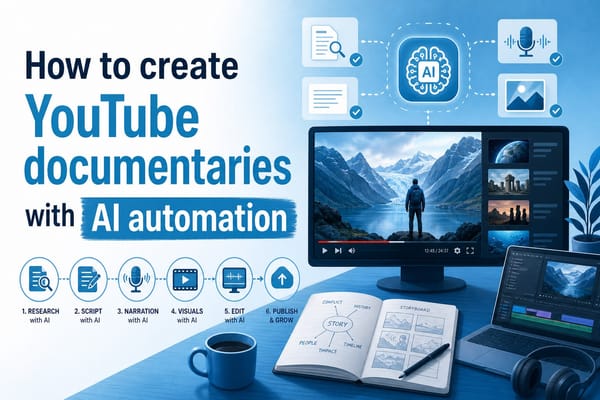
Let me walk through a practical example of what this looks like end to end for a faceless YouTube channel focused on history documentaries.
Step one: Topic research. You decide you want to cover the history of a specific event or era. You know your audience responds well to dramatic, lesser-known stories.
Step two: Title generation. You open your clickbait text generator and enter something like: "lesser known history, dramatic event, documentary style, YouTube." The tool gives you ten options. You land on something like: "The forgotten empire that almost conquered the entire world."
Step three: Video production. You take that title into Cliptude and enter it as your prompt. You might add some style notes, like the tone you want, the length of the video, and whether you want a whiteboard animation or a traditional documentary look. Cliptude handles the rest, pulling together a script, sourcing relevant footage, and producing the full video.
Step four: Thumbnail creation. You create a thumbnail that visually matches the energy of the title. Bold text, a dramatic image, strong contrast.
Step five: Publish and monitor. You post the video and watch the analytics. If click-through rate is lower than expected after a few days, you revisit the title using your generator and try a variation.
This kind of process is genuinely accessible to solo creators and small teams. You do not need a background in video editing, motion graphics, or scriptwriting. You need a clear idea of what you want to say and the tools to make it happen efficiently.
For creators who want to monetize their content, this workflow also makes it easier to maintain consistent output, which is one of the key factors in building a YouTube channel that generates revenue. The YouTube Partner Program requires a minimum number of watch hours and subscribers before monetization kicks in, and reaching those thresholds requires publishing regularly. When production time drops from days to hours, hitting those publishing goals becomes realistic even for one-person operations.
Cliptude also supports commercial rights on the content it produces, which means you can use the videos for monetized channels, brand partnerships, or client work without worrying about licensing issues on the footage or graphics.
For creators who want to understand more about how this kind of AI video platform works from the inside, the post Cliptude: the AI platform that turns prompts into polished videos gives a deeper look at the production process and what is possible with prompt-driven video creation.
I also want to address one question that comes up a lot: does using AI for titles and video production make the content feel generic? The honest answer is that it depends on how you use it. If you take every output at face value and never add your own perspective, voice, or creative direction, yes, the content can feel generic. But if you treat AI tools as a starting point and layer in your own insights, the result is efficient without being impersonal.
Your title strategy is where your creative judgment matters most. A clickbait text generator gives you options. You are the one who decides which option best fits your channel's voice, your audience's expectations, and your video's actual content. That decision requires knowledge of your niche, your viewers, and your goals that no AI has on its own.
The same is true for video production. When you enter a prompt into a platform like Cliptude, the way you frame that prompt shapes the output. Specific, thoughtful prompts produce better results than vague ones. The more clearly you articulate what you want, the more the finished video reflects your creative vision.
In short, the best creators are not replacing their judgment with AI. They are using AI to execute faster on ideas they have already thought through carefully. The clickbait text generator handles the headline formulas. The AI video platform handles the production. You handle the strategy, the niche expertise, and the audience relationship. That division of effort is what makes it possible to build a serious content operation without a big team or budget.
If you are just starting out with AI-assisted content creation, I would encourage you to try the title-first workflow I described above. Pick a topic you know well, run it through a clickbait text generator, choose the strongest title, and build your video from there. See how the alignment between title and content affects your viewer experience and your analytics. Then refine the process as you learn more about what works for your specific audience.
The tools available today make it easier than ever to produce high-quality video content at scale. The creators who figure out how to combine strong title strategy with efficient production workflows are the ones who will build the channels and audiences that last.
Ready to take the next step?
Ready to go from idea to finished video without the production headache? Cliptude lets you turn a simple prompt into a polished, publish-ready video in formats that work across YouTube, TikTok, and Instagram. Visit Cliptude to explore the platform and see how AI-powered video production can fit into your content workflow.