Nepali content creation made easy with AI video tools

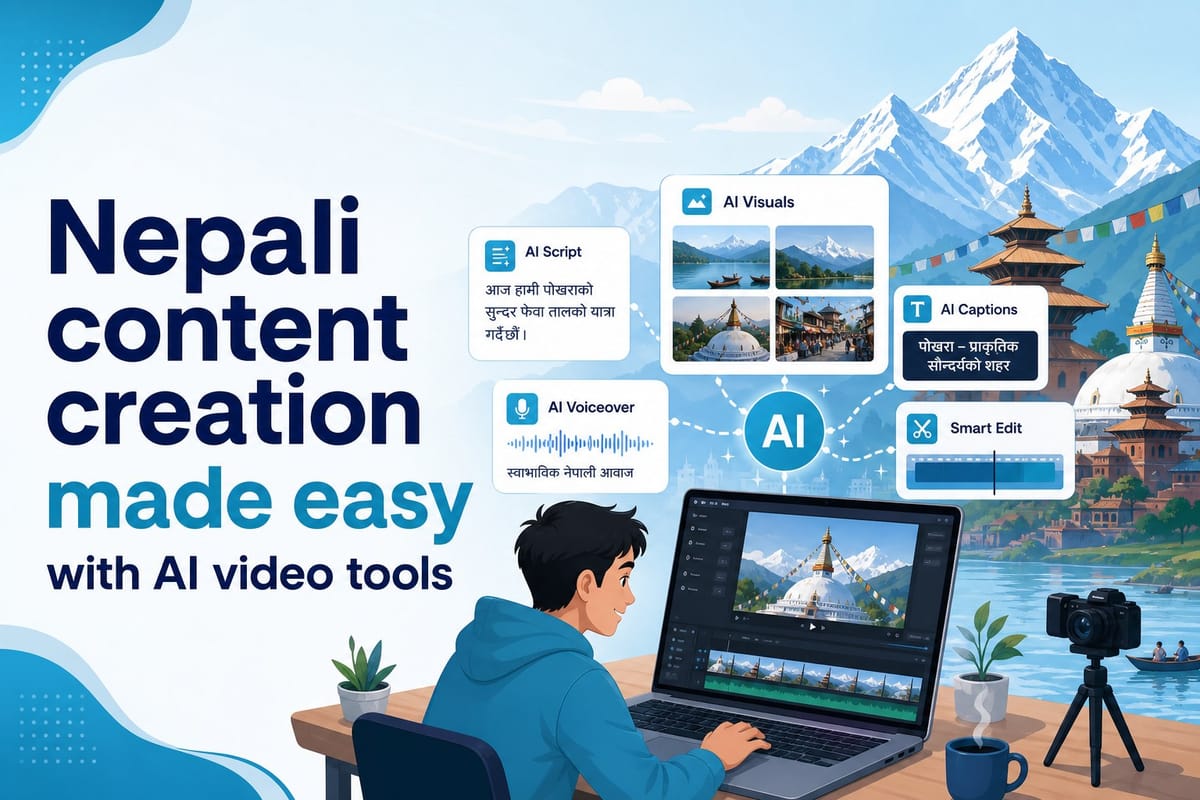
Table of contents
1. Why Nepali content creation has always been harder than it looks
2. How AI video tools handle the heavy lifting for Nepali creators
3. Practical steps to start your Nepali content channel with AI tools
Creating video content in Nepali used to mean hiring translators, voice actors, and video editors who understood the language and culture. For most solo creators or small teams, that process was slow, expensive, and full of back-and-forth revisions. Today, AI video tools have changed that equation completely. Platforms like Cliptude let you go from a simple prompt or script to a polished, publish-ready video without touching a camera or a timeline editor. Whether you want to build a faceless YouTube channel about Nepali history, cover Nepalese cuisine for a food audience, or create educational shorts about life in Nepal, the tools to do it at scale are now within reach. In this article, I will walk through what makes Nepali content creation uniquely challenging, how AI video tools solve those challenges, and how you can start producing professional videos for a Nepali-speaking or Nepal-focused audience right now.
Why Nepali content creation has always been harder than it looks
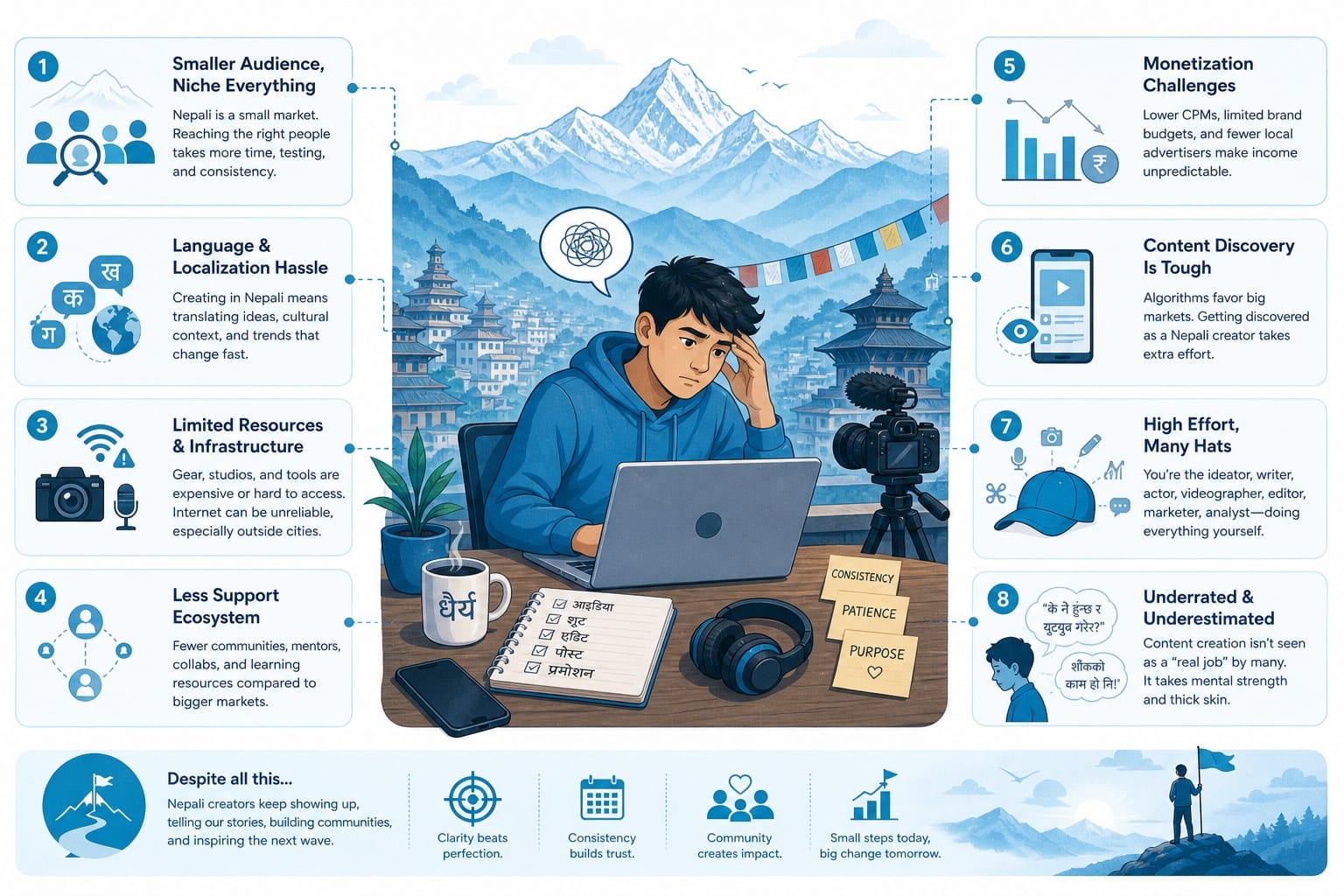
Nepal is home to roughly 30 million people, and Nepali is spoken by tens of millions more across India, Bhutan, and diaspora communities worldwide. Despite that reach, Nepali-language content on YouTube and short-form platforms is still relatively thin compared to languages like Hindi or English. That gap is not because there is no appetite for it. Search trends consistently show strong interest in topics like Nepali history, Nepalese cuisine, trekking routes, religious festivals, and social issues. The gap exists because producing quality video content in Nepali has historically required a specific and expensive set of skills.
First, there is the language barrier for production tools. Most mainstream video editing software defaults to English interfaces, English stock footage tags, and English voiceover libraries. Finding a stock clip tagged as relevant to Nepal, or sourcing a voice that sounds natural in Nepali, often meant going outside the standard platforms and paying premium rates for niche services.
Second, Nepali content often covers topics that require real research. A documentary about the history of the Gurkhas, for example, needs accurate dates, correct names, and cultural sensitivity. A listicle about Nepalese cuisine needs to get the dishes right, spell them correctly, and explain them in a way that resonates with both native speakers and curious outsiders. Doing that research manually, scripting it, recording a voiceover, sourcing footage, and editing it together could take a creator a full week for a single video.
Third, the monetization path is longer for smaller language markets. Creators who target Nepali-speaking audiences know that advertiser CPM rates in South Asian markets can be lower than in English-speaking markets. That means creators need to publish more videos, more consistently, to build a channel that generates meaningful income. Producing one video a week by hand while working another job is not a realistic strategy for scaling.
These three challenges, production tool limitations, research and scripting burden, and the need for higher volume to monetize, combine to keep many talented creators from ever getting started. Or they start, burn out after a few months, and quit before their channel gains traction. AI video tools directly address all three of these pain points, and that is why this moment feels genuinely different for creators who want to build a Nepali content business.
How AI video tools handle the heavy lifting for Nepali creators
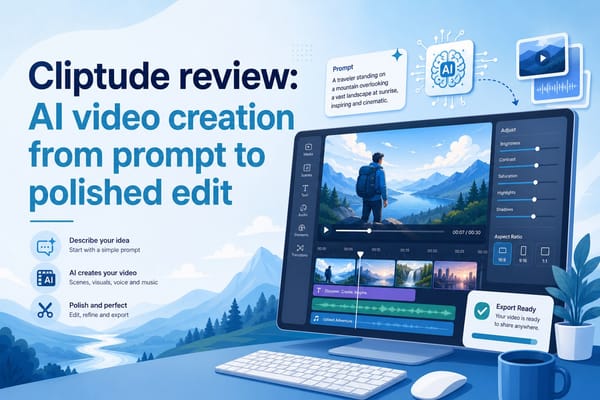
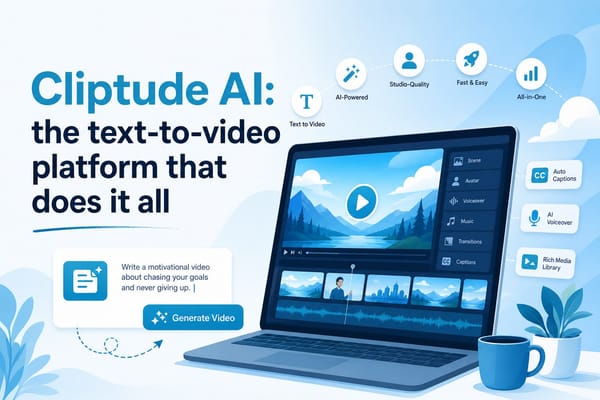
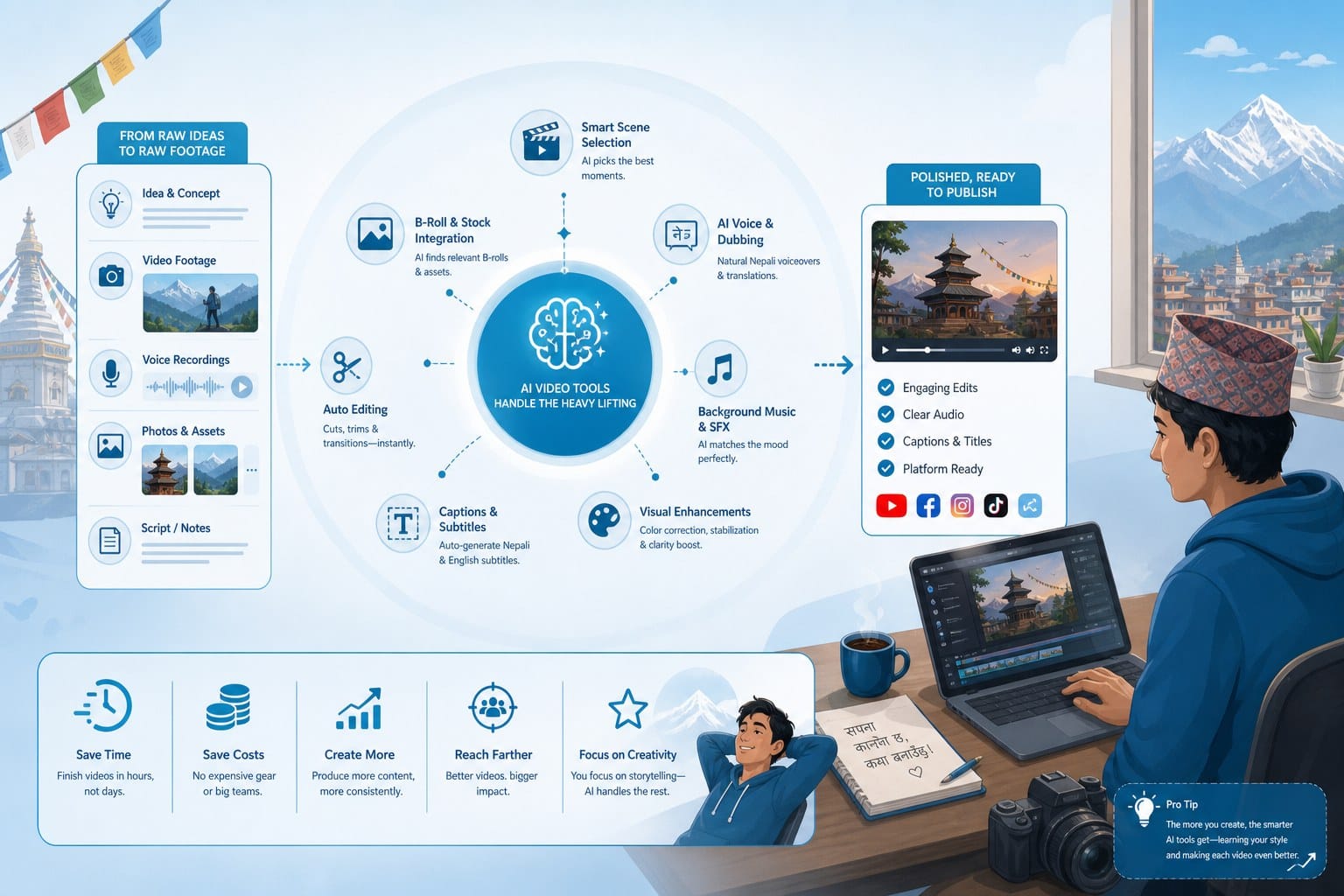
When I talk about AI video tools, I am not just talking about a tool that adds subtitles or cuts clips together automatically. A full-stack platform like Cliptude handles the entire production pipeline from a single starting point. You provide a prompt or a script, and the platform researches the topic, writes or refines the script, sources relevant footage, generates motion graphics, adds voiceover, and delivers a finished video. That kind of end-to-end automation changes what is possible for a solo creator or a small team.
Let me break down what that looks like for someone creating Nepali content specifically.
Research and scripting for Nepal-focused topics
If you want to create a documentary-style video about the history of Kathmandu, you can prompt the AI with something like: "Create a 10-minute YouTube documentary about the history of Kathmandu Valley, covering ancient kingdoms, the unification of Nepal, and modern development." The platform will research that topic, pull in relevant historical context, and generate a script that is structured for video. You can then review the script, adjust anything that feels off, and move forward.
This matters for Nepali content because the topics creators want to cover, like the Shah dynasty, the role of the Himalayas in shaping Nepali identity, or the diversity of Nepalese cuisine across different ethnic groups, require factual accuracy. Getting the name of a historical figure wrong or misdating an event will hurt your credibility with a Nepali audience. The AI does not replace your review step, but it gives you a solid, well-structured starting point that would have taken hours to produce manually.
For creators working in the Nepali language itself, the workflow is similar to what works for other South Asian languages. I have covered this in detail in a related article about how to create Urdu YouTube videos with AI, and many of the same principles apply. You can write or paste a script in Nepali, use the platform to source visuals and graphics, and build a video that targets native Nepali speakers directly.
Video formats that work well for a Nepali audience
Different content goals call for different video formats, and this is where Cliptude's format flexibility becomes a real advantage for Nepali creators.
Documentary-style videos work extremely well for topics like Nepali geography, culture, and history. A 10 to 20 minute documentary about the Annapurna Circuit, the story of Mount Everest expeditions, or the festivals of Dashain and Tihar can perform very well on YouTube, especially when the topic is not already saturated with high-quality content. The documentary format also works well for diaspora audiences who want to stay connected to their roots but consume content in English or a mix of English and Nepali.
Listicle videos, such as "7 things you did not know about Nepalese cuisine" or "Top 10 hidden gems in Nepal for trekkers," are consistently popular across YouTube and short-form platforms. They are easy to structure, easy to script, and easy to source visuals for. A platform like Cliptude can generate this type of video quickly, which means you can build a library of listicle content without spending weeks on production.
Whiteboard and animation formats are useful for educational content about Nepal. If you want to explain the caste system historically, the geography of the Himalayan range, or the political history of Nepal's transition from a monarchy to a federal republic, animated explainer videos make complex topics more accessible. These formats also work well for younger audiences and for creators who want to reach students or educators.
Short-form videos for TikTok, Instagram Reels, and YouTube Shorts are another strong option. A 60-second clip about a specific Nepali dish, a quick geography fact, or a cultural tradition can reach a much wider audience than a long-form video and serves as a discovery tool that drives viewers to your longer content. Cliptude supports short-form production, so you can create both long and short versions of the same topic without doubling your workload.
Scaling output without sacrificing quality
One of the biggest advantages of using an AI video platform is the ability to publish consistently. Consistency is one of the most important factors in YouTube channel growth. Channels that publish two to four videos per week grow significantly faster than channels that publish once a month. But for a solo creator doing everything manually, two to four videos per week is an unsustainable pace.
With AI-assisted production, the math changes. If you can go from prompt to finished video in a few hours instead of a few days, you can realistically maintain a consistent publishing schedule while also working another job or running a business. That is how creators building faceless Nepali content channels can actually compete and grow.
I covered the broader strategy for this kind of scaling in detail in how influencers and content creators can scale video output with AI. The core principle is the same whether you are creating content about Nepal, finance, travel, or any other niche: automation handles the production load, and you focus your energy on strategy, topic selection, and quality review.
Commercial rights and monetization
For creators who want to monetize their Nepali content, the commercial rights question is critical. Some AI-generated content comes with licensing restrictions that prevent you from running ads, selling the videos, or using them in commercial projects. Cliptude's credit-based model includes full commercial rights, which means the videos you create are yours to monetize through YouTube ad revenue, sponsorships, or other channels.
For a Nepali-focused creator, this matters because the path to monetization often involves multiple revenue streams. YouTube ad revenue for a Nepali-language channel may take longer to build up than for an English-language channel, so having the flexibility to use your videos in other commercial contexts, like sponsored content for tourism brands or educational licensing, gives you more options.
Practical steps to start your Nepali content channel with AI tools
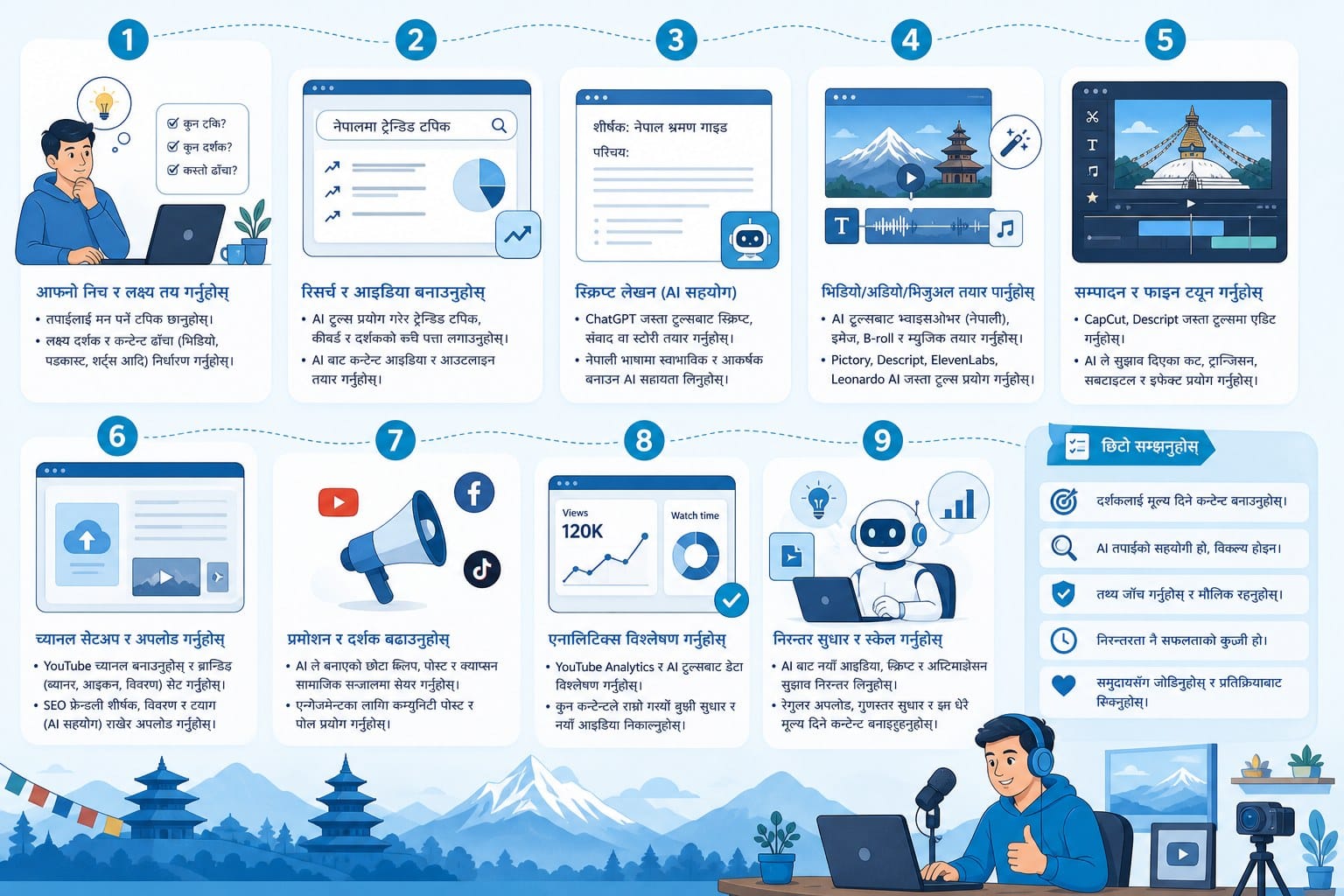
Starting a Nepali content channel with AI tools does not require any technical background, video editing experience, or a large budget. What it does require is a clear content strategy, a consistent workflow, and a willingness to review and refine what the AI produces. Here is how I would approach it.
Step one: Define your niche within Nepali content
Nepali content is a broad category. Before you start producing videos, get specific about what corner of that category you want to own. Some niches that are underserved right now include:
Nepalese cuisine and food culture. There is a growing global interest in South Asian food, and Nepalese cuisine specifically, from dal bhat to momo dumplings to sel roti, is not yet as well documented on video platforms as Indian or Thai food. A channel dedicated to explaining and celebrating Nepalese food, either in English for a global audience or in Nepali for a local and diaspora audience, has real room to grow.
Nepali history and geography. Channels that cover the history of the Nepali kingdoms, the unification under Prithvi Narayan Shah, the role of the Gurkha soldiers in world history, or the geography of the Himalayas can build a loyal audience among students, travelers, and diaspora communities. This is a topic where documentary-style videos work especially well.
Nepali language learning. There is a growing community of people who want to learn Nepali, particularly in countries where Nepali diaspora communities are large. A channel that teaches basic Nepali vocabulary, phrases, and grammar through short animated videos could serve a very specific and underserved audience.
Travel and trekking in Nepal. Nepal is one of the world's top trekking destinations, but much of the existing video content on YouTube is from foreign creators who visited once. A faceless channel that consistently covers trails, permits, gear, and logistics for trekking in Nepal, sourced from a genuine knowledge of the country, has a strong value proposition.
Culture and traditions. Festivals like Dashain, Tihar, Holi, and Teej are deeply important to Nepali people, and content that explains these traditions for both native Nepalis and international audiences performs well around those seasonal moments.
Choosing a specific niche helps you build topical authority on your channel faster, which is one of the key factors in how YouTube and other platforms decide to recommend your content to new viewers.
Step two: Build a content calendar before you start producing
Once you have your niche, plan out your first 20 to 30 video topics before you produce a single video. This sounds like a lot of upfront work, but it actually makes everything easier. When you sit down to create a video, you are not starting from zero. You already know what topic comes next, which means you can focus on quality rather than brainstorming.
For a Nepali history channel, your first 20 topics might look like this: the ancient Licchavi kingdom, the Malla dynasty, Prithvi Narayan Shah and unification, the Rana regime, Nepal's transition to democracy, the Maoist insurgency, the 2015 earthquake and reconstruction, the role of Nepal in World War II through the Gurkhas, the geography of the three ecological zones, the history of Kathmandu's Durbar Squares, and so on. Each of these is a distinct topic that can support a 10 to 20 minute documentary video and several short-form clips.
For a Nepalese cuisine channel, your first 20 topics might cover individual dishes, regional food traditions, the influence of Indian and Tibetan cuisine on Nepali cooking, street food in Kathmandu, and the role of food in Nepali festivals.
Having this calendar in place means you can produce videos in batches. You might spend one session creating five scripts or prompts, reviewing the AI output, and then moving to production. Batch production is significantly more efficient than producing one video at a time from start to finish.
Step three: Use AI tools to produce your first videos and set your quality standard
Your first few videos will teach you a lot about what the AI does well and where you need to add your own editing or review. With Cliptude, you start with a prompt or a script. For Nepali content, I recommend starting with a detailed prompt rather than a vague one. Instead of saying "make a video about Nepal," try something like: "Create a 12-minute YouTube documentary about the Licchavi dynasty in Nepal, covering their origin, major rulers, cultural contributions including Pashupatinath Temple, and their eventual decline. Target an English-speaking audience with a curious, educational tone."
The more specific your prompt, the more useful the initial output will be. You will still want to review the script for factual accuracy, especially for historical or cultural content where getting details wrong can damage your credibility with a knowledgeable audience.
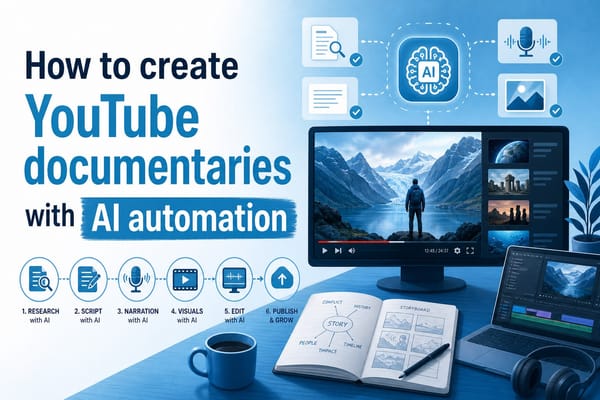
For a look at how this process works for documentary-style content specifically, the article on how to create YouTube documentaries with AI in minutes covers the workflow in detail. The same steps apply whether you are creating a documentary about Nepali history, Nepalese cuisine, or any other topic.
After your first three or four videos, you will have a clear sense of your production workflow and how long each step takes. At that point, you can start optimizing for speed without sacrificing the quality standard you have set.
Step four: Optimize for search and consistency
Once you have videos ready to publish, make sure you are optimizing each one for search. For Nepali content on YouTube, this means using specific, searchable titles and descriptions. A title like "The Licchavi Dynasty: Nepal's golden age explained" will perform better than a generic title like "Ancient Nepal history." Your description should include the Nepali keyword naturally, summarize what the video covers, and link to related videos on your channel.
Publish consistently. If you decide to publish twice a week, hold to that schedule. YouTube's recommendation algorithm rewards consistency, and your audience will come to expect new content from you on a regular schedule. With AI-assisted production, maintaining a twice-weekly schedule is realistic even for a solo creator.
Track which videos perform best and use that data to guide future topic selection. If your video about Nepalese cuisine outperforms your video about Nepali geography, that tells you something about your audience and what they want more of. Over time, you build a clearer picture of what works for your specific channel and audience.
Step five: Think about monetization from the start
Many creators wait until they have a large audience to think about monetization, but building monetization into your strategy from the beginning leads to better outcomes. For a Nepali content channel, consider these revenue paths:
YouTube ad revenue is the baseline. It takes time to qualify for the YouTube Partner Program (currently 1,000 subscribers and 4,000 watch hours), but consistent publishing gets you there faster.
Sponsorships from travel companies, trekking gear brands, language learning apps, or South Asian food brands can be a strong revenue source once your channel has a defined audience. Companies that want to reach people interested in Nepal or Nepalese culture will pay for access to an engaged audience.
Digital products like travel guides, Nepali recipe e-books, or language learning materials can be sold directly to your audience without needing a large subscriber count.
Licensing your videos to educational platforms, travel companies, or media outlets is another option that the commercial rights included in Cliptude's model makes possible.
Building a Nepali content channel with AI tools is a real business opportunity, not just a creative project. The combination of underserved content demand, scalable production tools, and multiple monetization paths makes this one of the more attractive niches for creators who are willing to put in consistent effort over the long term.
Ready to take the next step?
If you are ready to start creating Nepali content at scale, Cliptude gives you the tools to go from idea to finished video without a camera, a studio, or a video editing background. The platform handles research, scripting, footage sourcing, motion graphics, and editing, all from a simple prompt or script. Head to Cliptude to explore what you can build and start your first project today.